


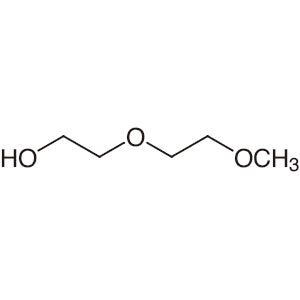
Diethylene Glycol Monomethyl Ether (DEGME), with CAS number 111-77-3, is a versatile chemical compound widely used in laboratory settings for its stability and reactivity. It serves as both a solvent and a reagent in the synthesis of various organic compounds. Its molecular structure allows it to participate effectively in chemical reactions, making it a valuable tool for researchers. DEGME is commonly employed in the preparation of heterocyclic compounds, esters, and other high-reactivity molecules. Its reliability and consistent performance make it a preferred choice for both academic and industrial laboratories.
DEGME is known for its excellent solubility in organic solvents such as ethyl acetate and ethanol. This property enhances its utility in a wide range of chemical processes. The addition of BHT as a stabilizer significantly improves its resistance to oxidation, thereby extending its shelf life and ensuring consistent quality. This makes it particularly suitable for long-term storage and repeated use in laboratory applications. Its non-toxic and non-hazardous nature also contributes to its safety profile, making it an ideal choice for laboratories that prioritize both efficiency and safety.
In Indonesian laboratories, DEGME is frequently used in organic chemistry research, the synthesis of new compounds, and the development of chemical products. It is a staple in chemical, pharmaceutical, and industrial laboratories, where it supports daily operations and experimental work. Its availability and reliability make it an essential component of laboratory workflows, especially in regions where chemical research is actively pursued.
TCI brochures (PDF)
- PEGylation Reagents 2025-02-18 · p. 1
- Bioconjugation Reagents 2026-07-07 · p. 6
- Biomaterials Research Reagents 2025-02-19 · p. 7
- Reagents for Biological Research 2025-03-11 · p. 32
Related TCI products
- TCI T1372 23783-42-8 Tetraethylene Glycol Monomethyl Ether
- TCI T0709 112-35-6 Triethylene Glycol Monomethyl Ether
- TCI P1159 23778-52-1 Pentaethylene Glycol Monomethyl Ether
- TCI O0296 25990-96-9 Octaethylene Glycol Monomethyl Ether
- TCI N0699 6048-68-6 Nonaethylene Glycol Monomethyl Ether
- TCI H0808 23601-40-3 Hexaethylene Glycol Monomethyl Ether
- Organic synthesis applications benefit from DEGME's ability to act as a solvent and reagent, enabling the production of complex organic molecules with high reactivity.
- Pharmaceutical research utilizes DEGME for the synthesis of active pharmaceutical ingredients, leveraging its stability and solubility properties.
- Industrial chemical formulation relies on DEGME for its compatibility with various organic solvents, making it suitable for the development of specialized chemical products.
- Analytical chemistry procedures use DEGME as a solvent for sample preparation, ensuring accurate and reproducible results in chromatographic and spectroscopic analyses.
- Environmental testing applications employ DEGME for the extraction and analysis of organic pollutants, taking advantage of its solubility and chemical inertness.
| Brand | TCI |
|---|---|
| CAS number | 111-77-3 |
| Molecular formula | — |
| Purity | — |
| Category | Chemistry > Building Blocks > Non-Heterocyclic Building Blocks |
| Pack sizes | Available in various quantities as per supplier specifications |
| Physical form | Liquid |
| Storage | Store in a cool, dark place away from heat and direct sunlight |
DEGME should be stored in a cool, dark location, away from heat and direct sunlight to maintain its stability and prevent degradation. It is recommended to use sealed, airtight containers made of glass or high-density polyethylene to minimize exposure to air and moisture. Due to its chemical nature, it should be handled in a well-ventilated area, and appropriate personal protective equipment such as gloves and goggles should be worn. While it is non-toxic and non-hazardous, proper handling and storage are essential to ensure safety and maintain product integrity in laboratory environments.
—
Product Categories
Produk Terkait
-
TetraethyleneGlycolMonomethylEther TCI T1372
Regular price From Rp 1.881.600,00Regular priceRp 1.331.400,00Sale price From Rp 1.881.600,00 -
TriethyleneGlycolMonomethylEther TCI T0709
Regular price From Rp 582.750,00Regular priceRp 423.150,00Sale price From Rp 582.750,00 -
PentaethyleneGlycolMonomethylEther TCI P1159
Regular price From Rp 4.796.400,00Regular priceRp 3.369.450,00Sale price From Rp 4.796.400,00 -
OctaethyleneGlycolMonomethylEther TCI O0296
Regular price From Rp 5.300.400,00Regular priceRp 3.722.250,00Sale price From Rp 5.300.400,00 -
NonaethyleneGlycolMonomethylEther TCI N0699
Regular price From Rp 4.266.150,00Regular priceRp 2.998.800,00Sale price From Rp 4.266.150,00 -
HexaethyleneGlycolMonomethylEther TCI H0808
Regular price From Rp 2.782.500,00Regular priceRp 1.961.400,00Sale price From Rp 2.782.500,00 -
DodecaethyleneGlycolMonomethylEther TCI D2904
Regular price From Rp 4.452.000,00Regular priceRp 3.129.000,00Sale price From Rp 4.452.000,00 -
HeptaethyleneGlycolMonomethylEther TCI H1046
Regular price From Rp 5.432.700,00Regular priceRp 3.814.650,00Sale price From Rp 5.432.700,00


