


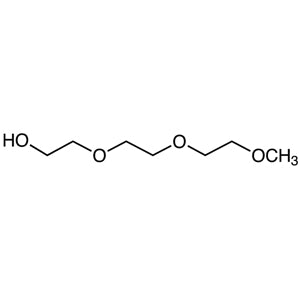
Triethylene Glycol Monomethyl Ether (TEGME), with CAS number 112-35-6, is a versatile chemical compound widely used in laboratory settings. It serves as a solvent, reagent, and auxiliary material in the synthesis of various organic compounds. Its molecular structure consists of a chain of triethylene glycol with a methyl group attached, making it highly compatible with a range of organic solvents. This chemical is particularly valued for its ability to dissolve a wide array of substances, which enhances its utility in both analytical and preparative chemistry.
One of the key attributes that make TEGME a preferred choice is its chemical stability and low reactivity under normal conditions. This characteristic allows it to be used in a variety of chemical reactions without interfering with the desired outcomes. Additionally, TEGME has a high boiling point, which makes it suitable for applications requiring elevated temperatures. Its non-hazardous nature and compatibility with many laboratory equipment and materials further contribute to its popularity among chemists.
In Indonesian laboratories, TEGME is commonly used in chemical research, especially in the synthesis of complex organic compounds and in the separation of chemical components. It is also utilized in the pharmaceutical industry and in the production of various chemical intermediates. Its reliability and consistent performance make it a staple in both academic and industrial research environments.
TCI brochures (PDF)
- PEGylation Reagents 2025-02-18 · p. 1
- Bioconjugation Reagents 2026-07-07 · p. 6
- Biomaterials Research Reagents 2025-02-19 · p. 7
- Reagents for Biological Research 2025-03-11 · p. 32
Related TCI products
- TCI T1372 23783-42-8 Tetraethylene Glycol Monomethyl Ether
- TCI P1159 23778-52-1 Pentaethylene Glycol Monomethyl Ether
- TCI O0296 25990-96-9 Octaethylene Glycol Monomethyl Ether
- TCI N0699 6048-68-6 Nonaethylene Glycol Monomethyl Ether
- TCI D2904 2050595-03-2 Dodecaethylene Glycol Monomethyl Ether
- TCI H0808 23601-40-3 Hexaethylene Glycol Monomethyl Ether
- Organic synthesis as a solvent and reagent due to its solubility and stability in various reaction conditions.
- Analytical chemistry for dissolving and isolating compounds during chromatographic and spectroscopic analyses.
- Pharmaceutical research for the preparation of drug intermediates and the development of new chemical compounds.
- Industrial chemical production as a key component in the formulation of specialty chemicals and solvents.
- Material science applications for the synthesis of polymers and the modification of polymer properties.
| Brand | TCI |
|---|---|
| CAS number | 112-35-6 |
| Molecular formula | — |
| Purity | — |
| Category | Chemistry > Building Blocks > Non-Heterocyclic Building Blocks |
| Pack sizes | Available in various quantities as per supplier specifications |
| Physical form | Liquid |
| Storage | Store in a cool, dry place away from direct sunlight and incompatible materials |
TEGME should be stored in a cool, dry environment, away from direct sunlight and sources of heat. It is recommended to keep it in a sealed container to prevent evaporation and contamination. Due to its liquid form, it should be stored in appropriate glass or plastic containers that are resistant to chemical degradation. Laboratory personnel should ensure proper ventilation when handling TEGME to avoid inhalation of vapors. It is important to keep the substance away from incompatible materials such as strong oxidizers or acids. Regular inspection of storage conditions and containers is advised to maintain the integrity and safety of the material.
—
Product Categories
- Building BlocksNon-Heterocyclic Building BlocksOxygen Compounds [Non-Heterocyclic Building Blocks]
- Chemical BiologyPEGylationmPEG (Methyl Polyethylene Glycols)
- Pharmaceutical Development and Drug Discovery Research ReagentsPEGylationmPEG (Methyl Polyethylene Glycols)
- Pharmaceutical Development and Drug Discovery Research ReagentsDrug Delivery Systems (DDS)PEGylation Reagents (for DDS)
Produk Terkait
-
TetraethyleneGlycolMonomethylEther TCI T1372
Regular price From Rp 1.881.600,00Regular priceRp 1.331.400,00Sale price From Rp 1.881.600,00 -
PentaethyleneGlycolMonomethylEther TCI P1159
Regular price From Rp 4.796.400,00Regular priceRp 3.369.450,00Sale price From Rp 4.796.400,00 -
OctaethyleneGlycolMonomethylEther TCI O0296
Regular price From Rp 5.300.400,00Regular priceRp 3.722.250,00Sale price From Rp 5.300.400,00 -
NonaethyleneGlycolMonomethylEther TCI N0699
Regular price From Rp 4.266.150,00Regular priceRp 2.998.800,00Sale price From Rp 4.266.150,00 -
DodecaethyleneGlycolMonomethylEther TCI D2904
Regular price From Rp 4.452.000,00Regular priceRp 3.129.000,00Sale price From Rp 4.452.000,00 -
HexaethyleneGlycolMonomethylEther TCI H0808
Regular price From Rp 2.782.500,00Regular priceRp 1.961.400,00Sale price From Rp 2.782.500,00 -
DiethyleneGlycolMonomethylEther(stabilizedwithBHT) TCI M0537
Regular price From Rp 505.050,00Regular priceRp 352.800,00Sale price From Rp 505.050,00 -
HeptaethyleneGlycolMonomethylEther TCI H1046
Regular price From Rp 5.432.700,00Regular priceRp 3.814.650,00Sale price From Rp 5.432.700,00


