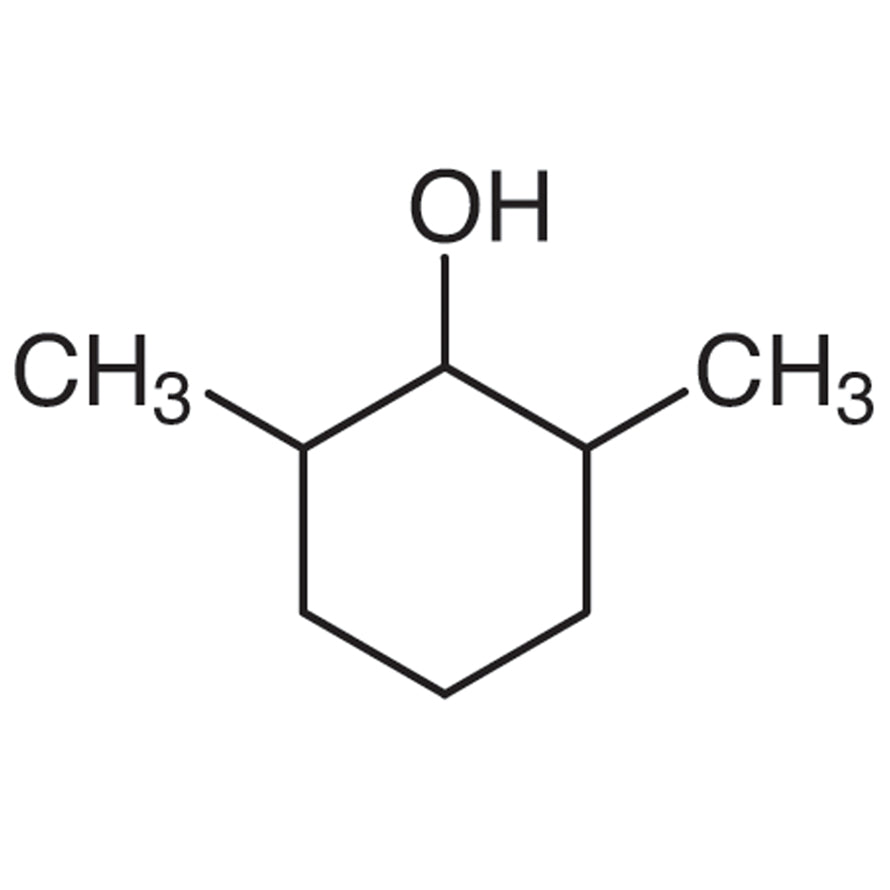
2,6-Dimethylcyclohexanol (mixture of isomers) is an organic compound widely used in chemical reactions for the synthesis of complex molecules. This compound is a cyclohexanol derivative with two methyl groups positioned at the 2nd and 6th carbon atoms, which imparts unique reactivity to its molecular structure. In the laboratory, it serves as a crucial building block in the development of various chemical compounds, particularly in organic chemistry research. Its versatility makes it a valuable resource for chemists seeking to create new materials or compounds with specific structural features.
The chemical properties of 2,6-Dimethylcyclohexanol make it a preferred choice for many applications. It exhibits stability under certain conditions but is highly reactive in substitution and oxidation reactions. This reactivity is enhanced by its cyclohexanol framework, which allows it to interact effectively with a variety of reagents such as acids, bases, and catalysts. The availability of the compound in a mixture of isomers provides flexibility in experimental outcomes, as each isomer can yield different results in specific reactions. This characteristic is particularly beneficial in synthetic chemistry where precise control over reaction pathways is essential.
In Indonesian laboratories, 2,6-Dimethylcyclohexanol is a key component in both fundamental and applied chemical research. It is commonly used in organic chemistry projects by research institutions and universities across the country. Its role in pharmaceutical and industrial chemical synthesis further underscores its importance in the scientific community. The compound’s adaptability and reactivity make it a go-to material for a wide range of chemical processes in the laboratory setting.
Related TCI products
- TCI D1660 1502-24-5 2,3-Dimethylcyclohexanol (mixture of isomers)
- TCI D0703 5715-23-1 3,4-Dimethylcyclohexanol (mixture of isomers)
- TCI D0702 5441-52-1 3,5-Dimethylcyclohexanol (mixture of isomers)
- TCI V0195 106-87-6 3-(Oxiran-2-yl)-7-oxabicyclo[410]heptane (mixture of isomers)
- TCI B5497 17385-36-3 [1,1'-Bi(cyclohexane)]-2,2'-diol (mixture of isomers)
- TCI B1621 20601-38-1 4,4'-Bicyclohexanol (mixture of isomers)
- Organic synthesis projects benefit from 2,6-Dimethylcyclohexanol due to its reactivity and structural versatility, allowing the creation of complex molecules with specific functional groups.
- Pharmaceutical research utilizes this compound as a building block for the development of new drugs, leveraging its ability to participate in various chemical transformations.
- Industrial chemical production relies on this material for the synthesis of intermediates used in the manufacturing of specialty chemicals and polymers.
- Academic research in Indonesian universities often incorporates this compound in teaching and experimental settings to demonstrate organic reaction mechanisms.
- Analytical chemistry applications use it as a standard reference material for testing and calibrating analytical instruments in chemical laboratories.
| Brand | TCI |
|---|---|
| CAS number | 5337-72-4 |
| Molecular formula | — |
| Purity | — |
| Category | Chemistry > Building Blocks > Non-Heterocyclic Building Blocks |
| Pack sizes | Available in various quantities as per supplier specifications |
| Physical form | Liquid |
| Storage | Store in a cool, dry place away from direct sunlight and incompatible materials |
2,6-Dimethylcyclohexanol should be stored in a cool, dry environment to maintain its chemical stability. It is recommended to keep the compound in a tightly sealed container to prevent exposure to air and moisture. Suitable storage containers include glass or high-density polyethylene (HDPE) bottles, which are resistant to chemical degradation. Laboratory personnel should handle the compound with care, using appropriate personal protective equipment such as gloves and safety goggles. It is important to avoid contact with incompatible substances like strong oxidizing agents or acids. Proper labeling of storage containers is essential for safe handling and to ensure that the compound remains accessible for use in research and development activities.
—
Produk Terkait
-
2,3-Dimethylcyclohexanol(mixtureofisomers) TCI D1660
Regular price From Rp 2.016.000,00Regular price -
3,4-Dimethylcyclohexanol(mixtureofisomers) TCI D0703
Regular price Rp 2.677.500,00Regular price -
3,5-Dimethylcyclohexanol(mixtureofisomers) TCI D0702
Regular price From Rp 2.411.850,00Regular price -
3-(Oxiran-2-yl)-7-oxabicyclo[410]heptane(mixtureofisomers) TCI V0195
Regular price From Rp 3.870.300,00Regular price -
[1,1'-Bi(cyclohexane)]-2,2'-diol(mixtureofisomers) TCI B5497
Regular price Rp 6.333.600,00Regular price -
4,4'-Bicyclohexanol(mixtureofisomers) TCI B1621
Regular price From Rp 1.565.550,00Regular price -
4-Methyl-2-phenyl-1,3-dioxolane(mixtureofisomers) TCI B1094
Regular price Rp 477.750,00Regular price -
2,2-Bis(4-hydroxycyclohexyl)propane(mixtureofisomers) TCI B0928
Regular price From Rp 505.050,00Regular price


![106-87-6 3-(Oxiran-2-yl)-7-oxabicyclo[4.1.0]heptane (mixture of isomers) - AMI Scientific](http://amiscientific.com/cdn/shop/files/TCI2510V0195.jpg?v=1767145750&width=533)
![17385-36-3 [1,1'-Bi(cyclohexane)]-2,2'-diol (mixture of isomers) - AMI Scientific](http://amiscientific.com/cdn/shop/files/TCI2510B5497.jpg?v=1768815804&width=533)
![17385-36-3 [1,1'-Bi(cyclohexane)]-2,2'-diol (mixture of isomers) - AMI Scientific](http://amiscientific.com/cdn/shop/files/TCI2510B5497_214e3b8f-db40-41ba-82df-9eaf7780201b.jpg?v=1772180910&width=533)