TCI D2020, 2'-(N,N-Dimethylamino)-5'-nitroacetanilide, is a chemical compound widely used in optical material research. It plays a critical role in the development of non-linear optical (NLO) materials, which are essential for advanced photonic applications. In the laboratory, this compound serves as a foundational material for synthesizing optical components such as crystals and films that exhibit unique responses to light. Its presence is vital in both academic and industrial research settings where optical properties are being explored.
This compound is preferred due to its complex molecular structure and unique chemical properties that enable interaction with light across various wavelengths. These characteristics make it highly suitable for applications requiring precise optical responses, such as in the development of sensors and advanced optical devices. Its stability and versatility in synthesis further enhance its appeal for researchers aiming to create materials with tailored optical behaviors. The compound’s ability to be synthesized in different forms also supports its use in a wide range of experimental setups.
In Indonesian laboratories, TCI D2020 is commonly used in research institutions and academic settings. It is particularly sought after by researchers in materials science and photonics who are working on projects related to optical sensors and non-linear optical materials. Its availability and reliability make it an essential component in the pursuit of innovative material solutions for modern scientific challenges.
Related TCI products
- Non-Linear Optical Material Research: This compound is ideal for studying the optical properties of materials that respond to light in non-linear ways, enabling the development of advanced photonic devices.
- Optical Sensor Development: Its ability to interact with light across various wavelengths makes it suitable for creating sensitive optical sensors used in scientific and industrial applications.
- Crystal and Film Synthesis: The compound is used in the synthesis of optical crystals and films, which are essential for applications in telecommunications and laser technology.
- Material Characterization Studies: Researchers use it to analyze how different materials behave under various light conditions, aiding in the design of new optical materials.
- Educational Research Projects: It is frequently used in academic settings to teach and demonstrate the principles of non-linear optical materials and their applications.
| Brand | TCI |
|---|---|
| CAS number | — |
| Molecular formula | — |
| Purity | — |
| Category | Materials Science > Photonic Materials and Optical Materials > Organic Non-Linear Optical (NLO) Materials |
| Pack sizes | Available in various quantities as per standard laboratory supply |
| Physical form | Solid, crystalline |
| Storage | Store in a cool, dry place away from direct light and moisture |
TCI D2020 should be stored in a cool, dry environment, away from direct sunlight and sources of moisture. It is recommended to keep the compound in a sealed container to prevent exposure to air and humidity, which can affect its stability. Laboratory personnel should handle the material with care, using appropriate personal protective equipment such as gloves and safety goggles to ensure safety during handling. The compound should not be stored near incompatible substances, and all storage areas should be well-ventilated to minimize any potential risks. Proper labeling of containers is essential to ensure safe handling and prevent accidental exposure. Regular monitoring of storage conditions will help maintain the integrity of the compound for reliable experimental results.
—
Produk Terkait
-
4'-Nitroacetanilide TCI N0108
Regular price From Rp 1.908.900,00Regular price -
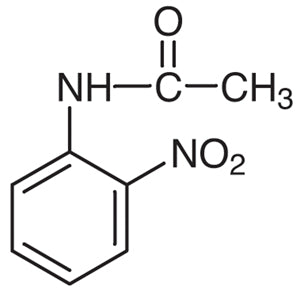
2'-Nitroacetanilide TCI N0107
Regular price Rp 2.094.750,00Regular price -
3'-Nitroacetanilide TCI N0106
Regular price Rp 1.961.400,00Regular price -
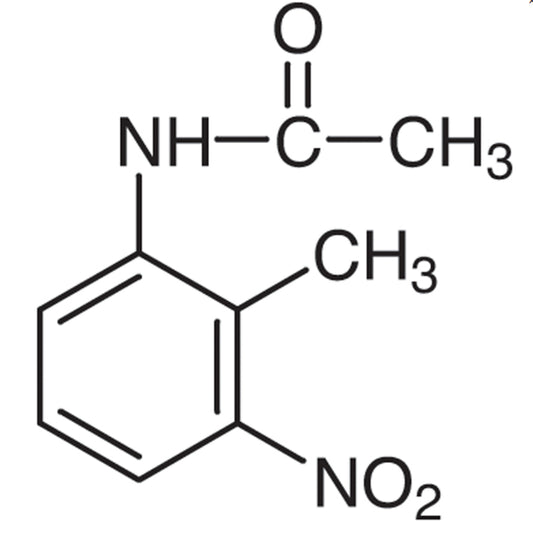
2'-Methyl-3'-nitroacetanilide TCI M1651
Regular price From Rp 637.350,00Regular price -
4',5'-Dichloro-2'-nitroacetanilide TCI D4907
Regular price From Rp 1.618.050,00Regular price -
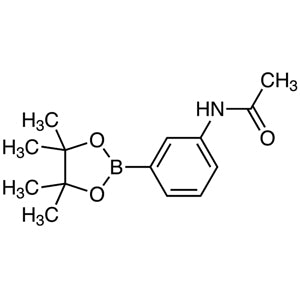
3'-(4,4,5,5-Tetramethyl-1,3,2-dioxaborolan-2-yl)acetanilide TCI T3216
Regular price Rp 1.696.800,00Regular price -
2'-Bromo-4'-fluoroacetanilide TCI B2721
Regular price Rp 1.618.050,00Regular price -
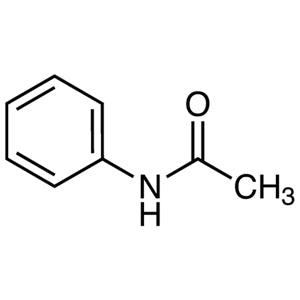
Acetanilide TCI A3272
Regular price Rp 1.140.300,00Regular price