TCI N0107 2'-Nitroacetanilide is an organic compound belonging to the acetylated anilide class, carrying a nitro group at the position ortho to the acetamido group on the benzene ring. In the laboratory, this material serves as a non-heterocyclic building block, meaning a starting molecular framework that is further modified into more complex structures. The acetamido group acts as a temporary protecting group for the aromatic amine, allowing chemists to carry out reactions on the ring without disturbing the nitrogen, and then to remove that protecting group once the desired framework has been assembled. Its role is therefore highly characteristic of a synthetic intermediate rather than a finished product.
The characteristics that make this compound a preferred choice lie in the combination of two functional groups with opposing electronic properties positioned close to one another. The nitro group is a strong electron-withdrawing substituent and activates the ring toward nucleophilic aromatic substitution, while the acetamido group is electron-donating and directs subsequent substituents. The ortho arrangement places the two groups in close spatial proximity, which makes this compound a natural precursor for cyclization reactions requiring two neighbouring functional groups. This predictable electronic and geometric behaviour allows synthetic routes to be planned with confidence, and it reduces the number of steps needed to reach a target skeleton.
In Indonesian laboratories, 2'-Nitroacetanilide is typically encountered in organic synthesis research at universities and in research and development units that build target molecules from simpler precursors. It is used on the bench scale in synthesis and methodology work, in postgraduate research projects, and in teaching laboratories where protecting-group strategy and directed aromatic substitution are demonstrated. Because it is an intermediate, it is normally drawn upon in small quantities as part of a multi-step route rather than consumed as a routine bulk reagent.
- Non-heterocyclic building block synthesis: the compound provides a ready-made substituted benzene framework that chemists elaborate into larger, more complex target structures without having to construct the aromatic core themselves.
- Protecting-group strategy in aromatic amine chemistry: the acetamido group masks the aromatic nitrogen so that reactions can be performed on the ring, then it is cleaved once the desired framework is complete.
- Nucleophilic aromatic substitution studies: the strongly electron-withdrawing nitro group activates the ring toward attack by nucleophiles, making this a suitable substrate for such substitution reactions and their investigation.
- Cyclization reaction precursor: the ortho relationship places the nitro and acetamido groups spatially adjacent, supplying the two neighbouring functional groups that ring-closing reactions require to proceed.
- Directed aromatic substitution and teaching demonstrations: the electron-donating acetamido group directs the orientation of subsequent substituents, illustrating clearly how competing electronic effects govern regiochemical outcomes on a ring.
| Brand | TCI |
|---|---|
| CAS number | 552-32-9 |
| Molecular formula | — |
| Purity | — |
| Category | Chemistry > Building Blocks > Non-Heterocyclic Building Blocks |
| Pack sizes | available in standard TCI research pack sizes; please confirm the packaging option required |
| Physical form | — |
| Storage | store in a tightly closed container in a cool, dry, well-ventilated place |
- Product code: N0107
- Chemical name: 2'-Nitroacetanilide
Store 2'-Nitroacetanilide in its original tightly closed container in a cool, dry and well-ventilated area, away from heat sources, direct sunlight and incompatible materials such as strong oxidizing and reducing agents. Chemically resistant containers with secure closures are suitable, and containers should be kept closed when not in use to limit moisture uptake and dust dispersion. Handle the material inside a fume hood, using a laboratory coat, safety goggles and chemical-resistant gloves. Avoid inhalation of dust and direct contact with skin and eyes, and wash hands thoroughly after handling. Keep the label intact and consult the manufacturer's safety data sheet before use and disposal.
—
Produk Terkait
-
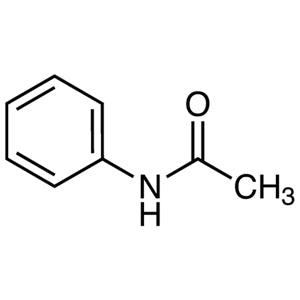
Acetanilide TCI A3272
Regular price Rp 1.140.300,00Regular price -
EthylNitroacetate TCI N0657
Regular price From Rp 1.431.150,00Regular price -
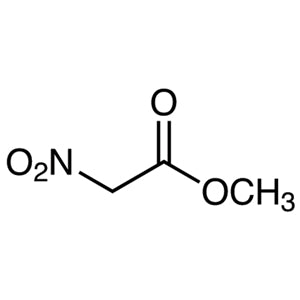
MethylNitroacetate TCI N0656
Regular price From Rp 2.545.200,00Regular price -
5'-Bromo-2'-hydroxy-3'-nitroacetophenone TCI B4556
Regular price From Rp 743.400,00Regular price -
2-Bromo-2'-nitroacetophenone TCI B3528
Regular price From Rp 2.545.200,00Regular price -
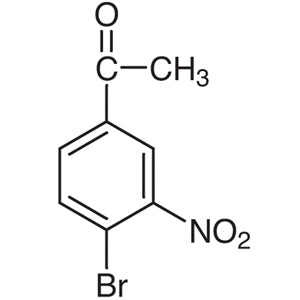
4'-Bromo-3'-nitroacetophenone TCI B3383
Regular price From Rp 664.650,00Regular price -
4'-Bromo-3'-chloroacetanilide TCI B3141
Regular price From Rp 769.650,00Regular price -
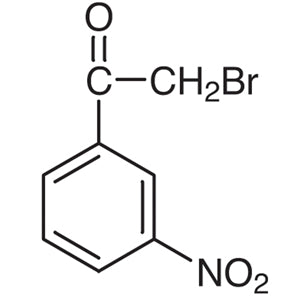
2-Bromo-3'-nitroacetophenone TCI B2855
Regular price From Rp 610.050,00Regular price