Ethyl Nitroacetate from TCI is the ethyl ester of nitroacetic acid. It belongs to the class of active methylene compounds, because its central carbon atom sits between a nitro group and an ester group. In organic synthesis laboratories, Ethyl Nitroacetate is known as a classic reagent for forming carbon–carbon bonds, introducing nitrogen atoms, and building amino acid and heterocyclic frameworks. It has a long history in the synthetic literature and is a dependable non-heterocyclic building block for research and development work.
Chemists choose Ethyl Nitroacetate because its methylene carbon is easy to deprotonate with fairly mild bases. The resulting carbanion can react with aldehydes, Michael acceptors, or alkyl electrophiles. The nitro group in the products can then be taken further: reduced to an amine, converted to a carbonyl through the Nef reaction, or used to build isoxazole rings. The ethyl ester is slightly more lipophilic than the methyl ester. It is often the better choice when a reference procedure specifically uses the ethyl ester, which makes it easier for researchers to reproduce reported methods directly.
In Indonesia, Ethyl Nitroacetate is useful to university organic chemistry laboratories, pharmaceutical and medicinal chemistry research groups, and industrial R&D teams working on new synthetic routes. Researchers who need a reliable active methylene reagent for carbon–carbon bond formation, nitrogen introduction, or amino acid and heterocycle synthesis can rely on it. Since it comes from TCI, laboratories get consistent material that supports reproducible results when they follow procedures from the published literature.
Related TCI products
- Carbon–carbon bond formation: after mild deprotonation, the active methylene carbon forms a carbanion that reacts well with aldehydes and alkyl electrophiles, giving substituted nitro ester products.
- Michael addition reactions: the stabilized carbanion adds to Michael acceptors, so Ethyl Nitroacetate is a practical nucleophile for building larger, functionalized carbon frameworks in multistep synthesis.
- Amino acid synthesis: the nitro group in the products can be reduced to an amine, which gives a direct route to amino acid frameworks from the ester backbone.
- Carbonyl compound preparation via the Nef reaction: the nitro group can be converted into a carbonyl, so the reagent also serves as a masked carbonyl equivalent in synthetic planning.
- Heterocycle construction: the nitro functionality can be used to form isoxazole rings, making this non-heterocyclic building block a useful starting point for heterocyclic target molecules.
| Brand | TCI (product code N0657) |
|---|---|
| CAS number | 626-35-7 |
| Molecular formula | — |
| Purity | — |
| Category | Chemistry > Building Blocks > Non-Heterocyclic Building Blocks |
| Pack sizes | please ask AMI Scientific about the pack sizes currently available |
| Physical form | — |
| Storage | follow the conditions on the TCI label and Safety Data Sheet |
- Chemical class: ethyl ester of nitroacetic acid; active methylene compound
Store Ethyl Nitroacetate in its original, tightly closed TCI container in a cool, dry, well-ventilated area. Keep it away from heat, ignition sources, strong bases, and reducing agents unless you are using them in a controlled reaction. Always follow the storage conditions on the product label and the Safety Data Sheet. Handle the material in a fume hood and wear suitable personal protective equipment, including chemical-resistant gloves, safety glasses, and a lab coat. Avoid breathing vapours and avoid contact with skin and eyes. Nitro compounds need care, so keep quantities to what your procedure needs and dispose of waste according to local chemical waste regulations.
—
Produk Terkait
-
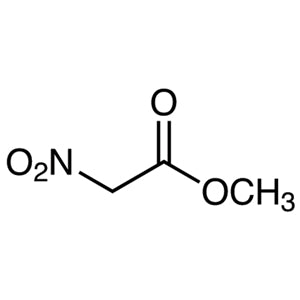
MethylNitroacetate TCI N0656
Regular price From Rp 2.545.200,00Regular price -
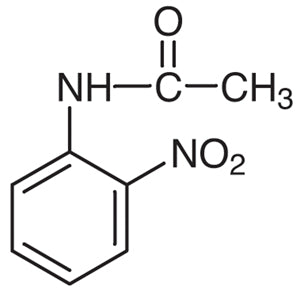
2'-Nitroacetanilide TCI N0107
Regular price Rp 2.094.750,00Regular price -
5'-Bromo-2'-hydroxy-3'-nitroacetophenone TCI B4556
Regular price From Rp 743.400,00Regular price -
2-Bromo-2'-nitroacetophenone TCI B3528
Regular price From Rp 2.545.200,00Regular price -
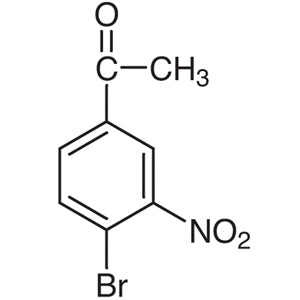
4'-Bromo-3'-nitroacetophenone TCI B3383
Regular price From Rp 664.650,00Regular price -
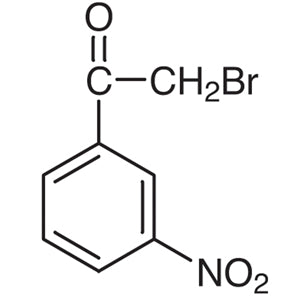
2-Bromo-3'-nitroacetophenone TCI B2855
Regular price From Rp 610.050,00Regular price -
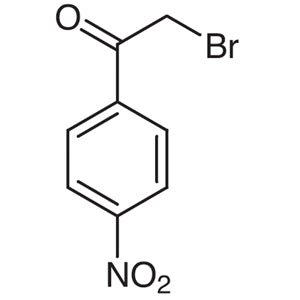
2-Bromo-4'-nitroacetophenone TCI N0473
Regular price From Rp 584.850,00Regular price -
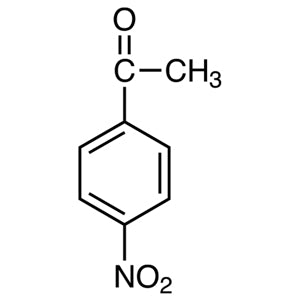
4'-Nitroacetophenone TCI N0111
Regular price From Rp 505.050,00Regular price