4,4'-Diamino-3,3'-dimethyldiphenylmethane is a chemical compound widely used in laboratory settings for polymer and macromolecule synthesis. As a key reagent in materials science, it plays a crucial role in the development of advanced chemical materials. Its unique molecular structure enables it to act as a building block for various complex chemical compounds. This compound is particularly valuable in the preparation of polymers such as epoxy resins and polyurethanes, where its reactivity and chemical stability are essential. Due to its versatility, it is frequently employed in chemical reactions that require high reactivity and the formation of strong chemical bonds.
The compound's ability to form covalent bonds with functional groups like amines and hydroxyls makes it highly desirable in polymerization processes. Its chemical stability under specific conditions ensures reliable performance in laboratory experiments. The reactivity of 4,4'-Diamino-3,3'-dimethyldiphenylmethane allows it to participate in a wide range of chemical reactions, making it a preferred choice for researchers working on polymer synthesis and material development. Its structural characteristics also enable the creation of diverse polymer structures, enhancing its utility in both academic and industrial research.
In Indonesian laboratories, this compound is commonly used in chemical research, especially in the fields of materials science and polymer chemistry. It is a key component in the development of new materials and the testing of mechanical properties. Many research institutions and universities in Indonesia rely on this compound for its reliability and effectiveness in various chemical processes. Its widespread use highlights its importance in advancing chemical research and innovation in the region.
TCI brochures (PDF)
- Raw Materials for Polyimide Synthesis 2026-05-11 · p. 5
- Monomers 2025-05-28 · p. 31
Related TCI products
- TCI T1419 55011-44-4 3,7-Diamino-2,8-dimethyldibenzothiophene Sulfone (contains 2,6-Dimethyl isomer)
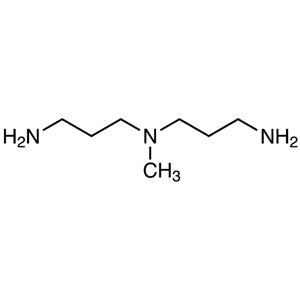
- TCI B0821 105-83-9 3,3'-Diamino-N-methyldipropylamine
- TCI M1085 4097-88-5 2,2'-Diamino-N-methyldiethylamine
- TCI D3390 3365-85-3 4,4''-Diamino-p-terphenyl
- TCI D2102 811-93-8 1,2-Diamino-2-methylpropane
- TCI D1658 54628-21-6 4,4'-Diamino-2,2'-dimethylbibenzyl
- Polymer synthesis and development, as it serves as a key monomer in the creation of epoxy and polyurethane materials.
- Chemical bonding studies, due to its ability to form strong covalent bonds with functional groups such as amines and hydroxyls.
- Material science research, where it is used to develop new polymers with specific mechanical and chemical properties.
- Cross-linking applications, as its structure allows for the formation of complex polymer networks.
- Industrial chemical processes, where it is employed in the production of adhesives and coatings requiring high chemical stability.
| Brand | TCI |
|---|---|
| CAS number | 838-88-0 |
| Molecular formula | — |
| Purity | — |
| Category | Materials Science > Polymer/Macromolecule Reagents > Monomers |
| Pack sizes | Available in various quantities as per standard laboratory requirements |
| Physical form | Solid, typically in powder or crystalline form |
| Storage | Store in a cool, dry place away from direct sunlight and moisture |
This compound should be stored in a cool, dry environment to maintain its chemical stability. It is recommended to keep it in a sealed container to prevent exposure to moisture and air. Suitable containers include glass or high-density polyethylene vessels that are resistant to chemical degradation. Laboratory personnel should handle the compound with care, using appropriate personal protective equipment such as gloves and safety goggles. It is important to ensure that the storage area is well-ventilated to minimize any potential risks associated with chemical exposure. Proper labeling of containers is essential for safe handling and to prevent accidental misuse.
—
Produk Terkait
-
3,7-Diamino-2,8-dimethyldibenzothiopheneSulfone(contains2,6-Dimethylisomer) TCI T1419
Regular price Rp 5.326.650,00Regular priceRp 3.740.100,00Sale price Rp 5.326.650,00 -
3,3'-Diamino-N-methyldipropylamine TCI B0821
Regular price From Rp 477.750,00Regular priceRp 333.900,00Sale price From Rp 477.750,00 -
2,2'-Diamino-N-methyldiethylamine TCI M1085
Regular price Rp 16.773.750,00Regular priceRp 11.729.550,00Sale price Rp 16.773.750,00 -
4,4''-Diamino-p-terphenyl TCI D3390
Regular price From Rp 3.232.950,00Regular priceRp 2.276.400,00Sale price From Rp 3.232.950,00 -
1,2-Diamino-2-methylpropane TCI D2102
Regular price From Rp 2.571.450,00Regular priceRp 1.797.600,00Sale price From Rp 2.571.450,00 -
4,4'-Diamino-2,2'-dimethylbibenzyl TCI D1658
Regular price Rp 4.001.550,00Regular priceRp 2.814.000,00Sale price Rp 4.001.550,00 -
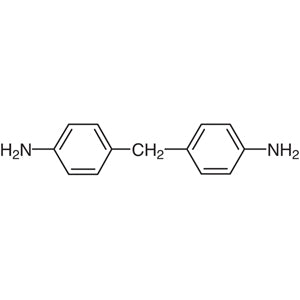
4,4'-Diaminodiphenylmethane TCI M0220
Regular price From Rp 582.750,00Regular priceRp 423.150,00Sale price From Rp 582.750,00 -
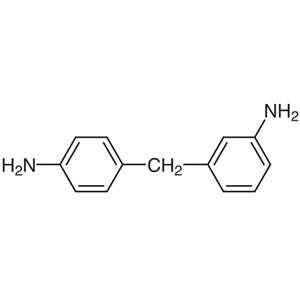
3,4'-Diaminodiphenylmethane TCI D1684
Regular price From Rp 1.272.600,00Regular priceRp 905.100,00Sale price From Rp 1.272.600,00