![2,11-Dithia[3.3]paracyclophane (CAS 28667-63-2) - TCI D2210 - AMI Scientific](http://amiscientific.com/cdn/shop/files/TCI2510D2210.jpg?v=1771057828&width=1946)
![2,11-Dithia[3.3]paracyclophane (CAS 28667-63-2) - TCI D2210 - AMI Scientific](http://amiscientific.com/cdn/shop/files/TCI2510D2210.jpg?v=1771057828&width=1445)
TCI D2210 2,11-Dithia[3.3]paracyclophane is a macrocyclic compound belonging to the cyclophane family — molecules in which two benzene rings are held facing one another by connecting bridges. In this compound, the two aromatic rings are joined by two bridges, each containing a single sulfur atom. This stacked arrangement produces a rigid three-dimensional geometry and a distinctive molecular cavity, making the material an important building block for laboratories working in supramolecular chemistry, coordination chemistry, and the synthesis of ring-strained molecules.
Two properties account for the strong interest in this compound. First, the two sulfur atoms in the bridges act as soft donor atoms capable of coordinating transition metal ions, which allows the compound to be used as a macrocyclic thioether ligand in complexation and chelation research. Second, those same sulfur bridges can be removed through sulfur extrusion reactions, making this compound a classic precursor to carbon-bridged cyclophanes that are considerably more difficult to prepare by direct synthesis. The close proximity of the two aromatic rings also gives rise to transannular interactions that are of interest for both spectroscopic and chemical study.
In Indonesian laboratories, this reagent is typically used in university and institutional research settings rather than in routine analysis. It is generally handled at small scale on the synthetic bench, where researchers in organic and inorganic chemistry groups employ it in host–guest and ligand design studies, in the preparation of strained aromatic frameworks, and in graduate-level and postgraduate research projects exploring structure–property relationships in rigid aromatic systems.
TCI brochures (PDF)
- Titration Reagents and TLC Stains 2026-05-07 · p. 9
Related TCI products
- TCI T1378 74043-83-7 1,6,20,25-Tetraaza[6.1.6.1]paracyclophane
- TCI D4298 6571-51-3 1,11-Dioxa[11]paracyclophane
- TCI P1165 1633-22-3 [2.2]Paracyclophane
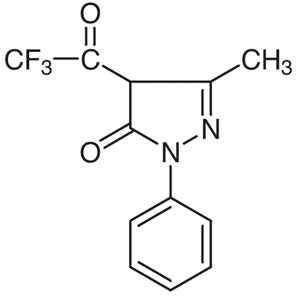
- TCI T1286 1691-93-6 4-Trifluoroacetyl-3-methyl-1-phenyl-5-pyrazolone
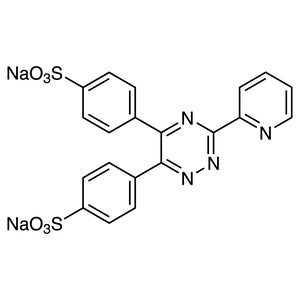
- TCI P0830 28048-33-1 3-(2-Pyridyl)-5,6-bis(4-sulfophenyl)-1,2,4-triazine Disodium Salt
- TCI P0811 298-07-7 Bis(2-ethylhexyl) Hydrogen Phosphate [for Rare Metals Extraction]
- Macrocyclic thioether ligand studies — the two bridging sulfur atoms serve as soft donor sites that coordinate transition metal ions within a rigid, preorganised macrocyclic framework.
- Sulfur extrusion synthesis — the sulfur bridges can be removed to deliver carbon-bridged cyclophanes that are considerably harder to obtain through direct synthetic routes.
- Supramolecular and host–guest chemistry — the distinctive molecular cavity formed between the two stacked benzene rings provides a defined binding environment for guest species.
- Coordination and complexation research — the compound acts as a well-defined macrocyclic ligand for investigating metal binding behaviour, complex stability, and chelation in laboratory studies.
- Strained-molecule and transannular interaction studies — the close facing aromatic rings allow researchers to examine ring strain and transannular effects spectroscopically and chemically.
| Brand | TCI |
|---|---|
| CAS number | 28667-63-2 |
| Molecular formula | — |
| Purity | — |
| Category | Chemistry > Synthetic Reagents > Chelation/Complexation Compounds |
| Pack sizes | available in standard TCI research-scale packaging; please confirm the required size when ordering |
| Physical form | — |
| Storage | store in a closed original container in a cool, dry place away from light |
- Chemical name: 2,11-Dithia[3.3]paracyclophane
- Product code: D2210
Store the compound in its original tightly closed container in a cool, dry, well-ventilated area, protected from light and away from strong oxidising agents and sources of ignition. Glass containers with sealed caps are appropriate for storage and for transferring portions to the reaction vessel. As with all sulfur-containing organic reagents, weigh and handle the material in a fume hood to avoid inhalation of dust or vapours, and wear a laboratory coat, chemical-resistant gloves, and safety goggles. Avoid contact with skin and eyes, keep the container closed when not in use to limit moisture uptake, and collect residues as chemical waste in accordance with your laboratory's waste procedures. Always consult the manufacturer's safety data sheet before first use.
—
Produk Terkait
-
1,6,20,25-Tetraaza[6.1.6.1]paracyclophane TCI T1378
Regular price Rp 4.479.300,00Regular price -
1,11-Dioxa[11]paracyclophane TCI D4298
Regular price From Rp 2.650.200,00Regular price -
[2.2]Paracyclophane TCI P1165
Regular price Rp 2.782.500,00Regular price -
4-Trifluoroacetyl-3-methyl-1-phenyl-5-pyrazolone TCI T1286
Regular price Rp 2.730.000,00Regular price -
3-(2-Pyridyl)-5,6-bis(4-sulfophenyl)-1,2,4-triazineDisodiumSalt TCI P0830
Regular price Rp 1.035.300,00Regular price -
Bis(2-ethylhexyl)HydrogenPhosphate[forRareMetalsExtraction] TCI P0811
Regular price From Rp 769.650,00Regular price -
Ammonium1-Pyrrolidinecarbodithioate[ReagentforAtomicAbsorptionAnalysis] TCI P0644
Regular price From Rp 1.298.850,00Regular price -
NeocuproineHydrochlorideMonohydrate TCI N0423
Regular price From Rp 795.900,00Regular price
![74043-83-7 1,6,20,25-Tetraaza[6.1.6.1]paracyclophane - AMI Scientific](http://amiscientific.com/cdn/shop/files/TCI2510T1378.jpg?v=1769143563&width=533)
![1,11-Dioxa[11]paracyclophane (CAS 6571-51-3) - TCI D4298 - AMI Scientific](http://amiscientific.com/cdn/shop/files/TCI2510D4298.jpg?v=1769141977&width=533)
![1633-22-3 [2.2]Paracyclophane - AMI Scientific](http://amiscientific.com/cdn/shop/files/TCI2510P1165.jpg?v=1767134397&width=533)
![298-07-7 Bis(2-ethylhexyl) Hydrogen Phosphate [for Rare Metals Extraction] - AMI Scientific](http://amiscientific.com/cdn/shop/files/TCI2510P0811.jpg?v=1767133767&width=533)
![5108-96-3 Ammonium 1-Pyrrolidinecarbodithioate [Reagent for Atomic Absorption Analysis] - AMI Scientific](http://amiscientific.com/cdn/shop/files/TCI2510P0644.jpg?v=1769057312&width=533)