
![298-07-7 Bis(2-ethylhexyl) Hydrogen Phosphate [for Rare Metals Extraction] - AMI Scientific](http://amiscientific.com/cdn/shop/files/TCI2510P0811.jpg?v=1767133767&width=1946)
![298-07-7 Bis(2-ethylhexyl) Hydrogen Phosphate [for Rare Metals Extraction] - AMI Scientific](http://amiscientific.com/cdn/shop/files/TCI2510P0811.jpg?v=1767133767&width=1445)
Bis(2-ethylhexyl) Hydrogen Phosphate is a chemical compound widely used in laboratory settings for its role in the extraction of rare metals. This compound serves as a key reagent in various chemical reactions and is particularly valuable in processes that require selective extraction of metals such as manganese, lead, and nickel. Its molecular structure, featuring two 2-ethylhexyl groups attached to a central phosphorus atom, allows it to act as a versatile ligand in complex chemical systems. Due to its chemical stability and controlled reactivity, it is a preferred choice for researchers working on metal extraction and purification techniques.
The compound's non-polar nature makes it highly soluble in organic solvents like ethyl acetate and chloroform, which is essential for its application in solvent-based extraction processes. This solubility profile enables it to interact effectively with metal ions in solution, facilitating their separation from other components. Additionally, its thermal and chemical stability ensures that it remains effective under a wide range of laboratory conditions. These properties make it a reliable and efficient reagent for various chemical applications.
In Indonesian laboratories, Bis(2-ethylhexyl) Hydrogen Phosphate is commonly used in research focused on rare metal extraction and chemical synthesis. Its availability and cost-effectiveness make it a popular choice for both academic and industrial research. The compound is frequently employed in analytical and preparative experiments, supporting advancements in materials science and environmental chemistry. Its consistent performance and reliability have made it an essential component in the chemical toolkit of Indonesian laboratories.
TCI brochures (PDF)
- Metal Extractants 2025-05-29 · p. 1
- Titration Reagents and TLC Stains 2026-05-07 · p. 9
Related TCI products
- TCI P1068 7057-92-3 Didodecyl Hydrogen Phosphate
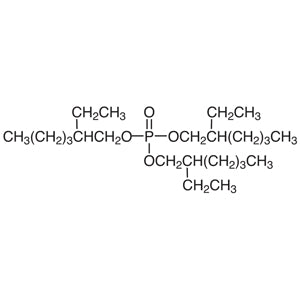
- TCI P1022 78-42-2 Tris(2-ethylhexyl) Phosphate
- TCI P0261 12645-31-7 2-Ethylhexyl Phosphate (Mono- and Di- Ester mixture)
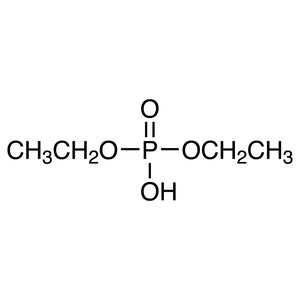
- TCI D6132 598-02-7 Diethyl Hydrogen Phosphate
- TCI D6108 813-78-5 Dimethyl Hydrogen Phosphate
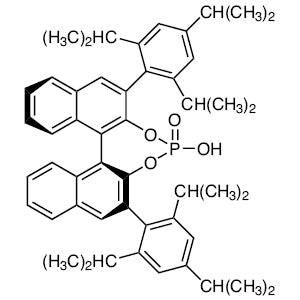
- TCI B6259 874948-63-7 (S)-3,3'-Bis(2,4,6-triisopropylphenyl)-1,1'-binaphthyl-2,2'-diyl Hydrogen Phosphate
- Rare Metal Extraction: This compound is ideal for extracting metals such as manganese, lead, and nickel due to its ability to form stable complexes with metal ions.
- Organic Solvent Compatibility: Its solubility in organic solvents like ethyl acetate and chloroform makes it suitable for use in solvent-based extraction processes.
- Chemical Stability: The compound's thermal and chemical stability allows it to be used in a wide range of laboratory conditions without degradation.
- Ligand Functionality: Its molecular structure enables it to act as a versatile ligand in complex chemical systems, supporting various synthetic and analytical applications.
- Preparative Chemistry: It is frequently used in preparative experiments where controlled reactivity and solubility are required for efficient metal separation.
| Brand | TCI |
|---|---|
| CAS number | 298-07-7 |
| Molecular formula | — |
| Purity | — |
| Category | Chemistry > Building Blocks > Non-Heterocyclic Building Blocks |
| Pack sizes | Available in various quantities as per standard laboratory supply |
| Physical form | Liquid |
| Storage | Store in a cool, dry place away from direct sunlight and incompatible materials |
Bis(2-ethylhexyl) Hydrogen Phosphate should be stored in a cool, dry environment to maintain its chemical stability. It is recommended to keep the compound in a sealed container to prevent exposure to moisture and air, which may affect its performance. The container should be made of a material compatible with the compound, such as glass or high-density polyethylene. In laboratory settings, it should be handled with appropriate personal protective equipment, including gloves and safety goggles, to ensure safe usage. Proper labeling and storage away from incompatible substances are essential to prevent accidental reactions. Regular inspection of storage conditions is advised to ensure the compound remains in optimal condition for use.
—
Produk Terkait
-
DidodecylHydrogenPhosphate TCI P1068
Regular price From Rp 2.386.650,00Regular price -
Tris(2-ethylhexyl)Phosphate TCI P1022
Regular price From Rp 477.750,00Regular price -
2-EthylhexylPhosphate(Mono-andDi-Estermixture) TCI P0261
Regular price From Rp 664.650,00Regular price -
DiethylHydrogenPhosphate TCI D6132
Regular price Rp 2.121.000,00Regular price -
DimethylHydrogenPhosphate TCI D6108
Regular price Rp 4.957.050,00Regular price -
(S)-3,3'-Bis(2,4,6-triisopropylphenyl)-1,1'-binaphthyl-2,2'-diylHydrogenPhosphate TCI B6259
Regular price Rp 7.234.500,00Regular price -
TripropylPhosphate TCI T4247
Regular price From Rp 1.644.300,00Regular price -
Bis(4-nitrophenyl)Phosphate[forPhosphodiesteraseSubstrate] TCI B1098
Regular price From Rp 5.327.700,00Regular price



![645-15-8 Bis(4-nitrophenyl) Phosphate [for Phosphodiesterase Substrate] - AMI Scientific](http://amiscientific.com/cdn/shop/files/TCI2510B1098.jpg?v=1768193282&width=533)