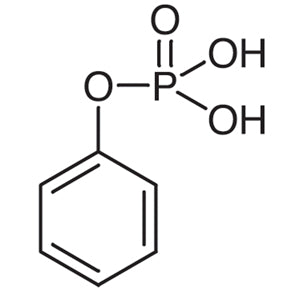
Bis(4-nitrophenyl) phosphate is a chemical compound used as a substrate for phosphodiesterase enzymes. It plays a crucial role in biochemical and chemical experiments, particularly in studies involving enzymatic activity. This compound is widely utilized in laboratories for its ability to interact with specific enzymes, making it an essential tool in research that requires controlled reactivity. Its stability and predictable behavior under various conditions make it a reliable choice for scientific applications.
The compound's chemical properties, including its molecular structure and controlled reactivity, make it a preferred choice for researchers. Its ability to participate in biochemical reactions with enzymes such as phosphodiesterase allows for precise experimental control. The compound's stability under standard laboratory conditions ensures consistent results, which is vital for reproducibility in scientific studies. These characteristics contribute to its popularity in both academic and industrial research settings.
In Indonesian laboratories, Bis(4-nitrophenyl) phosphate is commonly used in biochemical, pharmacological, and organic chemistry research. It supports experiments that require specific substrates and controlled enzymatic activity. Its application spans various research fields, making it a valuable resource for scientists and researchers in Indonesia. The compound's versatility and reliability make it a staple in many laboratory workflows.
Related TCI products
- Biochemical research utilizes this compound to study phosphodiesterase enzyme activity due to its specific reactivity with these enzymes.
- Pharmacological studies use it to investigate enzyme inhibition and substrate interactions in drug development processes.
- Organic chemistry experiments incorporate it as a building block for synthesizing more complex molecules with controlled reactivity.
- Enzymatic assays benefit from its role as a standard substrate for measuring enzyme activity in controlled environments.
- Analytical chemistry applications rely on its stability and reactivity for testing and characterizing enzyme mechanisms.
| Brand | TCI |
|---|---|
| CAS number | 645-15-8 |
| Molecular formula | — |
| Purity | — |
| Category | Chemistry > Building Blocks > Non-Heterocyclic Building Blocks |
| Pack sizes | Available in various quantities as per supplier specifications |
| Physical form | Solid, typically in crystalline form |
| Storage | Store in a cool, dry place away from direct sunlight |
This compound should be stored in a cool, dry environment to maintain its stability and prevent degradation. It is recommended to use airtight containers to minimize exposure to moisture and air. Due to its chemical nature, it should be handled with care, using appropriate personal protective equipment such as gloves and safety goggles. Avoid contact with skin and eyes, and ensure proper ventilation in the workspace. Keep it away from incompatible substances to prevent unwanted reactions. Proper storage and handling are essential to ensure the compound remains effective and safe for use in laboratory settings.
—
Produk Terkait
-
Tris(4-nitrophenyl)Phosphate TCI T1002
Regular price Rp 3.815.700,00Regular priceRp 2.683.800,00Sale price Rp 3.815.700,00 -
4-NitrophenylDihydrogenPhosphate TCI N1241
Regular price Rp 4.399.500,00Regular priceRp 3.092.250,00Sale price Rp 4.399.500,00 -
Disodium4-NitrophenylPhosphateHexahydrate TCI N0241
Regular price Rp 769.650,00Regular priceRp 553.350,00Sale price Rp 769.650,00 -
TripropylPhosphate TCI T4247
Regular price From Rp 1.696.800,00Regular priceRp 1.202.250,00Sale price From Rp 1.696.800,00 -
PhenylPhosphate TCI B0026
Regular price From Rp 4.293.450,00Regular priceRp 3.017.700,00Sale price From Rp 4.293.450,00 -
PotassiumDi-tert-butylPhosphate TCI P2797
Regular price Rp 1.776.600,00Regular priceRp 1.257.900,00Sale price Rp 1.776.600,00 -
DibenzylPhosphate TCI P1120
Regular price From Rp 1.801.800,00Regular priceRp 1.275.750,00Sale price From Rp 1.801.800,00 -
DidodecylHydrogenPhosphate TCI P1068
Regular price From Rp 2.439.150,00Regular priceRp 1.720.950,00Sale price From Rp 2.439.150,00