Tris(4-nitrophenyl) Phosphate is a chemical compound widely used in laboratory settings, particularly in organic synthesis and chemical reactions that require phosphate ester functionality. It serves as a versatile reagent in the formation of esters, acting as a coupling agent in substitution reactions, and functioning as a reaction modifier in controlled environments. Its role is critical in facilitating the development of complex organic molecules and enabling precise chemical transformations. This compound is essential in various chemical processes where stability and reactivity are key factors.
The compound's chemical stability and controlled reactivity make it a preferred choice for researchers. Its molecular structure consists of a phosphate group bonded to three nitrophenyl groups, contributing to its unique chemical behavior. The non-volatile nature of Tris(4-nitrophenyl) Phosphate ensures ease of handling and application in diverse laboratory conditions. These properties allow it to be used effectively in reactions requiring high stability and controlled environments, making it a reliable reagent in both academic and industrial research.
In Indonesian laboratories, Tris(4-nitrophenyl) Phosphate is commonly used in chemical research, especially in higher education institutions and research organizations. Its application spans across various synthetic processes and analytical methods, supporting both teaching and research activities. Its reliability and effectiveness make it a standard component in the chemical laboratories of Indonesia.
Related TCI products
- TCI B1098 645-15-8 Bis(4-nitrophenyl) Phosphate [for Phosphodiesterase Substrate]
- TCI N1241 330-13-2 4-Nitrophenyl Dihydrogen Phosphate
- TCI N0241 333338-18-4 Disodium 4-Nitrophenyl Phosphate Hexahydrate
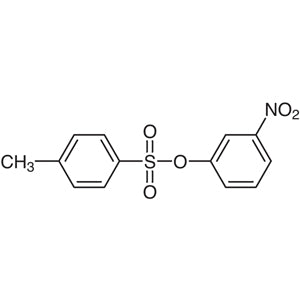
- TCI T1210 3899-90-9 3-Nitrophenyl p-Toluenesulfonate
- TCI B2960 1821-27-8 Bis(4-nitrophenyl)amine
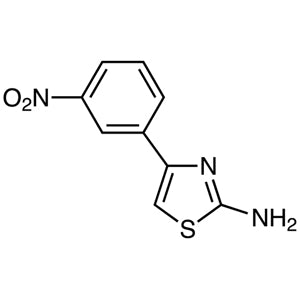
- TCI A3086 57493-24-0 2-Amino-4-(3-nitrophenyl)thiazole
- Organic synthesis where phosphate ester functionality is required for the formation of ester bonds in complex molecule development.
- Substitution reactions where the compound acts as a coupling agent to facilitate the transfer of functional groups.
- Controlled reaction environments where the compound is used as a reaction modifier to adjust the reaction conditions precisely.
- Analytical chemistry applications where its stability and reactivity are utilized in the development of chemical assays and detection methods.
- Teaching laboratories where it is used as an instructional material to demonstrate chemical reactions and functional group transformations.
| Brand | TCI |
|---|---|
| CAS number | 3871-20-3 |
| Molecular formula | — |
| Purity | — |
| Category | Chemistry > Building Blocks > Non-Heterocyclic Building Blocks |
| Pack sizes | — |
| Physical form | — |
| Storage | Store in a cool, dry place away from moisture and direct sunlight |
Tris(4-nitrophenyl) Phosphate should be stored in a cool, dry place, away from moisture and direct sunlight to maintain its chemical stability. It is recommended to use airtight containers made of materials that are chemically inert to prevent any unwanted reactions. General laboratory precautions include handling the compound with appropriate personal protective equipment, such as gloves and safety goggles, to ensure safety during use. Due to its non-volatile nature, it is less likely to evaporate, but proper ventilation should still be maintained in the laboratory. The compound should be kept in a secure location to prevent accidental exposure and ensure safe handling practices are followed at all times.
—
Produk Terkait
-
Bis(4-nitrophenyl)Phosphate[forPhosphodiesteraseSubstrate] TCI B1098
Regular price From Rp 5.327.700,00Regular price -
4-NitrophenylDihydrogenPhosphate TCI N1241
Regular price Rp 4.399.500,00Regular priceRp 3.092.250,00Sale price Rp 4.399.500,00 -
Disodium4-NitrophenylPhosphateHexahydrate TCI N0241
Regular price Rp 769.650,00Regular priceRp 553.350,00Sale price Rp 769.650,00 -
3-Nitrophenylp-Toluenesulfonate TCI T1210
Regular price Rp 4.611.600,00Regular priceRp 3.224.550,00Sale price Rp 4.611.600,00 -
Bis(4-nitrophenyl)amine TCI B2960
Regular price Rp 3.738.000,00Regular priceRp 2.613.450,00Sale price Rp 3.738.000,00 -
2-Amino-4-(3-nitrophenyl)thiazole TCI A3086
Regular price From Rp 664.650,00Regular price -
4-NitrophenylButyrate TCI N1316
Regular price Rp 1.988.700,00Regular priceRp 1.390.200,00Sale price Rp 1.988.700,00 -
(E)-4-(4-Nitrophenyl)but-3-en-2-one TCI N1263
Regular price Rp 2.041.200,00Regular priceRp 1.442.700,00Sale price Rp 2.041.200,00
![645-15-8 Bis(4-nitrophenyl) Phosphate [for Phosphodiesterase Substrate] - AMI Scientific](http://amiscientific.com/cdn/shop/files/TCI2510B1098.jpg?v=1768193282&width=533)