Bis(4-nitrophenyl)amine is a chemical compound widely used in organic reactions and the synthesis of complex molecules. As a key building block in chemical research, it serves as an intermediate in various synthetic pathways, particularly in the formation of heterocyclic compounds. Its structural versatility and reactivity make it a valuable resource in both academic and industrial laboratory settings. In Indonesian laboratories, this compound is essential for advancing research in organic chemistry and molecular synthesis, supporting the development of new compounds and functional materials.
The compound's unique properties, including the presence of nitro groups and a nitrogen atom, contribute to its reactivity and selectivity in chemical reactions. The nitro groups exhibit strong electron-withdrawing effects, influencing the reactivity of the molecule in electrophilic and nucleophilic reactions. These characteristics allow chemists to control reaction pathways with precision, making it an ideal choice for applications requiring high specificity. The stability of its molecular structure also ensures consistent performance in various synthetic processes, enhancing its reliability in laboratory environments.
In Indonesian laboratories, Bis(4-nitrophenyl)amine is commonly used in research focused on the synthesis of nitrogen-containing compounds and aromatic derivatives. It plays a crucial role in the development of pharmaceuticals, materials science, and chemical engineering. Its application spans from basic research to applied projects, supporting innovation in both academic and industrial chemical processes. The compound's adaptability and chemical behavior make it a preferred material for advanced chemical experimentation and product development.
Related TCI products
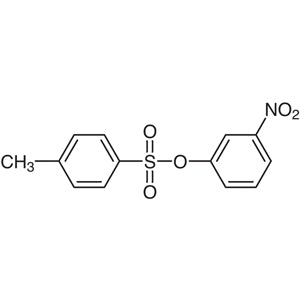
- TCI T1210 3899-90-9 3-Nitrophenyl p-Toluenesulfonate
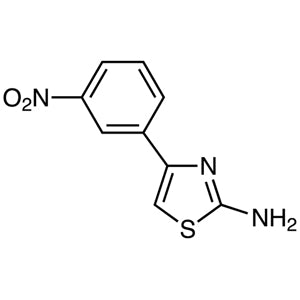
- TCI A3086 57493-24-0 2-Amino-4-(3-nitrophenyl)thiazole
- TCI T1002 3871-20-3 Tris(4-nitrophenyl) Phosphate
- TCI N1316 2635-84-9 4-Nitrophenyl Butyrate
- TCI N1263 30625-98-0 (E)-4-(4-Nitrophenyl)but-3-en-2-one
- TCI N1228 2403-53-4 2-(4-Nitrophenyl)-1,3-dioxolane
- Organic synthesis of heterocyclic compounds due to its reactivity and structural versatility.
- Development of pharmaceuticals and functional materials through controlled chemical reactions.
- Research on aromatic compound reactivity and electrophilic substitution mechanisms.
- Creation of nitrogen-containing molecules for use in chemical engineering and material science.
- Advanced chemical experimentation requiring high precision and controlled reaction conditions.
| Brand | TCI |
|---|---|
| CAS number | 1821-27-8 |
| Molecular formula | — |
| Purity | — |
| Category | Chemistry > Building Blocks > Non-Heterocyclic Building Blocks |
| Pack sizes | Available in various quantities as per supplier specifications |
| Physical form | Solid (as per standard chemical properties) |
| Storage | Store in a cool, dry place away from direct sunlight and incompatible materials. |
Bis(4-nitrophenyl)amine should be stored in a cool, dry environment to maintain its chemical stability. It is recommended to keep the compound in a sealed container to prevent exposure to moisture and air. Due to its chemical nature, it should be stored away from incompatible substances such as strong oxidizers or reducing agents. Proper labeling and safe handling practices are essential to ensure laboratory safety. Regular monitoring of storage conditions ensures the compound remains in optimal condition for use in chemical experiments. Always follow standard laboratory safety protocols when handling this material.
—
Produk Terkait
-
3-Nitrophenylp-Toluenesulfonate TCI T1210
Regular price Rp 4.611.600,00Regular priceRp 3.224.550,00Sale price Rp 4.611.600,00 -
2-Amino-4-(3-nitrophenyl)thiazole TCI A3086
Regular price From Rp 717.150,00Regular priceRp 516.600,00Sale price From Rp 717.150,00 -
Tris(4-nitrophenyl)Phosphate TCI T1002
Regular price Rp 3.815.700,00Regular priceRp 2.683.800,00Sale price Rp 3.815.700,00 -
4-NitrophenylButyrate TCI N1316
Regular price From Rp 1.988.700,00Regular priceRp 1.390.200,00Sale price From Rp 1.988.700,00 -
(E)-4-(4-Nitrophenyl)but-3-en-2-one TCI N1263
Regular price From Rp 2.041.200,00Regular priceRp 1.442.700,00Sale price From Rp 2.041.200,00 -
2-(4-Nitrophenyl)-1,3-dioxolane TCI N1228
Regular price From Rp 2.491.650,00Regular priceRp 1.757.700,00Sale price From Rp 2.491.650,00 -
2-(2-Nitrophenyl)propan-1-ol TCI N1133
Regular price Rp 5.539.800,00Regular priceRp 3.873.450,00Sale price Rp 5.539.800,00 -
1-(2-Nitrophenyl)ethanol TCI N1132
Regular price From Rp 1.881.600,00Regular priceRp 1.315.650,00Sale price From Rp 1.881.600,00