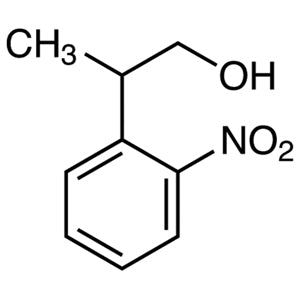
2-(2-Nitrophenyl)propan-1-ol is a chemical compound widely used as a building block in the synthesis of complex molecules. It plays a vital role in organic reactions where hydroxyl and nitro groups are essential to the molecular structure. In laboratory settings, this compound is a key component for the development of new substances, including pharmaceuticals and industrial chemicals. Its structural stability and reactivity make it a versatile reagent in various chemical processes.
This compound is preferred due to its controlled chemical properties, allowing for predictable outcomes in synthetic reactions. Its ability to participate in substitution, reduction, and nucleophilic reactions makes it a valuable tool for chemists. The compound’s reactivity and stability provide researchers with the flexibility needed to design and synthesize target molecules with specific structures. Its reliability in different reaction conditions ensures consistent results in laboratory experiments.
In Indonesian laboratories, 2-(2-Nitrophenyl)propan-1-ol is commonly used in both pure and applied chemistry research. It is a staple in academic and research institutions focused on pharmaceutical, material, and environmental chemistry. Its availability in small pack sizes and solid form makes it practical for laboratory use, supporting a wide range of experimental needs. Its reliability and versatility make it a preferred choice for researchers aiming to develop new compounds with precise molecular structures.
TCI brochures (PDF)
- Photolabile Protecting Groups for Caged Bioactive Molecules 2025-12-25 · p. 1
- Protecting Agents 2025-03-25 · p. 12
Related TCI products
- Pharmaceutical research utilizes this compound for the synthesis of drug molecules due to its reactivity and structural versatility.
- Environmental chemistry studies benefit from its use in the development of compounds for pollution control and remediation.
- Material science applications leverage its chemical properties to create new polymers and functional materials.
- Organic synthesis experiments rely on its ability to participate in various reaction mechanisms, enhancing the efficiency of synthetic pathways.
- Academic teaching laboratories use it as a practical example for demonstrating nucleophilic and substitution reactions in undergraduate courses.
| Brand | TCI |
|---|---|
| CAS number | 64987-77-5 |
| Molecular formula | — |
| Purity | — |
| Category | Chemistry > Building Blocks > Non-Heterocyclic Building Blocks |
| Pack sizes | Available in small quantities suitable for laboratory use |
| Physical form | Solid |
| Storage | Store in a cool, dry place away from direct sunlight |
This compound should be stored in a cool, dry environment to maintain its chemical stability. It is recommended to keep it in a sealed container to prevent moisture absorption. Due to its reactivity, it should be handled with care and stored away from incompatible substances. Proper ventilation is essential when working with this material to ensure safety. Laboratory personnel should wear appropriate personal protective equipment, such as gloves and safety goggles, when handling the compound. Regular monitoring of storage conditions is advised to ensure the integrity of the material remains intact.
—
Produk Terkait
-
1-(2-Nitrophenyl)ethanol TCI N1132
Regular price From Rp 1.881.600,00Regular priceRp 1.315.650,00Sale price From Rp 1.881.600,00 -
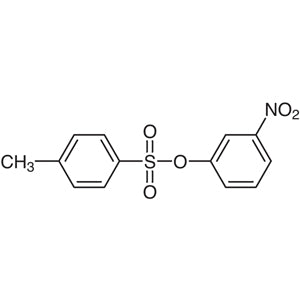
3-Nitrophenylp-Toluenesulfonate TCI T1210
Regular price Rp 4.611.600,00Regular priceRp 3.224.550,00Sale price Rp 4.611.600,00 -
Bis(4-nitrophenyl)amine TCI B2960
Regular price From Rp 3.738.000,00Regular priceRp 2.613.450,00Sale price From Rp 3.738.000,00 -
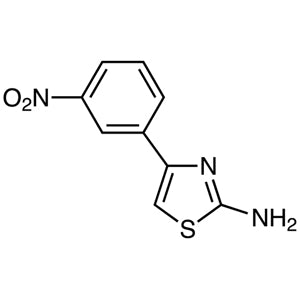
2-Amino-4-(3-nitrophenyl)thiazole TCI A3086
Regular price From Rp 717.150,00Regular priceRp 516.600,00Sale price From Rp 717.150,00 -
Tris(4-nitrophenyl)Phosphate TCI T1002
Regular price Rp 3.815.700,00Regular priceRp 2.683.800,00Sale price Rp 3.815.700,00 -
4-NitrophenylButyrate TCI N1316
Regular price From Rp 1.988.700,00Regular priceRp 1.390.200,00Sale price From Rp 1.988.700,00 -
(E)-4-(4-Nitrophenyl)but-3-en-2-one TCI N1263
Regular price From Rp 2.041.200,00Regular priceRp 1.442.700,00Sale price From Rp 2.041.200,00 -
2-(4-Nitrophenyl)-1,3-dioxolane TCI N1228
Regular price From Rp 2.491.650,00Regular priceRp 1.757.700,00Sale price From Rp 2.491.650,00