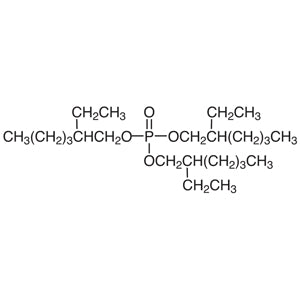
Phenyl Phosphate (TCI B0026), with CAS number 701-64-4, is a chemical compound widely used in laboratory settings for its versatile reactivity in organic synthesis. This compound serves as a key building block in the creation of various organic molecules, particularly in reactions involving phosphorylation. Its molecular structure consists of a phosphate group attached to a phenyl ring, making it a valuable reagent in the development of complex chemical structures. Due to its functional group, it is often utilized in synthetic pathways that require the introduction of phosphate functionalities into organic molecules.
Phenyl Phosphate is preferred for its chemical stability under controlled conditions, although it is sensitive to moisture and air exposure. Its distinct density and boiling point make it easier to isolate and purify during synthesis processes. These physical properties contribute to its efficiency in laboratory workflows, especially in applications requiring precise handling and separation techniques. The compound’s reactivity and stability under specific conditions make it a reliable choice for researchers working in organic chemistry.
In Indonesian laboratories, Phenyl Phosphate is commonly used in organic chemistry research, particularly in pharmaceutical, material science, and analytical chemistry fields. Its availability and consistent quality make it a preferred choice for both academic and industrial research. Researchers and students in higher education institutions and research organizations rely on this compound for its reliability and effectiveness in various chemical reactions.
Related TCI products
- TCI T4247 513-08-6 Tripropyl Phosphate
- TCI B1098 645-15-8 Bis(4-nitrophenyl) Phosphate [for Phosphodiesterase Substrate]
- TCI T1002 3871-20-3 Tris(4-nitrophenyl) Phosphate
- TCI P2797 33494-80-3 Potassium Di-tert-butyl Phosphate
- TCI P1120 1623-08-1 Dibenzyl Phosphate
- TCI P1068 7057-92-3 Didodecyl Hydrogen Phosphate
- Organic synthesis applications benefit from Phenyl Phosphate due to its role in phosphorylation reactions and ester formation, enabling the creation of complex organic molecules.
- Pharmaceutical research utilizes this compound for the development of drug molecules that require phosphate functional groups, enhancing the compound’s relevance in medicinal chemistry.
- Material science applications leverage its reactivity to synthesize advanced materials with specific functional properties, supporting innovation in polymer and composite research.
- Analytical chemistry uses Phenyl Phosphate for the detection and quantification of phosphate-containing compounds, aiding in the analysis of environmental and biological samples.
- Educational institutions incorporate it into teaching labs to demonstrate phosphorylation mechanisms and functional group reactivity in organic chemistry experiments.
| Brand | TCI |
|---|---|
| CAS number | 701-64-4 |
| Molecular formula | — |
| Purity | — |
| Category | Chemistry > Building Blocks > Non-Heterocyclic Building Blocks |
| Pack sizes | — |
| Physical form | — |
| Storage | Requires storage in a dry, cool, and airtight environment to prevent moisture and air exposure. |
Phenyl Phosphate should be stored in a dry, cool, and airtight container to prevent moisture and air exposure, which can degrade its chemical integrity. It is recommended to use glass or high-density polyethylene containers to minimize reactivity with storage materials. In laboratory settings, it should be handled in a well-ventilated area to avoid inhalation of vapors. Proper personal protective equipment, including gloves and safety goggles, should be worn during handling. Due to its sensitivity, it is essential to avoid contact with water and to ensure that storage conditions remain stable and controlled. Regular monitoring of storage conditions is advised to maintain the compound’s effectiveness and safety in laboratory use.
—
Produk Terkait
-
TripropylPhosphate TCI T4247
Regular price Rp 1.696.800,00Regular priceRp 1.202.250,00Sale price Rp 1.696.800,00 -
Bis(4-nitrophenyl)Phosphate[forPhosphodiesteraseSubstrate] TCI B1098
Regular price From Rp 5.327.700,00Regular price -
Tris(4-nitrophenyl)Phosphate TCI T1002
Regular price Rp 3.815.700,00Regular priceRp 2.683.800,00Sale price Rp 3.815.700,00 -
PotassiumDi-tert-butylPhosphate TCI P2797
Regular price Rp 1.776.600,00Regular priceRp 1.257.900,00Sale price Rp 1.776.600,00 -
DibenzylPhosphate TCI P1120
Regular price Rp 1.801.800,00Regular priceRp 1.275.750,00Sale price Rp 1.801.800,00 -
DidodecylHydrogenPhosphate TCI P1068
Regular price Rp 2.439.150,00Regular priceRp 1.720.950,00Sale price Rp 2.439.150,00 -
Tris(2-ethylhexyl)Phosphate TCI P1022
Regular price Rp 530.250,00Regular priceRp 386.400,00Sale price Rp 530.250,00 -
DidecylPhosphate TCI P1011
Regular price Rp 1.272.600,00Regular priceRp 905.100,00Sale price Rp 1.272.600,00

![645-15-8 Bis(4-nitrophenyl) Phosphate [for Phosphodiesterase Substrate] - AMI Scientific](http://amiscientific.com/cdn/shop/files/TCI2510B1098.jpg?v=1768193282&width=533)