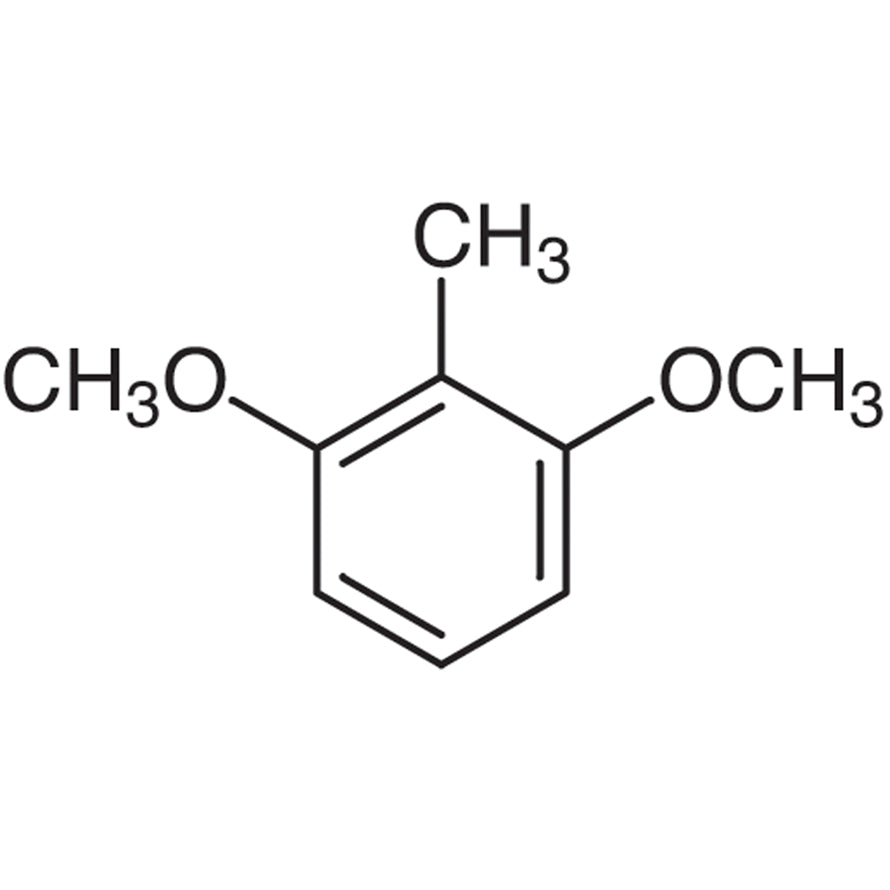
2,6-Dimethoxytoluene is a chemical compound widely used as a building block in various laboratory applications, particularly in the synthesis of complex organic molecules. This compound plays a crucial role in chemical reactions due to its ability to participate in multiple reaction types, including substitution, oxidation, and reduction. Its presence in laboratory settings is essential for the development of aromatic compounds and their derivatives, making it a versatile reagent in organic chemistry. The stability of its molecular structure allows it to maintain its integrity under various reaction conditions, contributing to the reliability of experimental outcomes.
One of the key properties that make 2,6-Dimethoxytoluene a preferred choice is its non-polar nature, which facilitates solubility in organic solvents such as ethyl acetate and chloroform. This solubility profile is highly advantageous in laboratory settings where reagents need to dissolve efficiently for effective chemical reactions. Additionally, its chemical reactivity enables it to interact with a wide range of functional groups, making it suitable for a variety of synthetic pathways. These characteristics ensure that it remains a reliable and efficient reagent in both research and industrial applications.
In Indonesian laboratories, 2,6-Dimethoxytoluene is commonly used in chemical research, including the synthesis of aromatic compounds, drug development, and the creation of new materials. Its availability, stability, and reactivity make it a go-to compound for researchers working on complex chemical processes. The compound's ability to participate in multiple reactions further enhances its value in laboratory environments where versatility and reliability are essential.
- Aromatic Compound Synthesis: 2,6-Dimethoxytoluene is ideal for synthesizing aromatic compounds due to its stable molecular structure and reactivity, allowing for the formation of complex aromatic derivatives.
- Drug Development: This compound is frequently used in pharmaceutical research as a building block for the synthesis of various medicinal compounds, contributing to the development of new therapeutic agents.
- Organic Chemistry Research: Its ability to participate in multiple reaction types makes it a valuable reagent in organic chemistry studies, supporting the exploration of new chemical pathways.
- Material Science Innovation: The compound's solubility in organic solvents and chemical reactivity make it suitable for the development of new materials with unique properties.
- Analytical Chemistry Applications: 2,6-Dimethoxytoluene is used in analytical processes to test the reactivity and solubility of other compounds, aiding in the characterization of chemical substances.
| Brand | TCI |
|---|---|
| CAS number | 5673-07-4 |
| Molecular formula | — |
| Purity | — |
| Category | Chemistry > Building Blocks > Non-Heterocyclic Building Blocks |
| Pack sizes | Available in various quantities as per supplier specifications |
| Physical form | Liquid |
| Storage | Store in a cool, dry place away from direct sunlight and incompatible materials |
2,6-Dimethoxytoluene should be stored in a cool, dry place, away from direct sunlight and sources of heat. It is recommended to keep the compound in a tightly sealed container to prevent evaporation and contamination. Due to its non-polar nature, it is advisable to use glass or high-density polyethylene containers to ensure compatibility and safety. In laboratory settings, it is important to handle the compound with appropriate personal protective equipment, such as gloves and safety goggles, to minimize exposure. Proper ventilation should be maintained when working with this compound to ensure a safe working environment. Always store it separately from strong oxidizing agents and incompatible substances to prevent any potential chemical reactions.
—
Produk Terkait
-
3-Bromo-2,6-dimethoxytoluene TCI B4745
Regular price From Rp 769.650,00Regular price -
2,5-Dimethoxytoluene TCI D2552
Regular price From Rp 1.590.750,00Regular price -
3,5-Dimethoxytoluene TCI D2526
Regular price From Rp 1.590.750,00Regular price -
3,4-Dimethoxytoluene TCI D1986
Regular price From Rp 1.035.300,00Regular price -
2,3,4,5-Tetramethoxytoluene TCI T2626
Regular price From Rp 2.068.500,00Regular price -
3,4,5-Trimethoxytoluene TCI T1236
Regular price Rp 1.115.100,00Regular price -
3-Bromo-5-methoxytoluene TCI B3526
Regular price From Rp 769.650,00Regular price -
3-Bromo-4-methoxytoluene TCI B3032
Regular price Rp 848.400,00Regular price