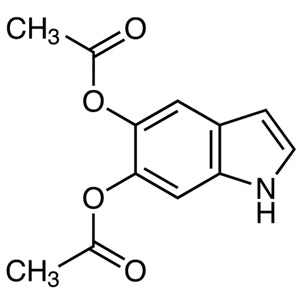
5,6-Diacetoxyindole is a chemical compound widely used in organic chemistry reactions, particularly in the synthesis of heterocyclic compounds. This compound features an indole structure with two acetoxy groups attached at positions 5 and 6, which contribute to its unique reactivity. Its structural complexity and reactivity make it a valuable tool in laboratory settings where the creation of complex molecules is required. It is commonly utilized in the development of pharmaceuticals, advanced materials, and organic chemical research. Due to its chemical versatility, it is a key component in various synthetic pathways, enabling the formation of a wide range of functional molecules.
The compound's high reactivity and stable chemical properties make it a preferred choice for laboratory applications. It is well-suited for substitution reactions and ring-opening reactions, where its functional groups can participate in multiple chemical transformations. Its consistent physical and chemical properties allow it to be reliably integrated into experimental protocols. This reliability ensures that researchers can achieve consistent results, which is essential for scientific accuracy and reproducibility. Its ease of handling and compatibility with various reagents further enhance its utility in diverse chemical processes.
In Indonesian laboratories, 5,6-Diacetoxyindole is extensively used in scientific research and educational settings. Many research institutions and universities incorporate it into their organic chemistry experiments. Its availability and high quality make it a go-to material for both academic and industrial applications. It plays a significant role in advancing chemical knowledge and innovation within the scientific community in Indonesia.
- Organic synthesis is a primary application where 5,6-Diacetoxyindole is used to build complex molecular structures due to its reactivity and structural versatility.
- Pharmaceutical research benefits from this compound as it is a key intermediate in the development of new drugs and bioactive compounds.
- Material science applications rely on its chemical properties to create advanced polymers and functional materials with specific characteristics.
- Educational institutions use it to teach organic chemistry concepts and demonstrate synthetic methodologies in laboratory settings.
- Industrial chemical processes integrate it into production lines where the synthesis of heterocyclic compounds is required for commercial products.
| Brand | TCI |
|---|---|
| CAS number | 15069-79-1 |
| Molecular formula | — |
| Purity | — |
| Category | Chemistry > Building Blocks > Heterocyclic Building Blocks |
| Pack sizes | Available in various quantities as per supplier specifications |
| Physical form | Solid, crystalline appearance |
| Storage | Store in a cool, dry place away from light and moisture |
5,6-Diacetoxyindole should be stored in a cool, dry environment, away from direct light and moisture to maintain its chemical integrity. It is recommended to use airtight containers to prevent exposure to air and humidity, which could affect its stability. When handling, it is important to follow standard laboratory safety procedures, including the use of personal protective equipment such as gloves and goggles. The compound should be kept in a well-ventilated area to minimize inhalation risks. It is also advisable to store it in a designated chemical storage cabinet to ensure safe handling and prevent accidental contamination. Proper storage conditions help preserve its reactivity and effectiveness in laboratory applications.
—
Produk Terkait
-
7-Benzyloxyindole TCI B2846
Regular price Rp 3.419.850,00Regular price -
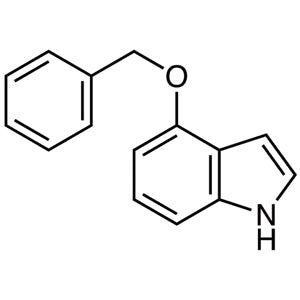
4-Benzyloxyindole TCI B2811
Regular price From Rp 1.538.250,00Regular price -
6-Benzyloxyindole TCI B2809
Regular price From Rp 1.378.650,00Regular price -
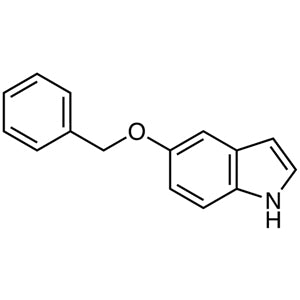
5-Benzyloxyindole TCI B1833
Regular price Rp 1.510.950,00Regular price -
5-Methoxyindole-3-carboxylicAcid TCI M2438
Regular price From Rp 2.254.350,00Regular price -
7-Methoxyindole TCI M1751
Regular price From Rp 3.683.400,00Regular price -
5-Methoxyindole-3-aceticAcid TCI M1303
Regular price Rp 3.367.350,00Regular price -
5-Methoxyindole-2-carboxylicAcid TCI M1271
Regular price From Rp 1.670.550,00Regular price