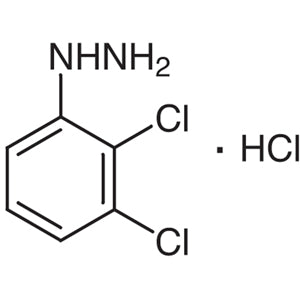
TCI D2641 2,3-Dichlorophenylhydrazine Hydrochloride, bearing CAS number 21938-47-6, is the hydrochloride salt of an arylhydrazine whose benzene ring carries two chlorine atoms at the 2- and 3-positions. It is a non-heterocyclic building block that is widely recognised as a starting material for the construction of nitrogen-containing heterocyclic rings. In the laboratory, the hydrazine group supplies two directly bonded nitrogen atoms that are ready to react with carbonyl compounds, making this material the most direct entry point to hydrazones, pyrazoles, indoles, and the many other azaheterocyclic frameworks that form the backbone of modern bioactive compounds.
The property that makes this material such a frequent choice is its presentation as a hydrochloride salt. Free arylhydrazines tend to be readily oxidised by air and to discolour over time, whereas the salt form is considerably more stable: a solid that is easy to weigh out, to store, and to transport. The free hydrazine is simply generated inside the reaction flask by adding base as the chemistry requires. The 2,3-dichloro substitution pattern also contributes a distinctive electronic and steric character, since both chlorine atoms withdraw electron density, thereby moderating the reactivity of the ring while at the same time directing the regioselectivity of the ring-forming step.
In Indonesian laboratories, a building block of this kind is typically used in synthetic organic chemistry groups at universities and research institutes, as well as in pharmaceutical and agrochemical discovery work where substituted heterocycles are prepared on a small scale. It is normally purchased in research quantities for method development, route scouting, and the preparation of compound libraries, and is handled as one component of a broader stock of building blocks maintained by the synthesis laboratory.
Related TCI products
- TCI D2644 63352-99-8 3,5-Dichlorophenylhydrazine Hydrochloride
- TCI D2433 5446-18-4 2,4-Dichlorophenylhydrazine Hydrochloride
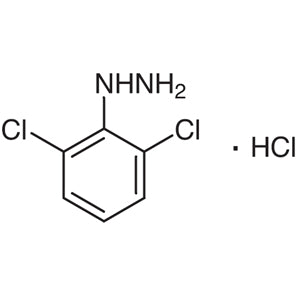
- TCI D2368 50709-36-9 2,6-Dichlorophenylhydrazine Hydrochloride
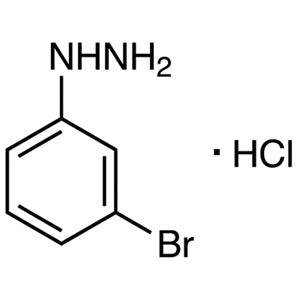
- TCI B3847 27246-81-7 3-Bromophenylhydrazine Hydrochloride
- TCI B2147 50709-33-6 2-Bromophenylhydrazine Hydrochloride
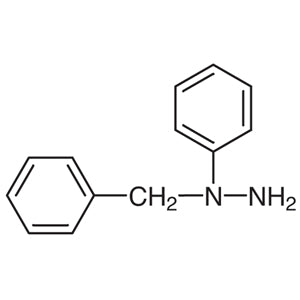
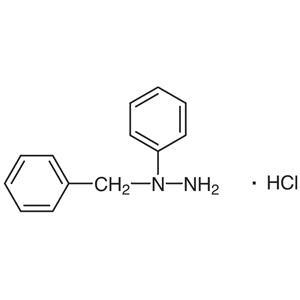
- TCI B1157 614-31-3 1-Benzyl-1-phenylhydrazine
- Hydrazone formation — the hydrazine group condenses directly with aldehydes and ketones, giving a straightforward and reliable route to substituted arylhydrazone intermediates in a single step.
- Fischer indole synthesis — as an arylhydrazine bearing a defined 2,3-dichloro pattern, it serves as the aryl component for building dichlorinated indole cores from carbonyl partners.
- Pyrazole ring construction — the two adjacent nitrogen atoms react with suitable 1,3-dicarbonyl substrates to deliver N-aryl pyrazole scaffolds common in bioactive compound programmes.
- Azaheterocycle scaffold preparation — it provides a general entry to a range of nitrogen-containing heterocyclic frameworks used as cores in medicinal and agrochemical research projects.
- Structure–activity relationship studies — the chlorine substituents allow researchers to introduce a defined electronic and steric profile when preparing analogue series for comparison against unsubstituted variants.
| Brand | TCI |
|---|---|
| CAS number | 21938-47-6 |
| Molecular formula | — |
| Purity | — |
| Category | Chemistry > Building Blocks > Non-Heterocyclic Building Blocks |
| Pack sizes | available in standard research-scale laboratory pack sizes; please confirm the currently offered sizes when ordering |
| Physical form | solid hydrochloride salt |
| Storage | keep in the tightly closed original container, protected from air and moisture |
Store the container tightly closed in a cool, dry, well-ventilated area away from direct sunlight, heat sources, and incompatible materials such as strong oxidising agents. The original manufacturer packaging is the most suitable container; if the material is transferred, use a clean, dry, tightly sealing glass or chemically compatible vessel with a clear label. Weigh and handle the solid in a fume hood to avoid inhaling dust, and wear safety glasses, gloves, and a laboratory coat. Because the free arylhydrazine liberated on addition of base is more sensitive to air than the salt, prepare it only immediately before use in the reaction flask. Close the container promptly after use, and consult the supplier safety data sheet for the full handling, first-aid, and disposal requirements before working with the material.
—
Produk Terkait
-
3,5-DichlorophenylhydrazineHydrochloride TCI D2644
Regular price From Rp 1.829.100,00Regular price -
2,4-DichlorophenylhydrazineHydrochloride TCI D2433
Regular price From Rp 980.700,00Regular price -
2,6-DichlorophenylhydrazineHydrochloride TCI D2368
Regular price Rp 2.625.000,00Regular price -
3-BromophenylhydrazineHydrochloride TCI B3847
Regular price Rp 2.491.650,00Regular price -
2-BromophenylhydrazineHydrochloride TCI B2147
Regular price From Rp 2.279.550,00Regular price -
1-Benzyl-1-phenylhydrazine TCI B1157
Regular price Rp 2.782.500,00Regular price -
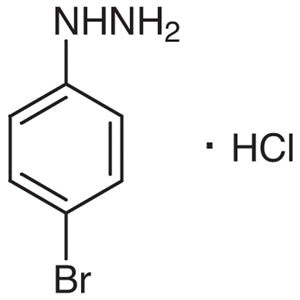
4-BromophenylhydrazineHydrochloride TCI B0635
Regular price From Rp 1.590.750,00Regular price -
1-Benzyl-1-phenylhydrazineHydrochloride TCI B0434
Regular price From Rp 1.565.550,00Regular price