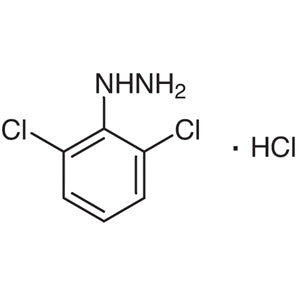
2,6-Dichlorophenylhydrazine Hydrochloride is a chemical compound widely used in laboratory settings for its versatile applications in synthetic chemistry. This compound plays a crucial role in the synthesis of heterocyclic compounds and other organic molecules, making it an essential reagent in chemical research. Its ability to participate in hydrazinative reactions enables the formation of complex molecular structures, which is vital in the development of new pharmaceuticals and chemical products. Due to its chemical stability and reactivity, it is a preferred choice for researchers seeking reliable and efficient chemical intermediates.
The compound's unique chemical structure, featuring two chlorine atoms at positions 2 and 6 on the phenyl ring, contributes to its reactivity and functional versatility. These chlorine substituents enhance the compound’s ability to undergo substitution reactions and other chemical transformations, making it suitable for a wide range of synthetic processes. Additionally, its solubility in organic solvents simplifies its handling and application in various laboratory conditions. This solubility property ensures that it can be easily incorporated into reaction mixtures, enhancing its utility in both academic and industrial research environments.
In Indonesian laboratories, 2,6-Dichlorophenylhydrazine Hydrochloride is commonly used in scientific research across multiple disciplines, including pharmaceuticals, organic chemistry, and analytical chemistry. Its reliability in chemical reactions and its role in the synthesis of complex compounds make it a sought-after material for researchers aiming to advance their studies in these fields. Its consistent performance and chemical properties ensure that it remains a valuable resource in the Indonesian scientific community.
Related TCI products
- TCI D2644 63352-99-8 3,5-Dichlorophenylhydrazine Hydrochloride
- TCI D2641 21938-47-6 2,3-Dichlorophenylhydrazine Hydrochloride
- TCI D2433 5446-18-4 2,4-Dichlorophenylhydrazine Hydrochloride
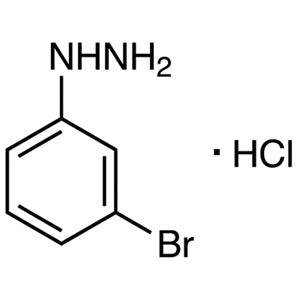
- TCI B3847 27246-81-7 3-Bromophenylhydrazine Hydrochloride
- TCI B2147 50709-33-6 2-Bromophenylhydrazine Hydrochloride
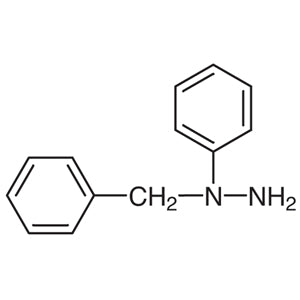
- TCI B1157 614-31-3 1-Benzyl-1-phenylhydrazine
- Pharmaceutical research utilizes this compound for the synthesis of heterocyclic drugs due to its reactivity in hydrazinative reactions.
- Organic chemistry laboratories employ it as a building block for creating complex molecular structures through substitution and condensation reactions.
- Analytical chemistry applications benefit from its solubility and stability, enabling accurate detection and quantification in various analytical techniques.
- Industrial chemical synthesis processes rely on its chemical versatility for the production of specialty chemicals and intermediates.
- Research institutions use it in the development of new compounds for drug discovery and material science applications.
| Brand | TCI |
|---|---|
| CAS number | 50709-36-9 |
| Molecular formula | — |
| Purity | — |
| Category | Chemistry > Building Blocks > Non-Heterocyclic Building Blocks |
| Pack sizes | Available in various quantities as per standard laboratory supply |
| Physical form | Solid powder |
| Storage | Store in a cool, dry, and well-ventilated area away from moisture and direct sunlight |
This compound should be stored in a cool, dry, and well-ventilated area to maintain its chemical stability and prevent degradation. It is recommended to use airtight containers to protect it from moisture and contaminants. Due to its hygroscopic nature, exposure to humidity can affect its purity and reactivity. Laboratory personnel should wear appropriate personal protective equipment, such as gloves and safety goggles, when handling this material. It should be kept away from incompatible substances like strong oxidizing agents. Proper labeling and storage conditions ensure safe handling and long-term usability in research environments.
—
Produk Terkait
-
3,5-DichlorophenylhydrazineHydrochloride TCI D2644
Regular price From Rp 1.829.100,00Regular price -
2,3-DichlorophenylhydrazineHydrochloride TCI D2641
Regular price From Rp 3.260.250,00Regular price -
2,4-DichlorophenylhydrazineHydrochloride TCI D2433
Regular price From Rp 980.700,00Regular price -
3-BromophenylhydrazineHydrochloride TCI B3847
Regular price Rp 2.491.650,00Regular price -
2-BromophenylhydrazineHydrochloride TCI B2147
Regular price From Rp 2.279.550,00Regular price -
1-Benzyl-1-phenylhydrazine TCI B1157
Regular price Rp 2.782.500,00Regular price -
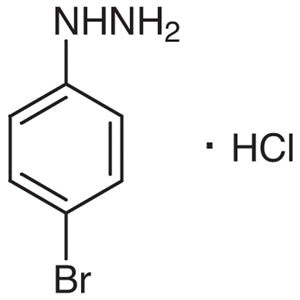
4-BromophenylhydrazineHydrochloride TCI B0635
Regular price From Rp 1.590.750,00Regular price -
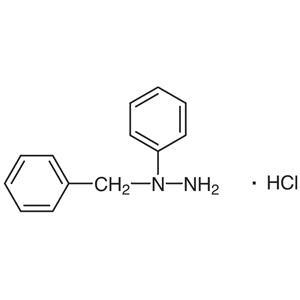
1-Benzyl-1-phenylhydrazineHydrochloride TCI B0434
Regular price From Rp 1.565.550,00Regular price