

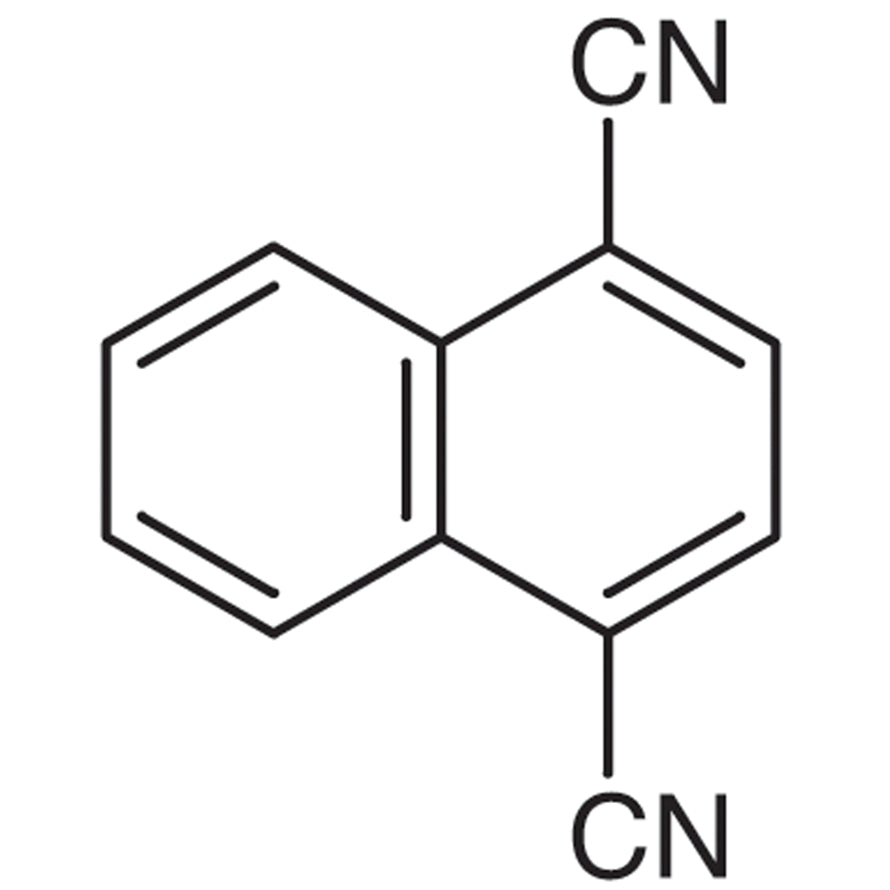
1,4-Dicyanonaphthalene is a chemical compound widely used as a building block in the synthesis of complex molecules. It plays a crucial role in laboratory settings where the creation of new compounds with specific structural characteristics is required. This compound is particularly valuable for its ability to participate in various chemical reactions, making it an essential tool for researchers working on organic synthesis and structural studies. Its versatility allows it to be incorporated into a wide range of chemical processes, supporting the development of advanced materials and pharmaceuticals.
The properties that make 1,4-Dicyanonaphthalene a preferred choice include its chemical stability under certain conditions and its reactivity in substitution and electrophilic reactions. The compound’s strong aromatic structure contributes to its high reactivity, enabling it to interact effectively with a variety of reagents. These characteristics make it ideal for applications requiring both stability and reactivity. Its ability to form complex structures also makes it a key component in the development of heterocyclic and organic compounds.
In Indonesian laboratories, 1,4-Dicyanonaphthalene is commonly used in chemical research, especially in the synthesis of organic compounds and molecular structure studies. It is a staple in academic and industrial research settings, supporting the advancement of new chemical compounds and materials. Its consistent performance and reliability make it a trusted resource for scientists and researchers in Indonesia.
Related TCI products
- Organic synthesis applications benefit from 1,4-Dicyanonaphthalene's ability to form complex molecular structures, enabling the creation of new compounds with specific functional groups.
- Structural analysis in chemical research relies on its strong aromatic properties, allowing for precise molecular characterization and reaction mechanisms.
- Heterocyclic compound development utilizes its reactivity in substitution reactions, making it a valuable intermediate in the synthesis of pharmaceuticals and polymers.
- Material science research incorporates it to develop advanced materials with tailored chemical properties, enhancing performance in various industrial applications.
- Molecular modeling studies use its known reactivity to simulate and predict chemical behavior in different reaction environments.
| Brand | TCI |
|---|---|
| CAS number | 3029-30-9 |
| Molecular formula | — |
| Purity | — |
| Category | Chemistry > Building Blocks > Non-Heterocyclic Building Blocks |
| Pack sizes | — |
| Physical form | — |
| Storage | Store in a cool, dry place away from light and incompatible materials |
1,4-Dicyanonaphthalene should be stored in a cool, dry environment, away from direct sunlight and sources of heat. It is recommended to keep the compound in a tightly sealed container to prevent exposure to moisture and air. Due to its chemical nature, it should be stored separately from reactive or incompatible substances to avoid potential hazards. Laboratory personnel should handle the compound with appropriate personal protective equipment, including gloves and safety goggles, to ensure safe handling. Proper ventilation is essential when working with this compound to minimize inhalation risks. Regular monitoring of storage conditions is advised to maintain its stability and effectiveness for research applications.
—
Produk Terkait
-
2,7-Dicyanonaphthalene TCI D3705
Regular price Rp 3.710.700,00Regular price -
6-Bromo-2,3-dicyanonaphthalene TCI B1390
Regular price Rp 15.422.400,00Regular price -
2,3-Dibromo-6,7-dicyanonaphthalene TCI D2282
Regular price Rp 11.263.350,00Regular price -
2,3-Dicyanonaphthalene TCI D1977
Regular price Rp 2.889.600,00Regular price -
1-Amino-2-bromonaphthalene TCI B3411
Regular price Rp 8.453.550,00Regular price -
1-Amino-4-bromonaphthalene TCI A1886
Regular price From Rp 1.565.550,00Regular price -
2-Nitronaphthalen-1-ol TCI N1197
Regular price From Rp 1.353.450,00Regular price -
3,4-Dihydronaphthalen-1(2H)-oneOxime TCI D6120
Regular price From Rp 1.458.450,00Regular price


