

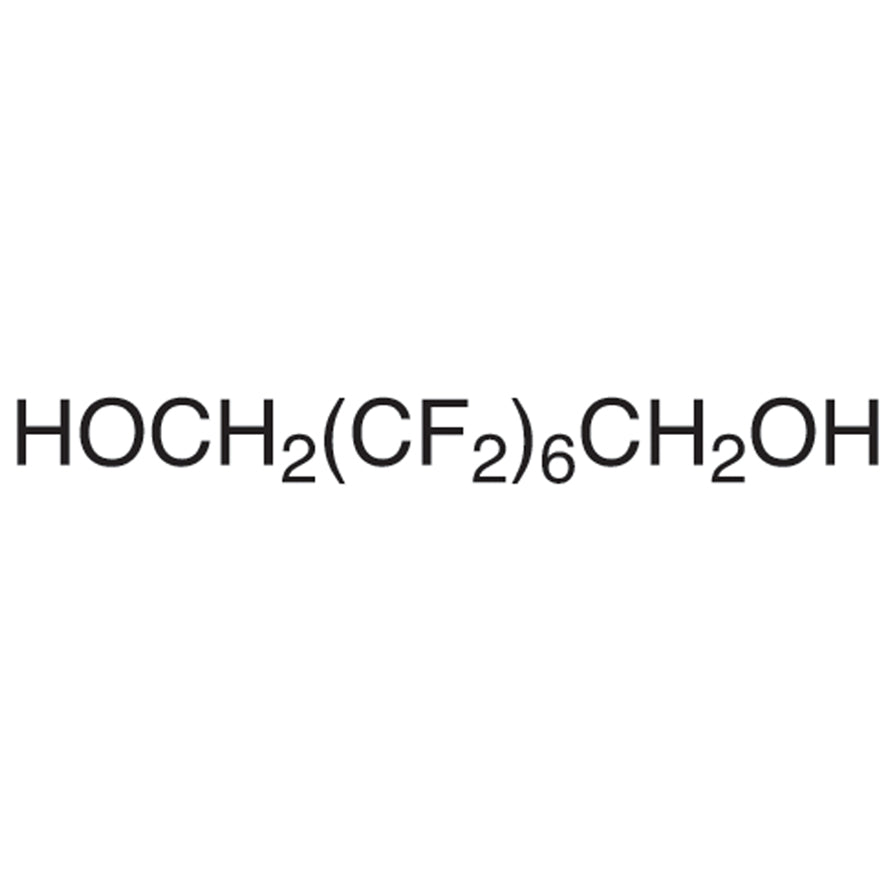
TCI D2891 90177-96-1 2,2,3,3,4,4,5,5,6,6,7,7-Dodecafluoro-1,8-octanediol is a specialized chemical compound used in materials science research, particularly in the development of fluorinated polymers. As a monomer, it plays a critical role in creating polymers with enhanced durability and chemical resistance. This compound is widely utilized in laboratory settings for synthesizing materials that exhibit superior performance under extreme environmental conditions. Its unique molecular structure, featuring multiple fluorine atoms, contributes to its exceptional stability and functional properties.
The high fluorination level of this compound results in a dense molecular structure, making it highly resistant to chemical reactions and environmental degradation. These properties make it a preferred choice for researchers aiming to develop advanced materials with high thermal and moisture resistance. Its chemical inertness and stability under various conditions ensure reliable performance in experimental applications. The compound’s ability to form strong, durable polymers makes it an essential component in modern polymer science.
In Indonesian laboratories, this compound is frequently used in the research and development of new materials with broad applications. It is commonly employed in the creation of membranes, coatings, and insulation materials due to its unique chemical and physical properties. Its stability and high reactivity make it a valuable tool for scientists working on innovative material solutions. The compound’s versatility supports a wide range of research activities in both academic and industrial settings.
TCI brochures (PDF)
- Fluorous Chemistry 2025-01-21 · p. 4
- Fluorination Reagents, Fluorinated Building Blocks 2026-03-18 · p. 52
Related TCI products
- TCI H1233 754-96-1 1H,1H,10H,10H-Hexadecafluoro-1,10-decanediol
- TCI T2296 425-61-6 2,2,3,3-Tetrafluoro-1,4-butanediol
- TCI H1279 918-21-8 Hexafluoro-2,3-bis(trifluoromethyl)-2,3-butanediol
- TCI D4990 2261-99-6 2,2,3,3,4,4,5,5,6,6,7,7-Dodecafluoroheptyl Methacrylate (stabilized with TBC)
- TCI D4989 2993-85-3 2,2,3,3,4,4,5,5,6,6,7,7-Dodecafluoroheptyl Acrylate (stabilized with TBC)
- TCI D2465 678-45-5 Dodecafluorosuberic Acid
- Fluorinated Polymer Synthesis: This compound is ideal for creating polymers with high chemical and thermal resistance, making it suitable for advanced material development.
- Coating and Membrane Fabrication: Its unique molecular structure allows for the production of durable and chemically inert coatings and membranes used in various industries.
- High-Temperature Material Research: The compound’s stability under extreme temperatures makes it a key component in studies involving high-temperature resistant materials.
- Environmental Protection Material Development: Its resistance to chemical degradation makes it useful in creating materials for environmental protection applications.
- Medical Device Component Manufacturing: The compound’s inertness and durability are beneficial in the development of medical-grade materials and coatings.
| Brand | TCI |
|---|---|
| CAS number | 90177-96-1 |
| Molecular formula | — |
| Purity | — |
| Category | Materials Science > Polymer/Macromolecule Reagents > Monomers |
| Pack sizes | Available in various quantities as per standard laboratory supply |
| Physical form | Liquid |
| Storage | Store in a cool, dry place away from light and incompatible materials |
This compound should be stored in a cool, dry environment, away from direct sunlight and sources of heat. It is recommended to use sealed, airtight containers to prevent exposure to moisture and air. Due to its chemical stability, it does not require refrigeration but should be kept in a secure location to avoid accidental spills or contamination. Laboratory personnel should wear appropriate personal protective equipment when handling the compound to ensure safety. Proper ventilation is advised during use to minimize exposure to vapors. The compound is non-reactive under normal conditions but should be handled with care to maintain its integrity and effectiveness in research applications.
—
Produk Terkait
-
1H,1H,10H,10H-Hexadecafluoro-1,10-decanediol TCI H1233
Regular price From Rp 610.050,00Regular price -
2,2,3,3-Tetrafluoro-1,4-butanediol TCI T2296
Regular price From Rp 795.900,00Regular price -
Hexafluoro-2,3-bis(trifluoromethyl)-2,3-butanediol TCI H1279
Regular price From Rp 2.625.000,00Regular price -
2,2,3,3,4,4,5,5,6,6,7,7-DodecafluoroheptylMethacrylate(stabilizedwithTBC) TCI D4990
Regular price From Rp 1.167.600,00Regular price -
2,2,3,3,4,4,5,5,6,6,7,7-DodecafluoroheptylAcrylate(stabilizedwithTBC) TCI D4989
Regular price Rp 1.829.100,00Regular price -
DodecafluorosubericAcid TCI D2465
Regular price From Rp 2.411.850,00Regular price -
1H,1H,2H,2H-Tridecafluoro-n-octylMethacrylate(stabilizedwithHQ+MEHQ) TCI T3414
Regular price From Rp 1.273.650,00Regular price -
2,3,5,6-Tetrafluoro-1,4-benzenedimethanol TCI T2732
Regular price From Rp 2.094.750,00Regular price


