

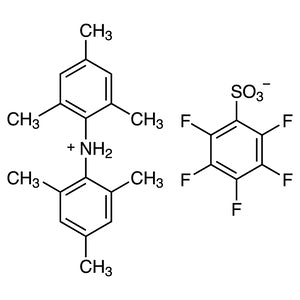
Dimesitylammonium pentafluorobenzenesulfonate is a chemical compound widely used in laboratory settings, particularly in catalysis and inorganic chemistry. This compound plays a crucial role in facilitating chemical reactions, especially in condensation and substitution processes. Its unique molecular structure contributes to its high reactivity, making it an essential reagent for researchers aiming to accelerate chemical transformations. In the laboratory, it is commonly employed as a catalyst or reagent in the synthesis of both organic and inorganic compounds. Its ability to act as a highly electronegative sulfonate ion enhances its effectiveness in reactive environments, making it a valuable tool for chemical synthesis.
One of the key properties that make this compound a preferred choice is its solubility in various organic solvents, which simplifies its preparation and application in experimental procedures. Its chemical stability under controlled conditions ensures reliable performance in laboratory experiments. Additionally, its reactivity towards uncontrolled environments highlights the need for careful handling. The compound's ability to function as a strong sulfonate ion allows it to participate in a wide range of chemical processes, making it adaptable to different experimental setups. These characteristics contribute to its popularity among researchers working in catalytic and synthetic chemistry.
In Indonesian laboratories, this compound is frequently used in both fundamental and applied chemical research. It is particularly valuable in studies related to catalysis and the synthesis of complex compounds. Researchers from educational institutions and research organizations often rely on this material for its efficiency and versatility. Its role in advancing chemical processes makes it an important component in the toolkit of many Indonesian scientists working in the field of inorganic and organic chemistry.
TCI brochures (PDF)
- Powerful Condensation Organocatalysts 2018-01-25 · p. 2
- Condensing Agents 2025-11-18 · p. 8
Related TCI products
- TCI B2291 405074-81-9 1-[Bis(trifluoromethanesulfonyl)methyl]-2,3,4,5,6-pentafluorobenzene
- TCI P1626 912823-79-1 Pentafluoroanilinium Trifluoromethanesulfonate
- TCI T3128 220227-21-4 2,4,5-Trifluorobenzenesulfonyl Chloride
- TCI T2035 51527-73-2 2,4,6-Trichlorobenzenesulfonyl Chloride
- TCI T1730 25440-14-6 5,10,15,20-Tetrakis(pentafluorophenyl)porphyrin
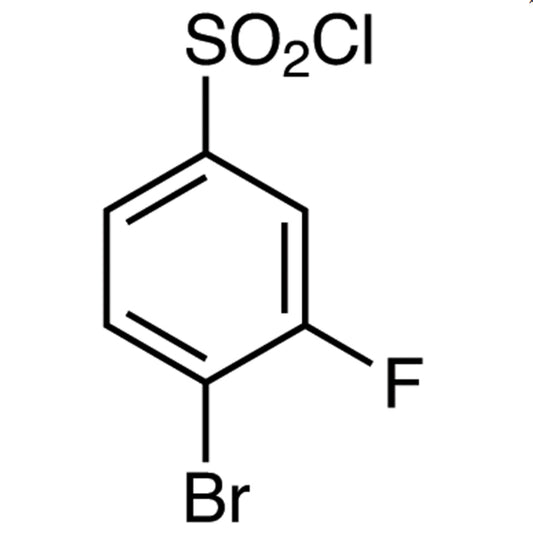
- TCI B3835 351003-51-5 4-Bromo-3-fluorobenzenesulfonyl Chloride
- Catalytic reactions in organic synthesis due to its ability to enhance reaction rates and improve yield.
- Inorganic chemistry experiments requiring a strong sulfonate ion for substitution and condensation reactions.
- Development of new chemical compounds through its role as a reagent in complex synthetic pathways.
- Research in condensation processes where high reactivity and stability are essential for successful outcomes.
- Advanced chemical studies involving the synthesis of complex molecules in both academic and industrial settings.
From the TCI brochure
- Esterification of a carboxylic acid with a secondary alcohol (1.1 eq), catalyzed by D3293 in heptane at 80 °C
| Brand | TCI |
|---|---|
| CAS number | 850629-65-1 |
| Molecular formula | — |
| Purity | — |
| Category | Chemistry > Catalysis and Inorganic Chemistry > Condensation [Catalysis] |
| Pack sizes | — |
| Physical form | — |
| Storage | Store in a cool, dry place away from moisture and direct sunlight. |
Data from the TCI brochure
| Yield | Y. 95% (1 eq acid, 1.1 eq alcohol, cat. D3293, heptane, 80 °C) |
|---|
Source: TCI brochure RR098 (2018-01-25)
This compound should be stored in a cool, dry environment, away from moisture and direct sunlight to maintain its chemical stability. It is recommended to use airtight containers to prevent exposure to air and moisture, which could affect its reactivity. Due to its high reactivity, it should be handled with care, using appropriate personal protective equipment such as gloves and safety goggles. In laboratory settings, it is important to ensure proper ventilation when working with this material to minimize any potential exposure. It is also advisable to keep it away from incompatible substances to avoid any unwanted chemical interactions. Proper storage and handling practices are essential to ensure the safety of laboratory personnel and the integrity of experimental results.
—
Produk Terkait
-
1-[Bis(trifluoromethanesulfonyl)methyl]-2,3,4,5,6-pentafluorobenzene TCI B2291
Regular price From Rp 3.763.200,00Regular price -
PentafluoroaniliniumTrifluoromethanesulfonate TCI P1626
Regular price From Rp 2.677.500,00Regular price -
2,4,5-TrifluorobenzenesulfonylChloride TCI T3128
Regular price From Rp 1.538.250,00Regular price -
2,4,6-TrichlorobenzenesulfonylChloride TCI T2035
Regular price From Rp 2.016.000,00Regular price -
5,10,15,20-Tetrakis(pentafluorophenyl)porphyrin TCI T1730
Regular price Rp 2.199.750,00Regular price -
4-Bromo-3-fluorobenzenesulfonylChloride TCI B3835
Regular price From Rp 2.016.000,00Regular price -
4-Bromo-2-fluorobenzenesulfonylChloride TCI B3698
Regular price From Rp 823.200,00Regular price -
5-tert-Butyl1-PentafluorophenylN-[(9H-Fluoren-9-ylmethoxy)carbonyl]-L-glutamate TCI B3318
Regular price From Rp 1.060.500,00Regular price
![405074-81-9 1-[Bis(trifluoromethanesulfonyl)methyl]-2,3,4,5,6-pentafluorobenzene - AMI Scientific](http://amiscientific.com/cdn/shop/files/TCI2510B2291_1d491266-8d39-418c-8071-bf7f7c3bd951.jpg?v=1767336434&width=533)



![86061-04-3 5-tert-Butyl 1-Pentafluorophenyl N-[(9H-Fluoren-9-ylmethoxy)carbonyl]-L-glutamate - AMI Scientific](http://amiscientific.com/cdn/shop/files/TCI2510B3318.jpg?v=1769141719&width=533)