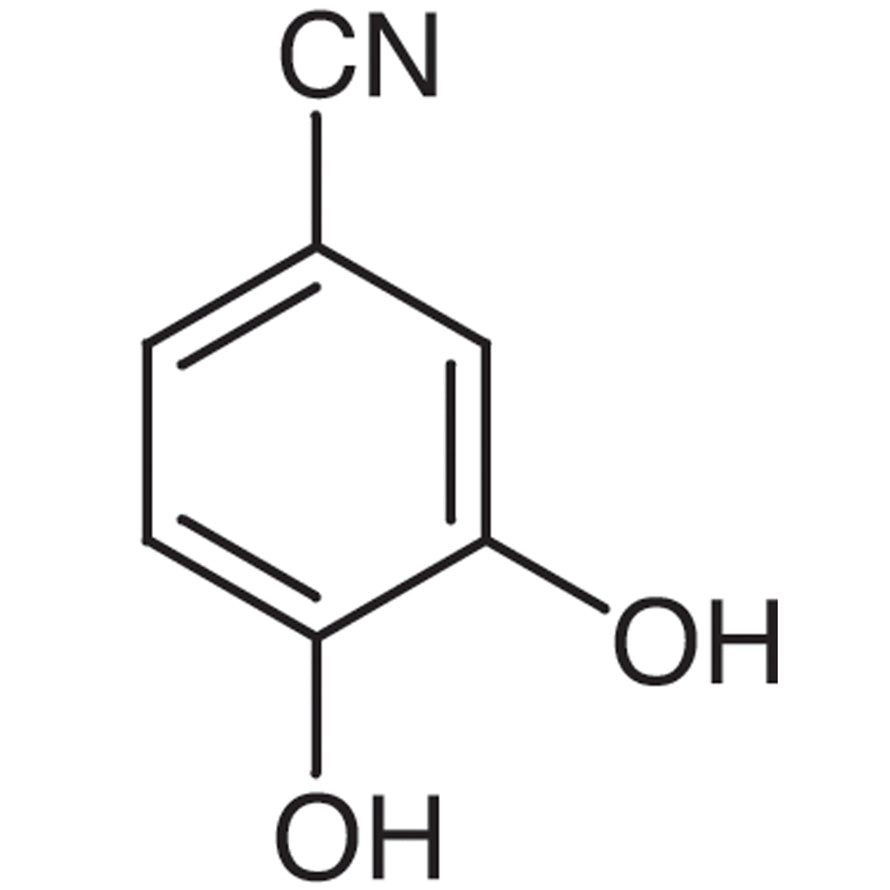
3,4-Dihydroxybenzonitrile is a chemical compound widely used as a foundational building block in organic synthesis. Its aromatic structure, combined with two hydroxyl groups and a nitrile group, makes it highly reactive and versatile for various chemical reactions. In the laboratory, this compound plays a crucial role in the development of complex organic molecules, including phenolic derivatives and heterocyclic compounds. Its ability to participate in multiple reaction types makes it an essential tool for synthetic chemists.
The compound's chemical properties, such as its reactivity and structural flexibility, make it a preferred choice for researchers. Its aromatic nature allows it to engage in substitution and condensation reactions, making it suitable for applications like Diels-Alder reactions, nitrilation, and electrophilic substitution. Additionally, its stability under controlled conditions enhances its reliability in laboratory settings. These characteristics contribute to its popularity among scientists working in organic chemistry and pharmaceutical research.
In Indonesian laboratories, 3,4-Dihydroxybenzonitrile is commonly used in the synthesis of pharmaceutical compounds and functionalized organic molecules. Its availability through suppliers like AMI Scientific ensures that researchers have access to this essential reagent for their experiments. The compound’s versatility and reactivity make it a valuable resource for both academic and industrial research in the region.
Related TCI products
- TCI T3285 43020-38-8 2,3,4-Trimethoxybenzonitrile
- TCI T3244 1885-35-4 3,4,5-Trimethoxybenzonitrile
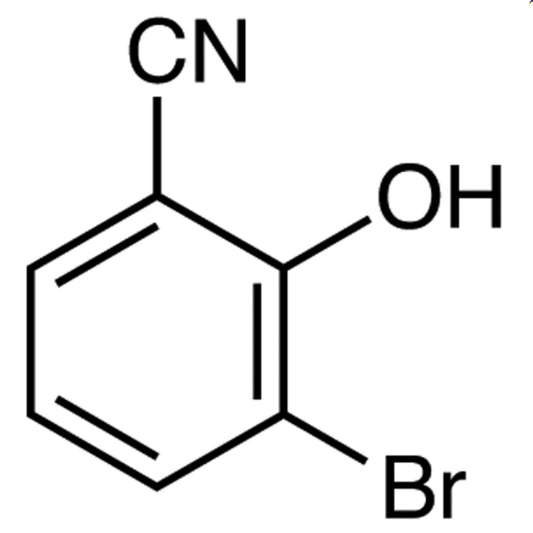
- TCI B5273 13073-28-4 3-Bromo-2-hydroxybenzonitrile
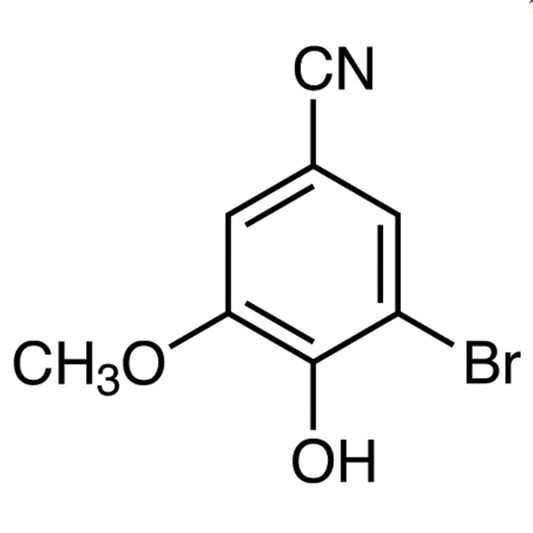
- TCI B4757 52805-45-5 3-Bromo-4-hydroxy-5-methoxybenzonitrile
- TCI B3124 117572-79-9 3-Bromo-4-methoxybenzonitrile
- TCI B3123 144649-99-0 5-Bromo-2-methoxybenzonitrile
- Organic synthesis for creating complex phenolic and heterocyclic compounds due to its reactive functional groups.
- Pharmaceutical research for developing drug molecules through nitrilation and substitution reactions.
- Analytical chemistry applications where precise chemical reactivity is required for compound modification.
- Teaching laboratories for demonstrating aromatic substitution and condensation reactions in undergraduate courses.
- Industrial chemical processes requiring stable yet reactive building blocks for large-scale synthesis.
| Brand | TCI |
|---|---|
| CAS number | 17345-61-8 |
| Molecular formula | — |
| Purity | — |
| Category | Chemistry > Building Blocks > Non-Heterocyclic Building Blocks |
| Pack sizes | Available in various quantities as per supplier specifications |
| Physical form | Solid or liquid depending on packaging |
| Storage | Store in a cool, dry place away from moisture and air exposure |
This compound should be stored in a cool, dry environment to prevent moisture absorption and degradation. It is recommended to use airtight containers to minimize exposure to air, which can affect its stability. Due to its reactivity, it should be handled with care in a well-ventilated area, ideally under a fume hood. Avoid direct contact with skin and eyes, and ensure proper personal protective equipment is worn. The compound is sensitive to humidity, so maintaining controlled storage conditions is essential for preserving its chemical integrity and ensuring safe laboratory use.
—
Produk Terkait
-
2,3,4-Trimethoxybenzonitrile TCI T3285
Regular price From Rp 1.458.450,00Regular price -
3,4,5-Trimethoxybenzonitrile TCI T3244
Regular price From Rp 1.485.750,00Regular price -
3-Bromo-2-hydroxybenzonitrile TCI B5273
Regular price From Rp 1.220.100,00Regular price -
3-Bromo-4-hydroxy-5-methoxybenzonitrile TCI B4757
Regular price From Rp 689.850,00Regular price -
3-Bromo-4-methoxybenzonitrile TCI B3124
Regular price Rp 1.829.100,00Regular price -
5-Bromo-2-methoxybenzonitrile TCI B3123
Regular price From Rp 1.140.300,00Regular price -
4-Bromo-2-hydroxybenzonitrile TCI B3120
Regular price From Rp 1.246.350,00Regular price -
5-Bromo-2-hydroxybenzonitrile TCI B2214
Regular price From Rp 3.100.650,00Regular price