

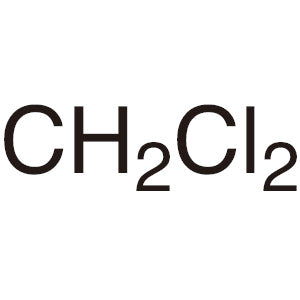
TCI D3478 is anhydrous-grade dichloromethane (methylene chloride) stabilized with 2-methyl-2-butene. Dichloromethane is one of the most widely used halogenated solvents in the chemistry laboratory because of its ability to dissolve a broad range of organic compounds, from nonpolar species through to compounds of intermediate polarity. The anhydrous version means the water content has been reduced and controlled, making this solvent suitable for reactions that are sensitive to moisture. At the bench, this material serves as a reaction medium, an extraction solvent, a chromatography solvent, and a solvent for washing glassware and transferring substances.
Several properties explain why this solvent is so frequently chosen. Its low boiling point allows it to be removed easily on a rotary evaporator without heating the product excessively, which protects thermally delicate compounds. Its density is higher than that of water, so during liquid-liquid extraction it forms a clearly defined lower phase that is straightforward to draw off. Its limited solubility in water means phase separation is sharp and unambiguous. Dichloromethane is also relatively inert toward many organic reagents. The added 2-methyl-2-butene acts as a stabilizer that scavenges radicals and slows the formation of decomposition products.
In Indonesian laboratories, this grade is used in the same routine ways: as the reaction medium for moisture-sensitive organic synthesis, as the extraction solvent in workup steps, as a component of mobile phases and eluents in chromatography, and as a general cleaning and transfer solvent. Research groups, university teaching and research laboratories, quality-control laboratories, and industrial analytical laboratories all draw on it where a volatile, dense, broadly capable halogenated solvent with controlled water content is required.
Related TCI products
- TCI M0629 75-09-2 Dichloromethane (stabilized with 2-Methyl-2-butene) [for HPLC Solvent]
- TCI D0529 75-09-2 Dichloromethane (stabilized with 2-Methyl-2-butene) [for Spectrophotometry]
- TCI M2563 563-45-1 3-Methyl-1-butene (ca. 15% in Dichloromethane, ca. 2.5mol/L)
- TCI B6534 106-98-9 1-Butene (ca. 3% in Dichloromethane, ca. 0.7 mol/L)
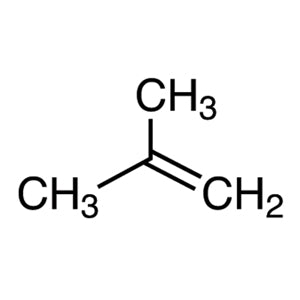
- TCI I0909 115-11-7 Isobutene (ca. 8% in Dichloromethane)
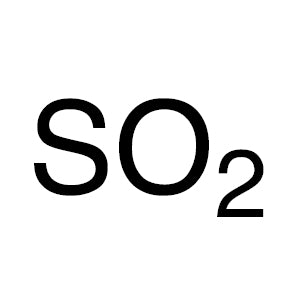
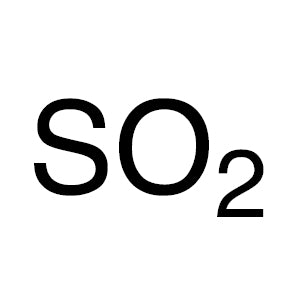
- TCI U0148 7446-09-5 Sulfur Dioxide (ca. 2.5% in Dichloromethane, ca. 0.5 mol/L)
- Moisture-sensitive organic synthesis — the controlled and reduced water content makes this anhydrous grade appropriate as a reaction medium where adventitious water would quench reagents or spoil the reaction.
- Liquid-liquid extraction — because dichloromethane is denser than water and only slightly soluble in it, it forms a distinct lower phase and gives a sharp, easily separated boundary during workup.
- Chromatographic separation — its ability to dissolve nonpolar through medium-polarity organic compounds makes it a versatile solvent for chromatography, whether used alone or as part of a solvent system.
- Solvent removal and concentration — the low boiling point allows the solvent to be stripped efficiently on a rotary evaporator without subjecting the isolated product to excessive heating.
- Glassware washing and substance transfer — its broad dissolving power and high volatility make it convenient for rinsing residues from apparatus and for quantitatively moving material between vessels.
| Brand | TCI |
|---|---|
| CAS number | 75-09-2 |
| Molecular formula | — |
| Purity | — |
| Category | Chemistry > Solvents > Anhydrous Solvents |
| Pack sizes | available in the packaging options listed for this catalogue item |
| Physical form | liquid solvent |
| Storage | keep tightly closed to preserve the anhydrous condition |
- Grade: anhydrous, stabilized with 2-methyl-2-butene
Store the container tightly closed in a cool, well-ventilated area away from heat, ignition sources, and direct sunlight. Because this is an anhydrous grade, keep exposure to open air to a minimum so that atmospheric moisture is not absorbed; reseal immediately after dispensing and, where practical, transfer under an inert atmosphere or with a dry syringe or cannula. Use the original supplier container or a compatible tightly sealed glass or solvent-resistant vessel, clearly labelled. Handle inside a fume hood, since this is a volatile halogenated solvent, and wear appropriate personal protective equipment including safety glasses, a laboratory coat, and suitable chemical-resistant gloves. Keep away from strong oxidizing agents and other incompatible materials, and collect waste as halogenated solvent waste for disposal according to your institution's procedures.
—
Produk Terkait
-
Dichloromethane(stabilizedwith2-Methyl-2-butene)[forHPLCSolvent] TCI M0629
Regular price Rp 903.000,00Regular price -
Dichloromethane(stabilizedwith2-Methyl-2-butene)[forSpectrophotometry] TCI D0529
Regular price Rp 2.571.450,00Regular price -
3-Methyl-1-butene(ca.15%inDichloromethane,ca.2.5mol/L) TCI M2563
Regular price Rp 6.996.150,00Regular price -
1-Butene(ca.3%inDichloromethane,ca.0.7mol/L) TCI B6534
Regular price From Rp 980.700,00Regular price -
Isobutene(ca.8%inDichloromethane) TCI I0909
Regular price From Rp 1.060.500,00Regular price -
SulfurDioxide(ca.2.5%inDichloromethane,ca.0.5mol/L) TCI U0148
Regular price From Rp 1.908.900,00Regular price -
alpha-(Trichloromethyl)benzylAcetate TCI T3122
Regular price From Rp 795.900,00Regular price -
(2R,5S)-2-Trichloromethyl-3-oxa-1-azabicyclo[3.3.0]octan-4-one TCI T2902
Regular price Rp 1.644.300,00Regular price
![75-09-2 Dichloromethane (stabilized with 2-Methyl-2-butene) [for HPLC Solvent] - AMI Scientific](http://amiscientific.com/cdn/shop/files/TCI2510M0629.jpg?v=1767123369&width=533)
![Dichloromethane (stabilized with 2-Methyl-2-butene) [for Spectrophotometry] (CAS 75-09-2) - TCI D0529 - AMI Scientific](http://amiscientific.com/cdn/shop/files/TCI2510D0529.jpg?v=1767101452&width=533)



![97538-67-5 (2R,5S)-2-Trichloromethyl-3-oxa-1-azabicyclo[3.3.0]octan-4-one - AMI Scientific](http://amiscientific.com/cdn/shop/files/TCI2510T2902.jpg?v=1767143504&width=533)