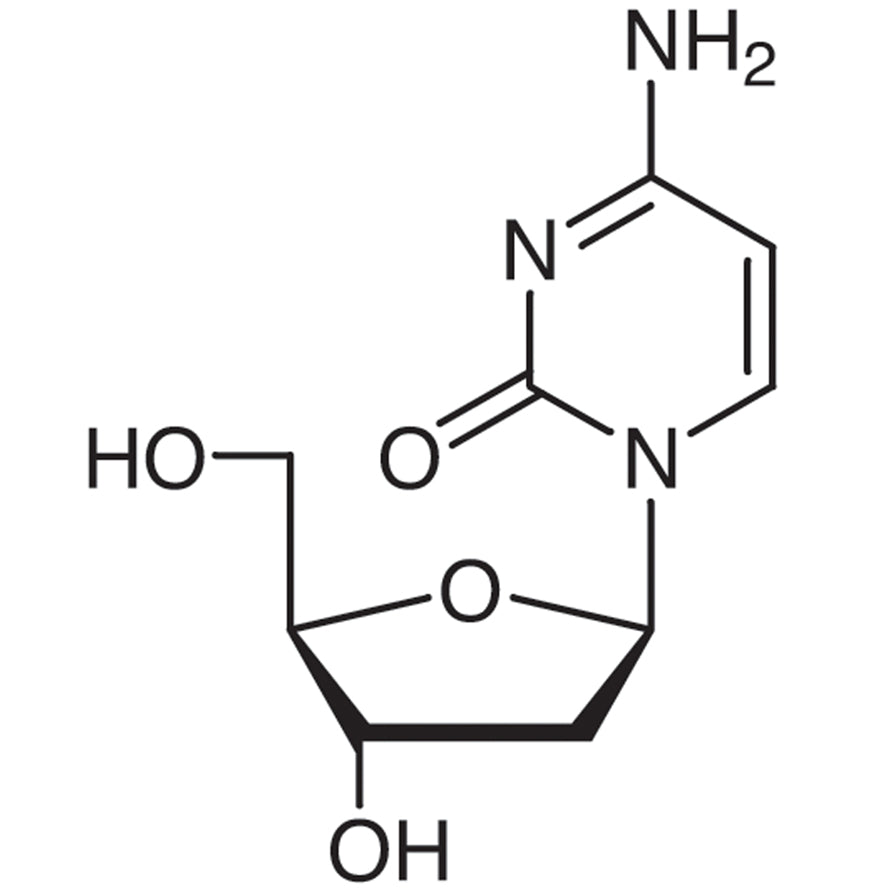
TCI D3583 2'-Deoxycytidine is one of the four deoxynucleosides that make up DNA, and it is a fundamental reagent that is almost always kept on hand in molecular biology laboratories. The compound consists of a cytosine base linked to a 2-deoxyribose sugar, which makes it structurally a direct building block of the deoxyribonucleic acid chain. Its role in the laboratory is broad, ranging from a cell culture media supplement, to a precursor in oligonucleotide and phosphoramidite synthesis, to a test material in DNA methylation studies, and further to a substrate in enzymology research on enzymes such as deoxycytidine kinase and cytidine deaminase. The availability of this material forms the foundation of many basic and applied experiments.
The main reason researchers choose reagent-grade 2'-Deoxycytidine is the need for high purity, free from other nucleosides that could interfere with the interpretation of results. As a crystalline solid, the compound is easy to weigh accurately and dissolves well in water, so preparing stock solutions is straightforward without the inconvenience of organic solvents. The amino group on the cytosine base and the two hydroxyl groups on the sugar provide clearly defined reaction points for protection and derivatization work, which is why the material integrates smoothly into synthetic schemes as well as into routine biochemical assays where consistency between batches matters.
In Indonesian laboratories, 2'-Deoxycytidine is typically used across university research groups, biotechnology institutes, and molecular diagnostics facilities that carry out nucleic acid work. It supports teaching and research activities in biochemistry and molecular biology, serves as a reference compound in analytical work on nucleosides, and functions as a starting material where oligonucleotide chemistry is performed locally. Because it is water soluble and supplied as a solid, it suits laboratories that prepare solutions fresh as needed rather than maintaining large solvent inventories.
TCI brochures (PDF)
- Nucleosides, Nucleotides, Nucleic Acids and Related Reagents 2026-03-23 · p. 2
- Reagents for Biological Research 2025-03-11 · p. 60
Related TCI products
- TCI B3102 4836-13-9 N4-Benzoyl-2'-deoxycytidine
- TCI B3087 67219-55-0 N4-Benzoyl-5'-O-(4,4'-dimethoxytrityl)-2'-deoxycytidine
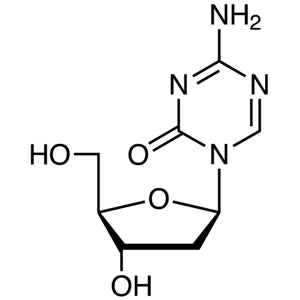
- TCI A2232 2353-33-5 5-Aza-2'-deoxycytidine
- TCI D0048 3992-42-5 2'-Deoxycytidine Hydrochloride
- TCI I0882 611-53-0 5-Iodo-2'-deoxycytidine
- TCI D3673 1032-65-1 2'-Deoxycytidine 5'-Monophosphate Hydrate
- Cell culture media supplementation — added as a nucleoside source to support cells in culture, with reagent-grade purity helping to avoid unwanted nucleoside contaminants that could alter growth behaviour.
- Oligonucleotide and phosphoramidite synthesis — serves as the deoxycytidine building block, where its free amino and hydroxyl groups give defined positions for selective protection before coupling steps.
- DNA methylation studies — used as a test and reference material when examining cytosine methylation, since it is the unmodified counterpart against which methylated species are compared.
- Enzymology research on deoxycytidine kinase — acts as the natural substrate for kinase activity measurements, and its high purity keeps competing nucleosides from confounding kinetic interpretation of results.
- Cytidine deaminase substrate work — supplied as a well-defined crystalline solid that dissolves in water, making it convenient to prepare accurate substrate concentrations for deamination assays.
| Brand | TCI (Tokyo Chemical Industry) |
|---|---|
| CAS number | 951-77-9 |
| Molecular formula | — |
| Purity | — |
| Category | Life Science > Biochemicals and Reagents > Nucleosides, Nucleotides, Oligonucleotides |
| Pack sizes | available in the standard research pack sizes offered by the manufacturer; please refer to the current catalogue listing for the options available |
| Physical form | crystalline solid, soluble in water |
| Storage | store according to the manufacturer's stated conditions on the product label and safety data sheet |
- Catalogue number: D3583
Store 2'-Deoxycytidine in its original tightly closed container, kept dry and protected from moisture, and follow the storage temperature stated by the manufacturer on the product label and safety data sheet. Because the material is a crystalline solid, use clean, dry spatulas and weighing vessels to prevent moisture uptake and cross-contamination between reagents. Prepared aqueous stock solutions should be held in clean, labelled containers and handled under conditions that limit microbial growth. As with any laboratory chemical, work in a well-ventilated area, wear a laboratory coat, gloves, and eye protection, avoid generating or inhaling dust during weighing, and consult the manufacturer's safety data sheet before use and for disposal guidance.
—
Produk Terkait
-
N4-Benzoyl-2'-deoxycytidine TCI B3102
Regular price From Rp 505.050,00Regular priceRp 368.550,00Sale price From Rp 505.050,00 -
N4-Benzoyl-5'-O-(4,4'-dimethoxytrityl)-2'-deoxycytidine TCI B3087
Regular price From Rp 2.068.500,00Regular priceRp 1.461.600,00Sale price From Rp 2.068.500,00 -
5-Aza-2'-deoxycytidine TCI A2232
Regular price From Rp 3.419.850,00Regular priceRp 2.406.600,00Sale price From Rp 3.419.850,00 -
2'-DeoxycytidineHydrochloride TCI D0048
Regular price From Rp 3.285.450,00Regular priceRp 2.313.150,00Sale price From Rp 3.285.450,00 -
5-Iodo-2'-deoxycytidine TCI I0882
Regular price Rp 2.677.500,00Regular priceRp 1.887.900,00Sale price Rp 2.677.500,00 -
2'-Deoxycytidine5'-MonophosphateHydrate TCI D3673
Regular price From Rp 1.192.800,00Regular priceRp 849.450,00Sale price From Rp 1.192.800,00 -
Adenosine TCI A0152
Regular price From Rp 769.650,00Regular priceRp 553.350,00Sale price From Rp 769.650,00 -
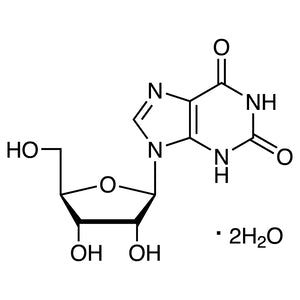
XanthosineDihydrate TCI X0008
Regular price Rp 1.167.600,00Regular priceRp 831.600,00Sale price Rp 1.167.600,00