3,6-Di(2-pyridyl)-1,2,4,5-tetrazine is a chemical compound widely used in catalytic reactions and organic synthesis within laboratory settings. It belongs to the class of nitrogen-donor ligands, which are essential in coordinating with transition metals. This compound plays a crucial role in facilitating chemical reactions by acting as a bridge between metal centers and organic substrates. Its unique structure allows it to participate in various types of reactions, including redox processes and the formation of heterocyclic compounds. Due to its versatility, it is a valuable tool in both academic and industrial research.
The compound's ability to form stable complexes with transition metals through nitrogen atoms makes it a preferred choice in catalytic systems. Its structural complexity enables it to adapt to different reaction conditions, enhancing its utility in diverse chemical applications. The nitrogen-donor nature of this ligand ensures high reactivity and selectivity, which are critical in achieving desired reaction outcomes. These properties make it an essential component in modern synthetic chemistry and catalysis research.
In Indonesian laboratories, 3,6-Di(2-pyridyl)-1,2,4,5-tetrazine is commonly used in organic chemistry and catalysis studies. It is frequently employed in experiments involving ligand-based reactions and metal complex formation. Its availability in the local market supports ongoing research efforts, enabling scientists to conduct experiments without logistical challenges. This compound is a staple in both academic and industrial research environments in Indonesia.
TCI brochures (PDF)
- trans-Cyclooctenes Tetrazine Selective Conjugation Reagents 2026-04-23 · p. 3
- Organic Linker Molecules for Metal Organic Frameworks (MOFs) 2026-05-11 · p. 5
- Ligands 2025-12-01 · p. 12
Related TCI products
- TCI T1937 42333-78-8 2,4,6-Tri(4-pyridyl)-1,3,5-triazine (purified by sublimation)
- TCI T2222 16834-13-2 5,10,15,20-Tetra(4-pyridyl)porphyrin
- TCI B4104 117408-98-7 (S)-4-tert-Butyl-2-(2-pyridyl)oxazoline
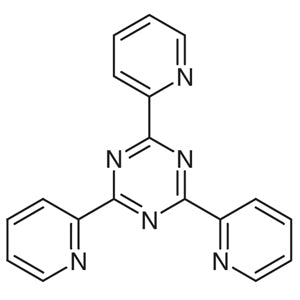
- TCI T0530 3682-35-7 2,4,6-Tri(2-pyridyl)-1,3,5-triazine
- TCI P2142 13228-40-5 2-(2-Pyridyl)indole
- TCI P2098 32959-62-9 2-(2-Pyridyl)benzoxazole
- Organic synthesis reactions benefit from this compound's ability to form stable metal complexes, enhancing reaction efficiency and selectivity.
- Catalytic processes utilizing transition metals require nitrogen-donor ligands, making this compound ideal for promoting redox reactions and complex formation.
- Heterocyclic compound synthesis often relies on nitrogen-donor ligands, and this compound provides a versatile platform for such reactions.
- Metal coordination studies utilize this ligand to investigate the interaction between transition metals and organic substrates.
- Research in catalysis and coordination chemistry frequently incorporates this compound to explore new reaction mechanisms and pathways.
From the TCI brochure
- Tetrazine partner for TCO click reaction (practical example)
| Brand | TCI |
|---|---|
| CAS number | 1671-87-0 |
| Molecular formula | — |
| Purity | — |
| Category | Chemistry > Catalysis and Inorganic Chemistry > Nitrogen-Donor Ligands [Catalysis] |
| Pack sizes | Available in various quantities as per standard laboratory requirements |
| Physical form | Solid (as per standard product description) |
| Storage | Store in a cool, dry place away from direct sunlight |
Data from the TCI brochure
| Jumlah | 4.5 mg, 0.019 mmol; 1.1 equiv. (dilarutkan dalam asetonitril/air (1:1) 1.0 mL, r.t., <1 min) |
|---|
Source: TCI brochure LL100 (2026-04-23)
This compound should be stored in a cool, dry environment to maintain its chemical integrity. It is recommended to keep it in airtight containers to prevent moisture absorption and contamination. Due to its chemical nature, it should be handled with care, using appropriate personal protective equipment such as gloves and safety goggles. Avoid exposure to direct sunlight and ensure proper ventilation in the laboratory. Regular monitoring of storage conditions is essential to preserve the compound's effectiveness and safety. Proper labeling of containers is also important for safe handling and identification.
—
Product Categories
- Organic-Inorganic Hybrid MaterialsMetal Organic Frameworks (MOF) and Their Raw MaterialsOrganic Linker Molecules [Metal Organic Frameworks (MOFs) Precursors]
- Polymer/Macromolecule ReagentsMetal Organic Frameworks (MOF) and Their Raw MaterialsOrganic Linker Molecules [Metal Organic Frameworks (MOFs) Precursors]
Produk Terkait
-
2,4,6-Tri(4-pyridyl)-1,3,5-triazine(purifiedbysublimation) TCI T1937
Regular price From Rp 1.961.400,00Regular price -
5,10,15,20-Tetra(4-pyridyl)porphyrin TCI T2222
Regular price From Rp 4.213.650,00Regular price -
(S)-4-tert-Butyl-2-(2-pyridyl)oxazoline TCI B4104
Regular price From Rp 4.240.950,00Regular price -
2,4,6-Tri(2-pyridyl)-1,3,5-triazine TCI T0530
Regular price From Rp 955.500,00Regular price -
2-(2-Pyridyl)indole TCI P2142
Regular price Rp 3.180.450,00Regular price -
2-(2-Pyridyl)benzoxazole TCI P2098
Regular price Rp 1.431.150,00Regular price -
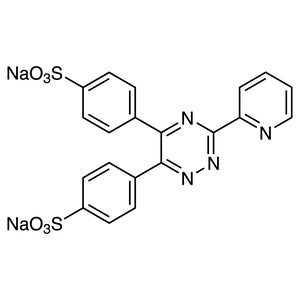
3-(2-Pyridyl)-5,6-bis(4-sulfophenyl)-1,2,4-triazineDisodiumSalt TCI P0830
Regular price Rp 1.035.300,00Regular price -
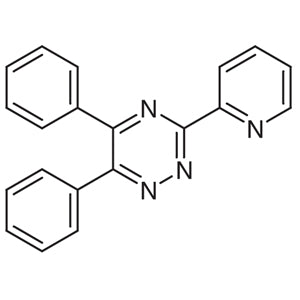
5,6-Diphenyl-3-(2-pyridyl)-1,2,4-triazine TCI D1201
Regular price Rp 848.400,00Regular price