


2-(2-Pyridyl)indole is a chemical compound widely used in laboratory settings, particularly in catalysis and inorganic chemistry. As a nitrogen-donor ligand, it plays a crucial role in the formation of transition metal complexes, which are essential in many synthetic processes. This compound is commonly employed in catalytic reactions to enhance reaction efficiency and selectivity. Its unique molecular structure, featuring two nitrogen atoms capable of acting as electron donors, makes it a versatile tool in both organic and inorganic chemical research.
The compound's stability and reactivity make it a preferred choice for various applications. Its ability to form stable complexes with transition metals contributes to its effectiveness in catalytic systems. Additionally, its thermal stability ensures that it remains functional under a range of reaction conditions. These properties make it a reliable material for use in both academic and industrial research environments. The compound’s chemical versatility allows it to be adapted to multiple experimental setups, making it a valuable resource for chemists.
In Indonesian laboratories, 2-(2-Pyridyl)indole is frequently used in catalytic research and organic synthesis. It is a key component in studies aimed at developing new synthetic methods and improving reaction outcomes. Due to its availability and effectiveness, it is a commonly selected ligand for various chemical processes in both academic and applied research settings. Its consistent performance and reliability have made it a standard material in chemical laboratories across Indonesia.
TCI brochures (PDF)
- Ligands 2025-12-01 · p. 12
Related TCI products
- TCI T1937 42333-78-8 2,4,6-Tri(4-pyridyl)-1,3,5-triazine (purified by sublimation)
- TCI B4104 117408-98-7 (S)-4-tert-Butyl-2-(2-pyridyl)oxazoline
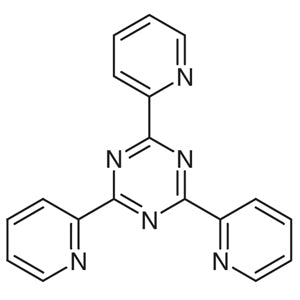
- TCI T0530 3682-35-7 2,4,6-Tri(2-pyridyl)-1,3,5-triazine
- TCI P2098 32959-62-9 2-(2-Pyridyl)benzoxazole
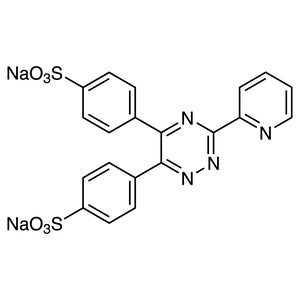
- TCI P0830 28048-33-1 3-(2-Pyridyl)-5,6-bis(4-sulfophenyl)-1,2,4-triazine Disodium Salt
- TCI D3640 1671-87-0 3,6-Di(2-pyridyl)-1,2,4,5-tetrazine
- Catalytic Research: This compound is ideal for catalytic research due to its ability to form stable transition metal complexes, enhancing reaction efficiency and selectivity in various synthetic processes.
- Organic Synthesis: It is widely used in organic synthesis to facilitate the formation of complex molecules, particularly in reactions involving transition metal catalysts.
- Inorganic Chemistry Studies: Its nitrogen-donor properties make it a valuable tool in inorganic chemistry, especially in the study of metal-ligand interactions and coordination chemistry.
- Transition Metal Complex Formation: The compound's ability to bind with transition metals allows it to be used in the creation of high-performance catalysts for industrial and academic applications.
- Chemical Reactivity Testing: It is often employed in experiments that test the reactivity of nitrogen-donor ligands under different reaction conditions and environments.
| Brand | TCI |
|---|---|
| CAS number | 13228-40-5 |
| Molecular formula | — |
| Purity | — |
| Category | Chemistry > Catalysis and Inorganic Chemistry > Nitrogen-Donor Ligands [Catalysis] |
| Pack sizes | Available in various quantities as per supplier specifications |
| Physical form | Solid, typically in crystalline form |
| Storage | Store in a cool, dry place away from light and moisture |
This compound should be stored in a cool, dry place, away from direct light and moisture to maintain its stability and reactivity. It is recommended to use airtight containers to prevent exposure to air and humidity, which may affect its performance. In laboratory settings, it should be handled with appropriate personal protective equipment to ensure safety. Due to its chemical nature, it is important to keep it away from incompatible substances. Regular monitoring of storage conditions is advised to ensure the compound remains in optimal condition for use. Proper labeling and storage practices are essential to maintain the integrity and effectiveness of the material in research applications.
—
Produk Terkait
-
2,4,6-Tri(4-pyridyl)-1,3,5-triazine(purifiedbysublimation) TCI T1937
Regular price From Rp 1.961.400,00Regular price -
(S)-4-tert-Butyl-2-(2-pyridyl)oxazoline TCI B4104
Regular price From Rp 4.240.950,00Regular price -
2,4,6-Tri(2-pyridyl)-1,3,5-triazine TCI T0530
Regular price From Rp 955.500,00Regular price -
2-(2-Pyridyl)benzoxazole TCI P2098
Regular price Rp 1.431.150,00Regular price -
3-(2-Pyridyl)-5,6-bis(4-sulfophenyl)-1,2,4-triazineDisodiumSalt TCI P0830
Regular price Rp 1.035.300,00Regular price -
3,6-Di(2-pyridyl)-1,2,4,5-tetrazine TCI D3640
Regular price From Rp 1.298.850,00Regular price -
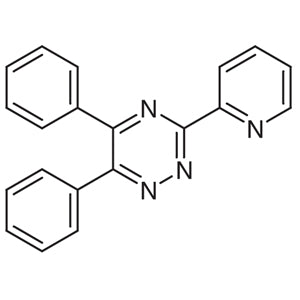
5,6-Diphenyl-3-(2-pyridyl)-1,2,4-triazine TCI D1201
Regular price Rp 848.400,00Regular price -
8-[2-(2-Pyridyl)phenyl]-5H-pyrido[3,2-b]indole TCI P2307
Regular price Rp 4.506.600,00Regular price




![1251503-35-1 8-[2-(2-Pyridyl)phenyl]-5H-pyrido[3,2-b]indole - AMI Scientific](http://amiscientific.com/cdn/shop/files/TCI2510P2307.jpg?v=1769057502&width=533)