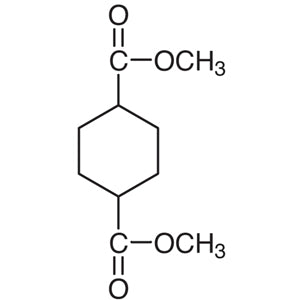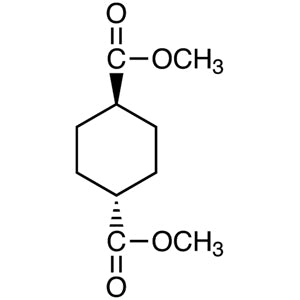
TCI D3723, also known as Dimethyl trans-1,4-Cyclohexanedicarboxylate, is the dimethyl diester of cyclohexane-1,4-dicarboxylic acid, in which the two ester groups sit on opposite sides of the ring in a trans configuration. In the laboratory, this compound serves as a non-heterocyclic building block and, at the same time, as an important model monomer for polymer chemistry. The symmetrical and linear structure produced by the 1,4-trans arrangement makes it a common reference material whenever researchers need a rigid cycloaliphatic linking unit that is free of aromatic rings.
The characteristics that make this compound a preferred choice are the combination of conformational rigidity and chemical stability. In the trans configuration, both ester groups can occupy equatorial positions simultaneously, so the molecule adopts its most stable, extended, and highly predictable shape. This property translates into polymers with good thermal stability and favourable mechanical behaviour. The two ester groups are also readily transformed through transesterification, hydrolysis to the corresponding diacid, or reduction to the diol, so a single starting material can support several research directions at once.
In Indonesian laboratories, this material is commonly used in polyester and coating research. Its role as a defined, symmetrical cycloaliphatic monomer allows academic and industrial research groups to build comparable formulations and to reproduce published synthetic routes reliably. Because one container of the ester can be redirected into diacid or diol chemistry, it fits well into laboratories that run several related projects on a shared inventory of building blocks.
Related TCI products
- TCI M2526 15177-67-0 Monomethyl trans-1,4-Cyclohexanedicarboxylate
- TCI D3702 1687-29-2 Dimethyl cis-1,2-Cyclohexanedicarboxylate
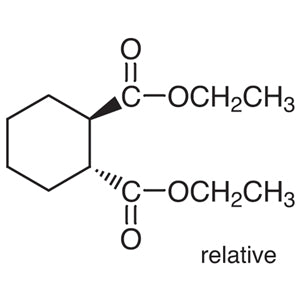
- TCI D3684 17351-22-3 Diethyl trans-1,2-Cyclohexanedicarboxylate
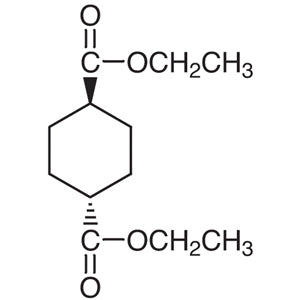
- TCI D3639 19145-96-1 Diethyl trans-1,4-Cyclohexanedicarboxylate
- TCI C1154 94-60-0 Dimethyl 1,4-Cyclohexanedicarboxylate (cis- and trans- mixture)
- TCI C0476 10138-59-7 Diethyl cis-1,2-Cyclohexanedicarboxylate (contains Diethyl trans-1,2-Cyclohexanedicarboxylate)
- Polyester synthesis research: the two methyl ester groups undergo transesterification cleanly, making the compound a convenient cycloaliphatic monomer for preparing and comparing polyester backbones.
- Coating formulation studies: the aromatic-free cycloaliphatic ring provides a rigid linking unit suitable for research on resins and coating systems developed in laboratory-scale work.
- Model monomer for polymer chemistry: its symmetrical, linear trans geometry gives researchers a well-defined reference structure when studying structure-property relationships in polymer chains.
- Preparation of the corresponding diacid: controlled hydrolysis of both ester groups converts the material into cyclohexane-1,4-dicarboxylic acid for further synthetic or comparative work.
- Preparation of cycloaliphatic diols: reduction of the two ester functions yields the corresponding diol, allowing a single starting material to serve several downstream research directions.
| Brand | TCI |
|---|---|
| CAS number | 3399-22-2 |
| Molecular formula | — |
| Purity | — |
| Category | Chemistry > Building Blocks > Non-Heterocyclic Building Blocks |
| Pack sizes | available in standard TCI catalogue pack sizes; please confirm the required quantity when ordering |
| Physical form | — |
| Storage | keep in a tightly closed original container, in a cool, dry, and well-ventilated place |
- Chemical name: Dimethyl trans-1,4-Cyclohexanedicarboxylate
Store the material in its tightly closed original container in a cool, dry, and well-ventilated area, away from direct sunlight, heat sources, and incompatible chemicals such as strong oxidising agents, strong acids, and strong bases. Amber glass or the supplier's original packaging is suitable, and containers should be resealed promptly after each use to limit exposure to atmospheric moisture. Handle the compound in a fume hood or a well-ventilated workspace, and wear standard personal protective equipment including safety goggles, a laboratory coat, and chemically resistant gloves. Avoid contact with skin and eyes and avoid inhaling any dust or vapour. Always consult the manufacturer's Safety Data Sheet before handling, and dispose of residues and contaminated materials according to institutional chemical waste procedures.
—
Produk Terkait
-
Monomethyltrans-1,4-Cyclohexanedicarboxylate TCI M2526
Regular price From Rp 1.008.000,00Regular price -
Dimethylcis-1,2-Cyclohexanedicarboxylate TCI D3702
Regular price From Rp 1.458.450,00Regular price -
Diethyltrans-1,2-Cyclohexanedicarboxylate TCI D3684
Regular price Rp 9.223.200,00Regular price -
Diethyltrans-1,4-Cyclohexanedicarboxylate TCI D3639
Regular price From Rp 3.075.450,00Regular price -
Dimethyl1,4-Cyclohexanedicarboxylate(cis-andtrans-mixture) TCI C1154
Regular price From Rp 717.150,00Regular price -
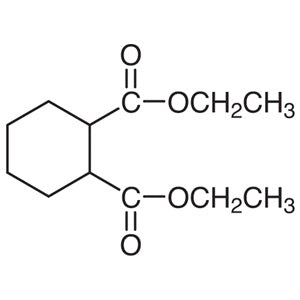
Diethylcis-1,2-Cyclohexanedicarboxylate(containsDiethyltrans-1,2-Cyclohexanedicarboxylate) TCI C0476
Regular price From Rp 1.749.300,00Regular price -
Diethylcis-1,2-Cyclohexanedicarboxylate TCI D3713
Regular price Rp 5.089.350,00Regular price -
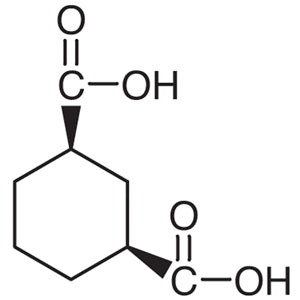
cis-1,3-CyclohexanedicarboxylicAcid TCI C2197
Regular price From Rp 4.240.950,00Regular price