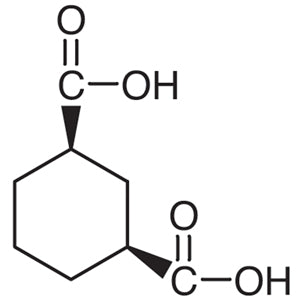
cis-1,3-Cyclohexanedicarboxylic Acid (CAS 2305-31-9) is an organic compound belonging to the class of cyclic aliphatic dicarboxylic acids and serves as an important building block in chemical synthesis. The molecule features a cyclohexane ring carrying two carboxyl groups (–COOH) attached at positions 1 and 3 in the cis configuration. In the laboratory, this material acts as a versatile precursor for assembling more complex molecules through esterification, amidation, or coordination with metal ions. The presence of two reactive acid groups makes it an ideal starting point for designing ligands, polymer monomers, and pharmaceutical or agrochemical intermediates, allowing synthetic chemists to build target structures step by step with predictable reactivity.
The main advantage of this compound lies in the cis geometry of its two carboxyl groups, which produces a characteristic bond angle and functional-group density that offer stereochemical flexibility not available in the trans isomer. This arrangement positions the two acid groups on the same face of the ring, enabling selective and well-defined interactions in both solution-phase and coordination chemistry. The compound is a stable dicarboxylic acid that is straightforward to weigh, dissolve, and handle under routine laboratory conditions, and its well-characterized reactivity supports reproducible results across repeated syntheses. For researchers seeking a dependable aliphatic diacid scaffold, this TCI-grade reagent offers consistent quality that simplifies method development and scale-up work.
In Indonesian laboratories, this reagent is commonly applied in organic chemistry, inorganic chemistry, and materials science research groups, where it is used to construct new molecular architectures in a systematic and controlled manner. Academic and industrial researchers employ it in esterification and amidation studies to generate monomers, crosslinkers, and coordination complexes, while polymer chemists use it as a rigid aliphatic dicarboxylic acid component in polyamide and polyester formulations. As a stocked item supplied by AMI Scientific, it supports both teaching laboratories and active research projects, ensuring that chemists across Indonesia can obtain a consistent, traceable building block for exploratory synthesis and method development.
Related TCI products
- TCI M2526 15177-67-0 Monomethyl trans-1,4-Cyclohexanedicarboxylate
- TCI D3723 3399-22-2 Dimethyl trans-1,4-Cyclohexanedicarboxylate
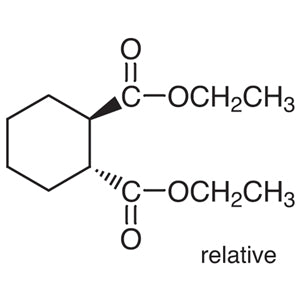
- TCI D3713 17351-07-4 Diethyl cis-1,2-Cyclohexanedicarboxylate
- TCI D3702 1687-29-2 Dimethyl cis-1,2-Cyclohexanedicarboxylate
- TCI D3684 17351-22-3 Diethyl trans-1,2-Cyclohexanedicarboxylate
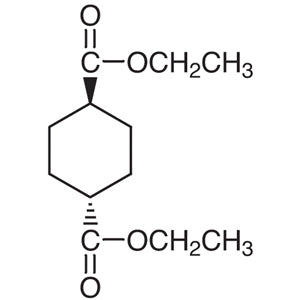
- TCI D3639 19145-96-1 Diethyl trans-1,4-Cyclohexanedicarboxylate
- Ligand Design – The two cis-oriented carboxyl groups provide two well-defined metal-binding sites, making this compound a practical scaffold for constructing chelating ligands and coordination complexes in inorganic synthesis.
- Polymer Monomer Synthesis – As a rigid aliphatic dicarboxylic acid, it can be incorporated into polyester and polyamide backbones through esterification or amidation, giving polymer chemists a useful building block for chain extension and crosslinking studies.
- Pharmaceutical and Agrochemical Intermediates – Its reactive carboxyl groups allow straightforward derivatization into esters, amides, and other functional handles, enabling stepwise assembly of bioactive molecules in medicinal chemistry programs.
- Materials Science Research – The defined cis geometry and predictable reactivity make it a useful component for constructing coordination polymers, metal–organic frameworks, and functional organic materials with controlled stereochemistry.
- Teaching and Method Development – As a well-characterized dicarboxylic acid with a defined CAS registry number, it serves as a dependable substrate for teaching esterification reactions and for validating analytical methods such as titration and chromatography.
| Brand | TCI (product code C2197) |
|---|---|
| CAS number | 2305-31-9 |
| Molecular formula | — |
| Purity | — |
| Category | Chemistry > Building Blocks > Non-Heterocyclic Building Blocks |
| Pack sizes | available in standard TCI container sizes; confirm the current pack options with AMI Scientific at the time of ordering. |
| Physical form | — |
| Storage | keep the container tightly closed in a cool, dry area, protected from moisture and direct sunlight. |
- Chemical name: cis-1,3-Cyclohexanedicarboxylic Acid
Store this reagent in a cool, dry, well-ventilated area, away from direct sunlight, moisture, and incompatible materials such as strong bases or oxidizing agents. Keep it in its original, tightly sealed container, preferably the TCI-supplied bottle, and reseal immediately after each use to prevent moisture uptake and contamination. Wear appropriate personal protective equipment, including laboratory gloves and safety glasses, when handling the material, and avoid inhaling any dust by working in a fume hood when transferring larger quantities. Keep the product labeled with its CAS number and batch information, and follow standard laboratory waste-disposal procedures applicable to organic acids.
*Note: Assumptions made where the Indonesian reference was silent — pack sizes, physical form, and purity are not specified and are therefore left to confirmation at the time of ordering.*
—
Produk Terkait
-
Monomethyltrans-1,4-Cyclohexanedicarboxylate TCI M2526
Regular price From Rp 1.008.000,00Regular price -
Dimethyltrans-1,4-Cyclohexanedicarboxylate TCI D3723
Regular price From Rp 1.008.000,00Regular price -
Diethylcis-1,2-Cyclohexanedicarboxylate TCI D3713
Regular price Rp 5.089.350,00Regular price -
Dimethylcis-1,2-Cyclohexanedicarboxylate TCI D3702
Regular price From Rp 1.458.450,00Regular price -
Diethyltrans-1,2-Cyclohexanedicarboxylate TCI D3684
Regular price Rp 9.223.200,00Regular price -
Diethyltrans-1,4-Cyclohexanedicarboxylate TCI D3639
Regular price From Rp 3.075.450,00Regular price -
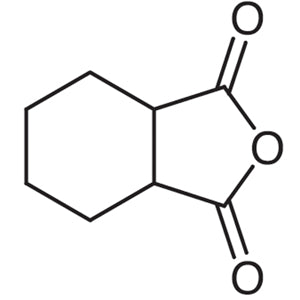
(+/-)-trans-1,2-CyclohexanedicarboxylicAnhydride TCI C1657
Regular price From Rp 2.942.100,00Regular price -
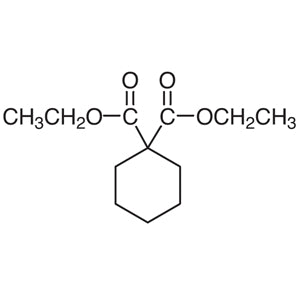
Diethyl1,1-Cyclohexanedicarboxylate TCI C1640
Regular price From Rp 1.060.500,00Regular price