![3,6-Di(2-thienyl)-2,5-dihydropyrrolo[3,4-c]pyrrole-1,4-dione (CAS 850583-75-4) - TCI D3969 - AMI Scientific](http://amiscientific.com/cdn/shop/files/TCI2510D3969.jpg?v=1768817986&width=1946)
![3,6-Di(2-thienyl)-2,5-dihydropyrrolo[3,4-c]pyrrole-1,4-dione (CAS 850583-75-4) - TCI D3969 - AMI Scientific](http://amiscientific.com/cdn/shop/files/TCI2510D3969.jpg?v=1768817986&width=1445)
TCI D3969 3,6-Di(2-thienyl)-2,5-dihydropyrrolo[3,4-c]pyrrole-1,4-dione, CAS 850583-75-4, is a diketopyrrolopyrrole (DPP) core compound bearing two thiophene ring substituents. It belongs to the group of semiconductor building blocks for polymers and macromolecules, and it stands as one of the most widely recognized frameworks in the development of organic electronic materials. The rigid bicyclic lactam structure, combined with two thiophene units, produces an extended conjugated system with strong absorption in the visible region. In materials laboratories, this compound commonly serves as the starting point for preparing monomers, dyes, and small-molecule semiconductors.
The main reasons researchers select this compound are its strong electron-acceptor character, its good chemical and thermal stability, and its ability to form ordered molecular arrangements arising from inter-lactam hydrogen bonding and pi-stacking interactions. The two lactam nitrogen atoms provide readily modified alkylation positions, allowing researchers to attach branched alkyl chains to tune solubility without altering the conjugated core. Once alkylated, the thiophene units can be halogenated and then used in cross-coupling reactions to construct donor-acceptor copolymers, making the material a versatile platform rather than a single-purpose reagent.
In Indonesian laboratories, this building block is typically used within university and institutional research groups working on organic electronic materials, synthetic polymer chemistry, and functional dye development. It is generally handled in synthesis laboratories where alkylation, halogenation, and cross-coupling steps are carried out in sequence, and where the resulting monomers or small molecules are subsequently characterized and evaluated. Its role is usually that of a core scaffold introduced early in a multi-step preparation route.
TCI brochures (PDF)
- Thiophenes 2026-06-29 · p. 7
- Building Blocks for Organic Semiconductor 2026-03-24 · p. 39
Related TCI products
- TCI B5486 1351986-34-9 2,5-Bis(2-octyldodecyl)-3,6-bis[5-(4,4,5,5-tetramethyl-1,3,2-dioxaborolan-2-yl)thiophen-2-yl]pyrrolo[3,4-c]pyrrole-1,4(2H,5H)-dione
- TCI B5996 1412448-63-5 2,5-Bis(2-decyltetradecyl)-3,6-bis[5-(4,4,5,5-tetramethyl-1,3,2-dioxaborolan-2-yl)thiophen-2-yl]pyrrolo[3,4-c]pyrrole-1,4(2H,5H)-dione
- TCI B4684 457931-23-6 4,7-Bis(5-bromo-4-n-octyl-2-thienyl)-2,1,3-benzothiadiazole
- TCI B4453 1025451-57-3 4,7-Bis(5-trimethylstannyl-2-thienyl)-2,1,3-benzothiadiazole
- TCI B3886 288071-87-4 4,7-Bis(5-bromo-2-thienyl)-2,1,3-benzothiadiazole
- TCI D4487 165190-76-1 4,7-Di(2-thienyl)-2,1,3-benzothiadiazole
- Donor-acceptor copolymer synthesis: after alkylation and halogenation of the thiophene units, the compound serves as the acceptor monomer in cross-coupling reactions that build extended conjugated polymer chains.
- Small-molecule organic semiconductor preparation: the extended conjugated DPP-thiophene system provides the strong visible absorption and electron-accepting character needed for defined molecular semiconductor targets.
- Functional dye and pigment research: the rigid bicyclic lactam core combined with two thiophene rings gives intense visible light absorption suitable for developing high-performance colorant systems.
- Monomer scaffold development: the two lactam nitrogen atoms offer accessible alkylation positions, letting researchers install branched alkyl chains to adjust solubility while preserving the conjugated core.
- Molecular ordering and self-assembly studies: inter-lactam hydrogen bonding together with pi-stacking interactions promotes ordered molecular arrangements useful for investigating solid-state packing behaviour.
| Brand | TCI |
|---|---|
| CAS number | 850583-75-4 |
| Molecular formula | — |
| Purity | — |
| Category | Materials Science > Material Building Blocks > Polymer/Macromolecule Semiconductor Building Blocks |
| Pack sizes | available in the standard catalogue pack sizes offered by the manufacturer for this item |
| Physical form | — |
| Storage | store in a tightly closed container, protected from light and moisture, in accordance with the manufacturer's documentation |
- Chemical name: 3,6-Di(2-thienyl)-2,5-dihydropyrrolo[3,4-c]pyrrole-1,4-dione
Store this compound in its original tightly closed container, kept in a cool, dry, and well-ventilated area away from direct light and sources of heat or ignition. Amber glass or opaque containers are suitable for limiting light exposure, and the container should be resealed promptly after each use to prevent moisture uptake. Handle the material inside a fume hood using gloves, safety goggles, and a laboratory coat, and avoid generating or inhaling dust during weighing and transfer. Always consult the manufacturer's safety data sheet for the definitive handling, incompatibility, and disposal instructions before beginning work.
—
Produk Terkait
-
2,5-Bis(2-octyldodecyl)-3,6-bis[5-(4,4,5,5-tetramethyl-1,3,2-dioxaborolan-2-yl)thiophen-2-yl]pyrrolo[3,4-c]pyrrole-1,4(2H,5H)-dione TCI B5486
Regular price Rp 6.704.250,00Regular price -
2,5-Bis(2-decyltetradecyl)-3,6-bis[5-(4,4,5,5-tetramethyl-1,3,2-dioxaborolan-2-yl)thiophen-2-yl]pyrrolo[3,4-c]pyrrole-1,4(2H,5H)-dione TCI B5996
Regular price Rp 7.684.950,00Regular price -
4,7-Bis(5-bromo-4-n-octyl-2-thienyl)-2,1,3-benzothiadiazole TCI B4684
Regular price Rp 4.479.300,00Regular price -
4,7-Bis(5-trimethylstannyl-2-thienyl)-2,1,3-benzothiadiazole TCI B4453
Regular price Rp 5.034.750,00Regular price -
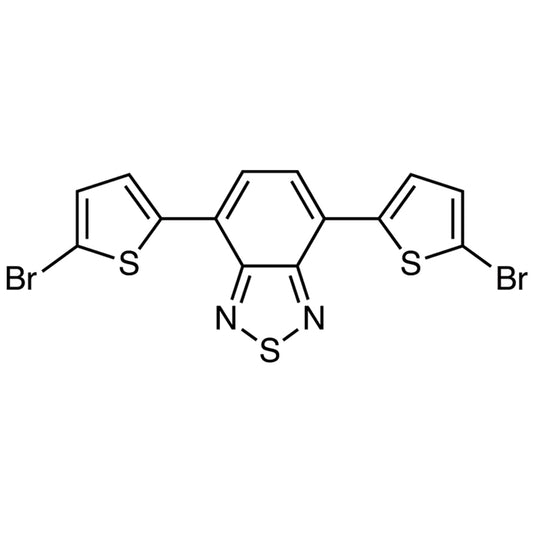
4,7-Bis(5-bromo-2-thienyl)-2,1,3-benzothiadiazole TCI B3886
Regular price From Rp 1.696.800,00Regular price -
4,7-Di(2-thienyl)-2,1,3-benzothiadiazole TCI D4487
Regular price From Rp 2.650.200,00Regular price -
3-(5-Bromo-2-thienyl)-2,5-bis(2-ethylhexyl)-6-(2-thienyl)pyrrolo[3,4-c]pyrrole-1,4-dione TCI B5456
Regular price Rp 7.023.450,00Regular price -
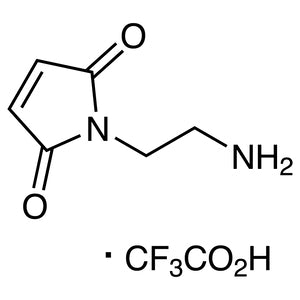
1-(2-Aminoethyl)-1H-pyrrole-2,5-dioneTrifluoroacetate TCI A3663
Regular price From Rp 2.837.100,00Regular price
![1351986-34-9 2,5-Bis(2-octyldodecyl)-3,6-bis[5-(4,4,5,5-tetramethyl-1,3,2-dioxaborolan-2-yl)thiophen-2-yl]pyrrolo[3,4-c]pyrrole-1,4(2H,5H)-dione - AMI Scientific](http://amiscientific.com/cdn/shop/files/TCI2510B5486.jpg?v=1769141888&width=533)
![2,5-Bis(2-decyltetradecyl)-3,6-bis[5-(4,4,5,5-tetramethyl-1,3,2-dioxaborolan-2-yl)thiophen-2-yl]pyrrolo[3,4-c]pyrrole-1,4(2H,5H)-dione (CAS 1412448-63-5) - TCI B5996 - AMI Scientific](http://amiscientific.com/cdn/shop/files/TCI2510B5996.jpg?v=1768204466&width=533)



![1308671-90-0 3-(5-Bromo-2-thienyl)-2,5-bis(2-ethylhexyl)-6-(2-thienyl)pyrrolo[3,4-c]pyrrole-1,4-dione - AMI Scientific](http://amiscientific.com/cdn/shop/files/TCI2510B5456.jpg?v=1768815794&width=533)