1-(2-Aminoethyl)-1H-pyrrole-2,5-dione Trifluoroacetate is a specialized chemical compound used in laboratory settings for its unique reactivity and structural versatility. This compound serves as a key component in chemical and biochemical experiments, particularly in the field of organic synthesis and molecular linking. Its ability to form stable intermediates and participate in crosslinking reactions makes it an essential tool for researchers aiming to construct complex molecular structures. In the laboratory, it is widely utilized as a linker or crosslinker, facilitating the attachment of various molecular entities to accelerate reaction processes and enhance the formation of intricate chemical compounds.
The compound's chemical properties, including its stability under controlled conditions and its reactivity towards diverse environmental factors, make it a preferred choice for advanced research applications. Its complex molecular structure allows for multiple interaction points, enabling it to engage with a wide range of substrates. This versatility supports its use in both synthetic and analytical chemistry, offering researchers the flexibility to tailor reactions according to specific experimental needs. The compound's reactivity and structural adaptability contribute to its growing popularity in biochemical and organic chemistry research.
In Indonesian laboratories, this compound is commonly used in academic and industrial research settings. It is particularly relevant for studies involving molecular reactivity, drug development, and the synthesis of novel chemical compounds. Its application spans across universities, research institutions, and pharmaceutical industries, where it plays a crucial role in advancing scientific understanding and innovation.
Related TCI products
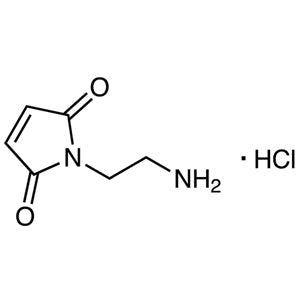
- TCI A2436 134272-64-3 N-(2-Aminoethyl)maleimide Hydrochloride
- TCI B5486 1351986-34-9 2,5-Bis(2-octyldodecyl)-3,6-bis[5-(4,4,5,5-tetramethyl-1,3,2-dioxaborolan-2-yl)thiophen-2-yl]pyrrolo[3,4-c]pyrrole-1,4(2H,5H)-dione
- TCI B5456 1308671-90-0 3-(5-Bromo-2-thienyl)-2,5-bis(2-ethylhexyl)-6-(2-thienyl)pyrrolo[3,4-c]pyrrole-1,4-dione
- TCI A2914 4-[(2-Aminoethyl)carbamoyl]benzenesulfonyl Azide Trifluoroacetate
- TCI M3573 1631-28-3 1-(p-Tolyl)-1H-pyrrole-2,5-dione
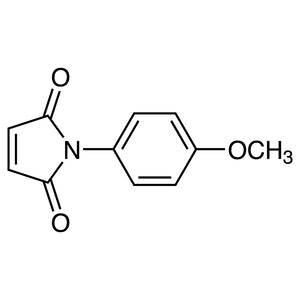
- TCI M3555 1081-17-0 1-(4-Methoxyphenyl)-1H-pyrrole-2,5-dione
- Used in organic synthesis for creating complex molecular structures due to its ability to act as a versatile linker.
- Applied in biochemical research for crosslinking proteins and other biomolecules to study molecular interactions.
- Utilized in drug development to design and test new pharmaceutical compounds through targeted chemical modifications.
- Employed in analytical chemistry for the preparation of reagents and intermediates in various chemical reactions.
- Integrated into research projects focusing on molecular reactivity and the development of novel chemical compounds.
| Brand | TCI |
|---|---|
| CAS number | 146474-00-2 |
| Molecular formula | — |
| Purity | — |
| Category | Chemistry > Chemical Biology > Linkers and Crosslinkers |
| Pack sizes | Available in various quantities as per supplier specifications |
| Physical form | Solid or powder, depending on the packaging |
| Storage | Store in a cool, dry place away from direct sunlight and moisture |
This compound should be stored in a cool, dry environment to maintain its chemical stability. It is recommended to keep it in a tightly sealed container to prevent exposure to moisture and air, which can affect its reactivity. Suitable storage containers include glass or high-density polyethylene vessels that are resistant to chemical degradation. In laboratory settings, it is important to handle the compound with care, using appropriate personal protective equipment such as gloves and safety goggles. Avoid contact with incompatible substances, and ensure proper ventilation when working with the material. Regular monitoring of storage conditions is essential to ensure the compound remains effective for its intended applications.
—
Product Categories
Produk Terkait
-
N-(2-Aminoethyl)maleimideHydrochloride TCI A2436
Regular price From Rp 3.498.600,00Regular priceRp 2.462.250,00Sale price From Rp 3.498.600,00 -
2,5-Bis(2-octyldodecyl)-3,6-bis[5-(4,4,5,5-tetramethyl-1,3,2-dioxaborolan-2-yl)thiophen-2-yl]pyrrolo[3,4-c]pyrrole-1,4(2H,5H)-dione TCI B5486
Regular price Rp 6.756.750,00Regular priceRp 4.740.750,00Sale price Rp 6.756.750,00 -
3-(5-Bromo-2-thienyl)-2,5-bis(2-ethylhexyl)-6-(2-thienyl)pyrrolo[3,4-c]pyrrole-1,4-dione TCI B5456
Regular price Rp 7.075.950,00Regular priceRp 4.963.350,00Sale price Rp 7.075.950,00 -
AzideTrifluoroacetate TCI A2914
Regular price Rp 2.782.500,00Regular priceRp 1.961.400,00Sale price Rp 2.782.500,00 -
1-(p-Tolyl)-1H-pyrrole-2,5-dione TCI M3573
Regular price From Rp 2.439.150,00Regular priceRp 1.720.950,00Sale price From Rp 2.439.150,00 -
1-(4-Methoxyphenyl)-1H-pyrrole-2,5-dione TCI M3555
Regular price Rp 2.439.150,00Regular priceRp 1.720.950,00Sale price Rp 2.439.150,00 -
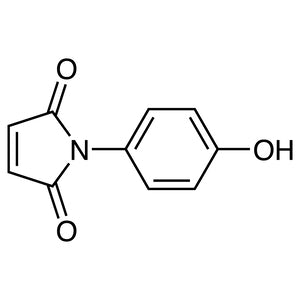
1-(4-Hydroxyphenyl)-1H-pyrrole-2,5-dione TCI H1137
Regular price From Rp 2.702.700,00Regular priceRp 1.905.750,00Sale price From Rp 2.702.700,00 -
5-(2-Ethylhexyl)-4H-thieno[3,4-c]pyrrole-4,6(5H)-dione TCI E1397
Regular price Rp 7.684.950,00Regular priceRp 5.389.650,00Sale price Rp 7.684.950,00