

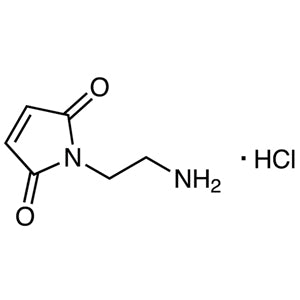
N-(2-Aminoethyl)maleimide Hydrochloride is a chemical compound widely used in biochemical and organic chemistry applications. It serves as a key reagent in molecular conjugation processes, particularly in crosslinking and protein modification. This compound plays a crucial role in the development of bioactive molecules and in studying molecular reactivity. Its ability to react selectively with thiol (-SH) groups on proteins makes it an essential tool for creating specific molecular linkages. This characteristic is vital in various research areas, including bioconjugation and functionalized biomolecule synthesis.
The compound is valued for its reactivity and stability under controlled laboratory conditions. These properties make it a reliable choice for a wide range of experiments. Its chemical structure allows for efficient conjugation reactions, which are fundamental in biochemistry and molecular biology. The compound’s predictable behavior and consistent performance contribute to its popularity among researchers. Its reliability ensures reproducibility in experimental outcomes, which is critical in scientific research.
In Indonesian laboratories, N-(2-Aminoethyl)maleimide Hydrochloride is commonly used in biomedical research, drug development, and protein analysis. Its availability and quality make it a preferred material for academic and industrial applications. Researchers in Indonesia rely on this compound for its effectiveness in creating stable molecular linkages, supporting advancements in biochemistry and related fields.
TCI brochures (PDF)
- Cross-linkers 2026-04-14 · p. 2
- Bioconjugation Reagents 2026-07-07 · p. 8
- Reagents for Biological Research 2025-03-11 · p. 29
Related TCI products
- Bioconjugation studies benefit from this compound's ability to form stable linkages with thiol groups, enabling precise molecular attachment in drug development and diagnostics.
- Protein modification experiments utilize its reactivity with cysteine residues, allowing for targeted functionalization of biomolecules in biotechnology applications.
- Crosslinking applications leverage its capacity to connect different molecular entities, enhancing the study of protein interactions and structural analysis.
- Immunological assays incorporate this compound for creating antibody conjugates, improving the specificity and sensitivity of detection methods.
- Molecular labeling techniques use its reactivity to attach fluorescent or radioactive tags to biomolecules, facilitating tracking and analysis in biochemical research.
| Brand | TCI |
|---|---|
| CAS number | 134272-64-3 |
| Molecular formula | — |
| Purity | — |
| Category | Chemistry > Chemical Biology > Linkers and Crosslinkers |
| Pack sizes | Available in various quantities as per supplier specifications |
| Physical form | Solid (as per standard product description) |
| Storage | Store in a cool, dry place away from moisture and light |
This compound should be stored in a cool, dry environment, away from moisture and direct light to maintain its stability and reactivity. It is recommended to use airtight containers to prevent exposure to air and humidity, which could affect its chemical integrity. In a laboratory setting, it should be handled with appropriate personal protective equipment, such as gloves and safety goggles, to ensure safety during use. Proper ventilation is also essential when working with this compound to minimize inhalation risks. It is important to follow standard laboratory safety protocols to prevent any potential hazards associated with chemical handling. The compound should not be stored near incompatible materials to avoid any chemical reactions that could compromise its quality or safety.
—
Product Categories
Produk Terkait
-
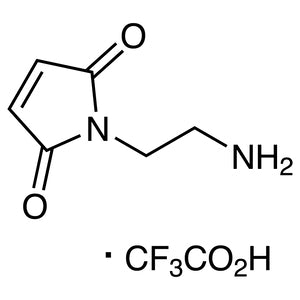
1-(2-Aminoethyl)-1H-pyrrole-2,5-dioneTrifluoroacetate TCI A3663
Regular price From Rp 2.837.100,00Regular price -
N-(2-Hydroxyethyl)maleimide TCI H1544
Regular price From Rp 3.312.750,00Regular price -
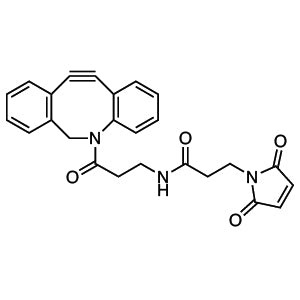
DBCO-maleimide(2mg*5) TCI D5849
Regular price Rp 6.042.750,00Regular price -
DBCO-maleimide TCI D4739
Regular price Rp 9.514.050,00Regular price -
Methyl-PEG12-Maleimide TCI M3051
Regular price Rp 6.095.250,00Regular price -
N-(2-Aminoethyl)piperazine TCI A0304
Regular price From Rp 505.050,00Regular price -
Tris(2-aminoethyl)amine TCI T1243
Regular price From Rp 769.650,00Regular price -
tert-Butyl2-[(4R,6R)-6-(2-Aminoethyl)-2,2-dimethyl-1,3-dioxan-4-yl]acetate TCI B3702
Regular price From Rp 477.750,00Regular price



![125995-13-3 tert-Butyl 2-[(4R,6R)-6-(2-Aminoethyl)-2,2-dimethyl-1,3-dioxan-4-yl]acetate - AMI Scientific](http://amiscientific.com/cdn/shop/files/TCI2510B3702_705847bc-29c8-4b1a-a9b8-9f4767f456f2.jpg?v=1767433734&width=533)
![125995-13-3 tert-Butyl 2-[(4R,6R)-6-(2-Aminoethyl)-2,2-dimethyl-1,3-dioxan-4-yl]acetate - AMI Scientific](http://amiscientific.com/cdn/shop/files/TCI2510B3702.jpg?v=1772179478&width=533)