TCI D5849 DBCO-maleimide is a heterobifunctional crosslinking reagent that combines a dibenzocyclooctyne (DBCO) group at one end with a maleimide group at the other. The material is supplied as a set of five vials containing 2 mg each, a format designed so that every experiment can use a fresh vial without repeatedly opening the same package. Its role in the laboratory is to bridge two different molecules: one side attaches to a thiol group, while the other side waits for an azide partner to be reacted in a subsequent step.
The property that makes this reagent so useful is the orthogonality of its two reactive groups. The maleimide reacts selectively with the thiol group of a free cysteine at near-neutral pH, forming a stable thioether bond. Meanwhile, the DBCO undergoes strain-promoted azide–alkyne cycloaddition (SPAAC) with azide groups, proceeding spontaneously without requiring any copper catalyst at all. The copper-free nature of this reaction is highly important for biological work, because copper ions can damage proteins and kill cells. A single reagent therefore enables a controlled two-stage conjugation.
In Indonesian laboratories, this reagent fits naturally into bioconjugation work carried out in university research groups, biotechnology institutes, and analytical service laboratories. The five-vial presentation suits settings where experiments are run intermittently rather than continuously, since each run can draw on an unopened vial. Groups working on protein labelling and click chemistry benefit from a reagent that requires no copper catalyst system to be established locally, keeping the workflow simple and compatible with cell-based experiments.
Advantages (TCI brochure)
- Packaged as a set of five 2 mg bottles, saving weighing time
- Packaging allows full utilization of the content
- Copper(I)-free click reaction with azides due to strained azacyclooctyne moiety
TCI brochures (PDF)
- Copper-free Click Reaction Linkers 2026-04-30 · p. 1
- Pre-weighed Bioconjugation Reagents 2025-06-26 · p. 2
- Bioconjugation Reagents 2026-07-07 · p. 4
- Click Chemistry 2026-09-08 · p. 17
- Reagents for Biological Research 2025-03-11 · p. 32
Related TCI products
- TCI D4739 1395786-30-7 DBCO-maleimide
- TCI A2436 134272-64-3 N-(2-Aminoethyl)maleimide Hydrochloride
- TCI H1544 1585-90-6 N-(2-Hydroxyethyl)maleimide
- TCI B4062 1263166-93-3 N-(1R,8S,9s)-Bicyclo[6.1.0]non-4-yn-9-ylmethyloxycarbonyl-1,8-diamino-3,6-dioxaoctane
- TCI M3468 1802907-92-1 Methyltetrazine-PEG4-NHS Ester
- TCI M3051 2853560-28-6 Methyl-PEG12-Maleimide
- Protein labelling via free cysteine residues: the maleimide end couples selectively to thiol groups at near-neutral pH, leaving the DBCO end available for a later azide partner.
- Copper-free click chemistry conjugation: the DBCO group undergoes strain-promoted azide–alkyne cycloaddition spontaneously, so no copper catalyst has to be introduced into the reaction mixture.
- Two-stage controlled bioconjugation: the orthogonality of the maleimide and DBCO groups allows each coupling step to be performed and checked separately before proceeding to the next.
- Live-cell compatible conjugation work: because the SPAAC reaction avoids copper ions entirely, it removes a reagent known to damage proteins and kill cells during labelling.
- Bridging thiol-bearing and azide-bearing molecules: the heterobifunctional design joins two chemically different partners that could not otherwise be linked in a single controlled sequence.
From the TCI brochure
- Click reaction with an azide-bearing fluorescent dye, followed by labeling of BSA bearing an SH group (obtained with Traut's reagent)
| Brand | TCI |
|---|---|
| CAS number | 1395786-30-7 |
| Molecular formula | — |
| Purity | — |
| Category | Chemistry > Chemical Biology > Conjugation Chemistry / Click Chemistry |
| Pack sizes | set of five vials, 2 mg each (2 mg × 5) |
| Physical form | — |
| Storage | store according to the manufacturer's stated conditions on the product label |
- Reactive groups: dibenzocyclooctyne (DBCO) and maleimide, one at each end
Data from the TCI brochure
| Konsentrasi larutan D5849 | 0.01 M dalam DMSO (500 µL) (Langkah 2 prosedur, suhu ruang) |
|---|---|
| Waktu reaksi click | 1 jam (25°C, suhu ruang) |
| Waktu reaksi dengan BSA | 30 menit (25°C, suhu ruang) |
Source: TCI brochure RR062 (2026-04-30)
Store the reagent under the conditions stated by the manufacturer on the product label, keeping the vials tightly closed in their original packaging and protected from moisture. The five-vial format is intended to limit repeated opening of a single container, so open only the vial required for the current experiment and keep the remainder sealed. Handle the material in a well-ventilated area or a fume hood, wearing gloves, safety glasses, and a laboratory coat. Prepare solutions immediately before use and avoid unnecessary exposure to air and humidity. Consult the manufacturer's safety data sheet before handling, and dispose of residues in accordance with institutional chemical waste procedures.
—
Product Categories
- Chemical BiologyConjugation Chemistry/Click ChemistryCopper-free Click Reaction Reagents
- Chemical BiologyLinkers and CrosslinkersHeterobifunctional Cross-Linkers
- Chemical BiologyBioconjugationCopper-free Click Reaction Reagents
- Chemical BiologyBioconjugationHeterobifunctional Cross-Linkers
- Pharmaceutical Development and Drug Discovery Research ReagentsLinkers and CrosslinkersHeterobifunctional Cross-Linkers
- Biochemicals and ReagentsBioconjugationCopper-free Click Reaction Reagents
- Biochemicals and ReagentsBioconjugationHeterobifunctional Cross-Linkers
- Pharmaceutical Development and Drug Discovery ResearchBioconjugationCopper-free Click Reaction Reagents
- Pharmaceutical Development and Drug Discovery ResearchBioconjugationHeterobifunctional Cross-Linkers
- Pharmaceutical Development and Drug Discovery ResearchLinkers and CrosslinkersHeterobifunctional Cross-Linkers
- Pharmaceutical Development and Drug Discovery ResearchConjugation Chemistry/Click ChemistryCopper-free Click Reaction Reagents
Produk Terkait
-
DBCO-maleimide TCI D4739
Regular price Rp 9.514.050,00Regular price -
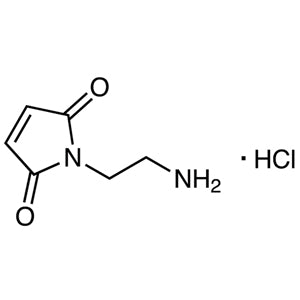
N-(2-Aminoethyl)maleimideHydrochloride TCI A2436
Regular price From Rp 3.446.100,00Regular price -
N-(2-Hydroxyethyl)maleimide TCI H1544
Regular price From Rp 3.312.750,00Regular price -
N-(1R,8S,9s)-Bicyclo[6.1.0]non-4-yn-9-ylmethyloxycarbonyl-1,8-diamino-3,6-dioxaoctane TCI B4062
Regular price From Rp 4.399.500,00Regular price -
Methyltetrazine-PEG4-NHSEster TCI M3468
Regular price From Rp 2.650.200,00Regular price -
Methyl-PEG12-Maleimide TCI M3051
Regular price Rp 6.095.250,00Regular price -
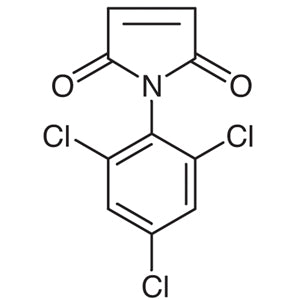
N-(2,4,6-Trichlorophenyl)maleimide TCI T1987
Regular price Rp 3.525.900,00Regular price -
2,3-Bis(2,4,5-trimethyl-3-thienyl)maleimide TCI B1535
Regular price From Rp 2.809.800,00Regular price


![1263166-93-3 N-(1R,8S,9s)-Bicyclo[6.1.0]non-4-yn-9-ylmethyloxycarbonyl-1,8-diamino-3,6-dioxaoctane - AMI Scientific](http://amiscientific.com/cdn/shop/files/TCI2510B4062_d8124249-9a3f-43c3-aba1-176f03bda357.jpg?v=1767435179&width=533)