TCI B4062, with the CAS number 1263166-93-3, is a complex chemical compound used in the field of chemical biology, particularly in conjugation and click chemistry applications. This compound plays a crucial role in laboratory settings where the synthesis of bioactive molecules is required. Its unique molecular structure, featuring oxirane chains and amino groups, enables specific chemical reactions that are essential for the development of pharmaceuticals and biomarkers. Due to its functional versatility, it is a valuable tool for researchers aiming to create complex molecular structures with defined biological functions.
The compound’s chemical properties make it a preferred choice for advanced research applications. It exhibits high specificity and efficiency in click chemistry reactions, which are known for their rapid and selective bond formation. The stability and reactivity of TCI B4062 ensure reliable results in synthetic processes, making it a trusted reagent in both academic and industrial research environments. Its ability to form stable and precise molecular linkages supports the development of innovative drug delivery systems and diagnostic tools.
In Indonesian laboratories, TCI B4062 is widely used in chemical and biological research, especially in conjugation and molecular synthesis. It is a key component in the work of research institutions and universities that focus on drug development, biomarker discovery, and advanced chemical synthesis. Its application is essential for advancing scientific knowledge and supporting the creation of new therapeutic agents and diagnostic tools.
Advantages (TCI brochure)
- Copper-free click reaction with azides due to strained cyclooctyne moiety
TCI brochures (PDF)
- Copper-free Click Reaction Linkers 2026-04-30 · p. 1
- Cross-linkers 2026-04-14 · p. 1
- Bioconjugation Reagents 2026-07-07 · p. 4
- Click Chemistry 2026-09-08 · p. 3
- Reagents for Biological Research 2025-03-11 · p. 28
- Molecular synthesis in drug development where precise chemical linkages are required for creating bioactive compounds.
- Click chemistry experiments that demand efficient and selective bond formation between molecular components.
- Conjugation chemistry applications for attaching functional groups to biomolecules such as proteins or nucleic acids.
- Research in biomarker development for identifying and characterizing biological targets in disease studies.
- Advanced chemical biology projects involving the design and synthesis of complex molecular structures with specific biological functions.
From the TCI brochure
- Shown reacting with an azide (N3-R) to give a triazole product; the scheme shows a fluorophore attached via a carbamate linkage
| Brand | TCI |
|---|---|
| CAS number | 1263166-93-3 |
| Molecular formula | — |
| Purity | — |
| Category | Chemistry > Chemical Biology > Conjugation Chemistry/Click Chemistry |
| Pack sizes | — |
| Physical form | — |
| Storage | Store in a cool, dry place away from light and moisture. |
This compound should be stored in a cool, dry environment, away from direct light and moisture to maintain its chemical integrity. It is recommended to use airtight containers made of materials that are chemically inert to prevent any unwanted reactions. Proper labeling of storage containers is essential for safe handling and identification. Laboratory personnel should wear appropriate personal protective equipment, such as gloves and safety goggles, when handling this material. Regular monitoring of storage conditions ensures the compound remains stable and suitable for use in research applications. Adherence to standard laboratory safety protocols minimizes risks associated with its handling and use.
References cited in the TCI brochure
- Jan Dommerholt. Readily Accessible Bicyclononynes for Bioorthogonal Labeling and Three‐Dimensional Imaging of Living Cells Angewandte Chemie International Edition, 2010. doi:10.1002/anie.201003761
Product Categories
- Chemical BiologyConjugation Chemistry/Click ChemistryCrosslinker Azides/Alkynes [Conjugation Chemistry/Click Chemistry]
- Chemical BiologyConjugation Chemistry/Click ChemistryCopper-free Click Reaction Reagents
- Chemical BiologyLinkers and CrosslinkersHeterobifunctional Cross-Linkers
- Chemical BiologyBioconjugationCopper-free Click Reaction Reagents
- Chemical BiologyBioconjugationHeterobifunctional Cross-Linkers
- Specialty Synthesis
- Pharmaceutical Development and Drug Discovery Research ReagentsLinkers and CrosslinkersHeterobifunctional Cross-Linkers
- Biochemicals and ReagentsBioconjugationCopper-free Click Reaction Reagents
- Biochemicals and ReagentsBioconjugationHeterobifunctional Cross-Linkers
- Pharmaceutical Development and Drug Discovery ResearchBioconjugationCopper-free Click Reaction Reagents
- Pharmaceutical Development and Drug Discovery ResearchBioconjugationHeterobifunctional Cross-Linkers
- Pharmaceutical Development and Drug Discovery ResearchLinkers and CrosslinkersHeterobifunctional Cross-Linkers
- Pharmaceutical Development and Drug Discovery ResearchConjugation Chemistry/Click ChemistryCrosslinker Azides/Alkynes [Conjugation Chemistry/Click Chemistry]
- Pharmaceutical Development and Drug Discovery ResearchConjugation Chemistry/Click ChemistryCopper-free Click Reaction Reagents
Produk Terkait
-
DBCO-maleimide TCI D4739
Regular price Rp 9.566.550,00Regular priceRp 6.705.300,00Sale price Rp 9.566.550,00 -
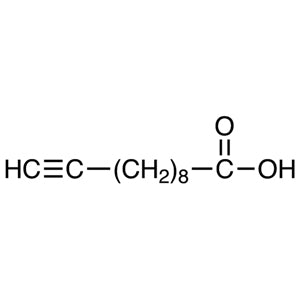
10-UndecynoicAcid TCI U0054
Regular price From Rp 1.060.500,00Regular priceRp 757.050,00Sale price From Rp 1.060.500,00 -
TriethyleneGlycolMono(2-propynyl)Ether TCI T3114
Regular price From Rp 2.464.350,00Regular priceRp 1.738.800,00Sale price From Rp 2.464.350,00 -
4-PentynoicAcid TCI P2341
Regular price From Rp 1.590.750,00Regular priceRp 1.127.700,00Sale price From Rp 1.590.750,00 -
Propargyl-PEG5-NHSEster TCI P2283
Regular price Rp 4.266.150,00Regular priceRp 2.998.800,00Sale price Rp 4.266.150,00 -
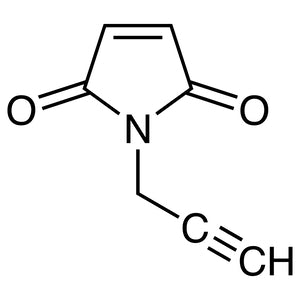
N-Propargylmaleimide TCI P2139
Regular price From Rp 2.147.250,00Regular priceRp 1.517.250,00Sale price From Rp 2.147.250,00 -
Methyltetrazine-PEG4-NHSEster TCI M3468
Regular price From Rp 2.702.700,00Regular priceRp 1.905.750,00Sale price From Rp 2.702.700,00 -
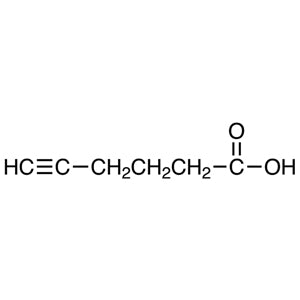
5-HexynoicAcid TCI H0882
Regular price From Rp 2.199.750,00Regular priceRp 1.554.000,00Sale price From Rp 2.199.750,00