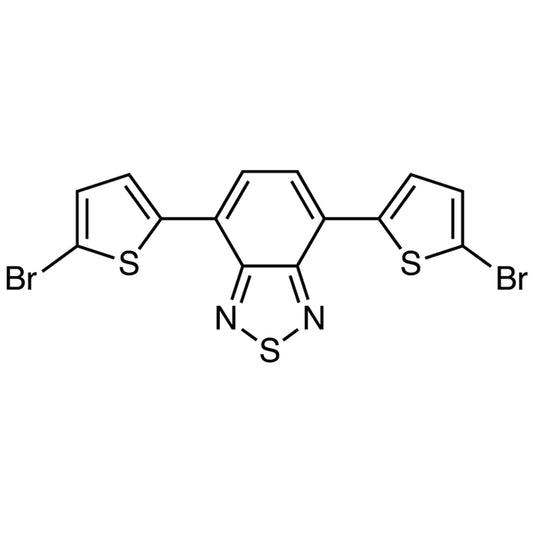
4,7-Bis(5-bromo-4-n-octyl-2-thienyl)-2,1,3-benzothiadiazole is a complex chemical compound widely used in semiconductor and molecular building block research. This material plays a crucial role in the synthesis of advanced organic materials, particularly in the development of optoelectronic devices and display technologies. Its unique molecular structure enables it to serve as a foundational component in the creation of materials with conductive and light-responsive properties. In laboratory settings, it is essential for researchers working on next-generation electronic materials and devices.
The compound's properties, including its bromo and n-octyl groups, make it a preferred choice for material scientists. These functional groups contribute to its electronic and structural characteristics, allowing it to interact effectively with light and generate stable electrical responses. Its versatility in chemical reactivity and compatibility with various synthetic processes make it a valuable tool in the development of organic semiconductors. These features are critical for applications that require precise control over material behavior under different conditions.
In Indonesian laboratories, this compound is commonly used in research focused on organic semiconductor development and advanced material synthesis. It is an essential component in studies related to organic light-emitting diodes (OLEDs) and photovoltaic cells. Researchers in academic and industrial settings rely on this compound to explore new material properties and improve the performance of electronic devices.
TCI brochures (PDF)
- Thiophenes 2026-06-29 · p. 6
- Building Blocks for Organic Semiconductor 2026-03-24 · p. 39
Related TCI products
- TCI B4453 1025451-57-3 4,7-Bis(5-trimethylstannyl-2-thienyl)-2,1,3-benzothiadiazole
- TCI B3886 288071-87-4 4,7-Bis(5-bromo-2-thienyl)-2,1,3-benzothiadiazole
- TCI D4487 165190-76-1 4,7-Di(2-thienyl)-2,1,3-benzothiadiazole
- TCI B5753 1192352-10-5 4,7-Bis(5-bromothiophen-2-yl)-5,6-bis(n-octyloxy)-2,1,3-benzothiadiazole
- TCI D3969 850583-75-4 3,6-Di(2-thienyl)-2,5-dihydropyrrolo[3,4-c]pyrrole-1,4-dione
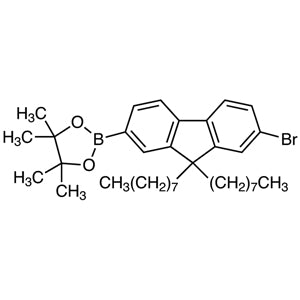
- TCI B5580 620624-96-6 2-(7-Bromo-9,9-di-n-octyl-9H-fluoren-2-yl)-4,4,5,5-tetramethyl-1,3,2-dioxaborolane
- Organic Semiconductor Development: This compound is ideal for creating organic materials with conductive and light-sensitive properties, essential for advanced electronic devices.
- Optoelectronic Device Fabrication: Its light-responsive nature makes it suitable for the production of OLEDs and other optoelectronic components.
- Molecular Building Block Research: It serves as a foundational material in the synthesis of complex organic molecules used in material science.
- Display Technology Innovation: Its structural and electronic properties are key in the development of next-generation display technologies.
- Photovoltaic Cell Research: The compound's ability to interact with light makes it valuable in the study of organic solar cell materials.
| Brand | TCI |
|---|---|
| CAS number | 457931-23-6 |
| Molecular formula | — |
| Purity | — |
| Category | Materials Science > Material Building Blocks > Polymer/Macromolecule Semiconductor Building Blocks |
| Pack sizes | Available in various quantities as per standard laboratory supply |
| Physical form | Solid |
| Storage | Store in a cool, dry place away from light and moisture |
This compound should be stored in a cool, dry environment, away from direct light and moisture to maintain its chemical integrity. It is recommended to use airtight containers made of glass or high-density polyethylene to prevent contamination and degradation. Due to its chemical nature, it should be handled with appropriate personal protective equipment, including gloves and safety goggles. Proper ventilation is essential when working with this material to minimize exposure. Laboratory personnel should follow standard safety protocols when handling and storing this compound to ensure a safe working environment.
—
Produk Terkait
-
4,7-Bis(5-trimethylstannyl-2-thienyl)-2,1,3-benzothiadiazole TCI B4453
Regular price Rp 5.087.250,00Regular priceRp 3.573.150,00Sale price Rp 5.087.250,00 -
4,7-Bis(5-bromo-2-thienyl)-2,1,3-benzothiadiazole TCI B3886
Regular price From Rp 1.749.300,00Regular priceRp 1.239.000,00Sale price From Rp 1.749.300,00 -
4,7-Di(2-thienyl)-2,1,3-benzothiadiazole TCI D4487
Regular price From Rp 2.702.700,00Regular priceRp 1.905.750,00Sale price From Rp 2.702.700,00 -
4,7-Bis(5-bromothiophen-2-yl)-5,6-bis(n-octyloxy)-2,1,3-benzothiadiazole TCI B5753
Regular price Rp 3.472.350,00Regular priceRp 2.443.350,00Sale price Rp 3.472.350,00 -
3,6-Di(2-thienyl)-2,5-dihydropyrrolo[3,4-c]pyrrole-1,4-dione TCI D3969
Regular price From Rp 2.702.700,00Regular priceRp 1.905.750,00Sale price From Rp 2.702.700,00 -
2-(7-Bromo-9,9-di-n-octyl-9H-fluoren-2-yl)-4,4,5,5-tetramethyl-1,3,2-dioxaborolane TCI B5580
Regular price Rp 3.735.900,00Regular priceRp 2.628.150,00Sale price Rp 3.735.900,00 -
7-Bromo-2,1,3-benzothiadiazole-4-carbonitrile TCI B5473
Regular price Rp 3.260.250,00Regular priceRp 2.295.300,00Sale price Rp 3.260.250,00 -
3-(5-Bromo-2-thienyl)-2,5-bis(2-ethylhexyl)-6-(2-thienyl)pyrrolo[3,4-c]pyrrole-1,4-dione TCI B5456
Regular price Rp 7.075.950,00Regular priceRp 4.963.350,00Sale price Rp 7.075.950,00