![1,8-Diazabicyclo[5.4.0]-7-undecene Hydrogen Tribromide (CAS 138666-59-8) - TCI D3976 - AMI Scientific](http://amiscientific.com/cdn/shop/files/TCI2510D3976.jpg?v=1768205014&width=1946)
![1,8-Diazabicyclo[5.4.0]-7-undecene Hydrogen Tribromide (CAS 138666-59-8) - TCI D3976 - AMI Scientific](http://amiscientific.com/cdn/shop/files/TCI2510D3976.jpg?v=1768205014&width=1445)
1,8-Diazabicyclo[5.4.0]-7-undecene Hydrogen Tribromide is a synthetic reagent widely used in organic chemistry for its ability to participate in halogenation reactions. This compound plays a crucial role in the formation of C-X (halogen) bonds, which are essential in the synthesis of complex organic molecules. Its unique structure allows for selective substitution reactions, making it a valuable tool in the hands of chemists working on intricate molecular designs. In laboratory settings, it is often employed to introduce bromine atoms into organic substrates, enabling the creation of compounds with specific functional groups and molecular architectures.
The compound is valued for its reactivity and stability under controlled conditions. It exhibits good solubility in organic solvents, which enhances its usability in various synthetic procedures. Its ability to form strong covalent bonds contributes to its effectiveness in chemical reactions requiring high precision. Additionally, its predictable behavior in different reaction environments ensures consistent results, making it a reliable choice for both academic and industrial research. These properties collectively make it a preferred reagent in the field of organic synthesis.
In Indonesian laboratories, this reagent is commonly used in pharmaceutical and material science research. It supports the development of new drugs and advanced materials by facilitating the synthesis of complex organic compounds. Its application is widespread in educational and research institutions, where it is used to teach and conduct experiments related to organic chemistry and halogenation processes.
TCI brochures (PDF)
- Halogenation Reagents 2026-04-03 · p. 6
Related TCI products
- TCI B3596 820965-08-0 1-Butyl-3-methylimidazolium Tribromide
- TCI T1382 111865-47-5 Benzyltrimethylammonium Tribromide [Brominating Reagent]
- TCI T1284 38932-80-8 Tetrabutylammonium Tribromide
- TCI P1743 7789-60-8 Phosphorus Tribromide
- TCI P0928 4207-56-1 Trimethylphenylammonium Tribromide
- TCI D1270 6674-22-2 1,8-Diazabicyclo[5.4.0]-7-undecene
- Organic Synthesis: This reagent is ideal for creating complex organic molecules through halogenation reactions, offering precise control over bond formation.
- Pharmaceutical Research: It is used to synthesize compounds with specific functional groups, aiding in drug development and molecular design.
- Material Science: The compound supports the creation of advanced materials by enabling the formation of halogenated structures with desired properties.
- Educational Research: It is widely used in academic settings to demonstrate halogenation mechanisms and synthetic techniques in organic chemistry.
- Industrial Chemistry: Its stability and reactivity make it suitable for large-scale chemical processes requiring controlled halogenation reactions.
| Brand | TCI |
|---|---|
| CAS number | 138666-59-8 |
| Molecular formula | — |
| Purity | — |
| Category | Chemistry > Synthetic Reagents > C-X(Halogen) Bond Formation [Synthetic Reagents] |
| Pack sizes | Available in various quantities as per supplier specifications |
| Physical form | Liquid |
| Storage | Store in a cool, dark place away from moisture and incompatible substances |
This reagent should be stored in a cool, dry environment to maintain its stability and reactivity. It is recommended to keep it in a tightly sealed container to prevent exposure to moisture and air. Due to its reactive nature, it should be handled in a well-ventilated area, preferably under a fume hood. Avoid contact with incompatible materials such as strong bases or reducing agents. Always use appropriate personal protective equipment, including gloves and safety goggles, when handling this compound. Proper storage and handling ensure the safety of laboratory personnel and the integrity of the reagent for future use.
—
Produk Terkait
-
1-Butyl-3-methylimidazoliumTribromide TCI B3596
Regular price Rp 3.922.800,00Regular priceRp 2.758.350,00Sale price Rp 3.922.800,00 -
BenzyltrimethylammoniumTribromide[BrominatingReagent] TCI T1382
Regular price Rp 875.700,00Regular priceRp 627.900,00Sale price Rp 875.700,00 -
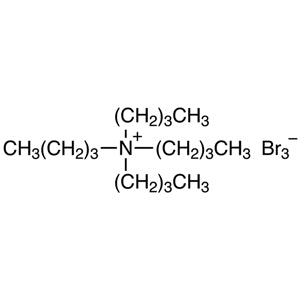
TetrabutylammoniumTribromide TCI T1284
Regular price Rp 1.008.000,00Regular priceRp 720.300,00Sale price Rp 1.008.000,00 -
PhosphorusTribromide TCI P1743
Regular price Rp 743.400,00Regular priceRp 519.750,00Sale price Rp 743.400,00 -
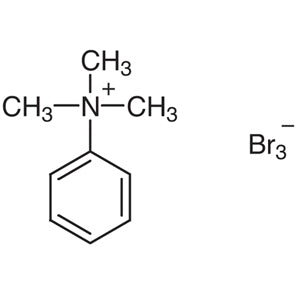
TrimethylphenylammoniumTribromide TCI P0928
Regular price Rp 1.881.600,00Regular priceRp 1.331.400,00Sale price Rp 1.881.600,00 -
1,8-Diazabicyclo[5.4.0]-7-undecene TCI D1270
Regular price Rp 557.550,00Regular priceRp 405.300,00Sale price Rp 557.550,00 -
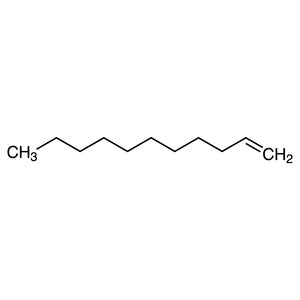
1-Undecene TCI U0052
Regular price Rp 2.068.500,00Regular priceRp 1.445.850,00Sale price Rp 2.068.500,00 -
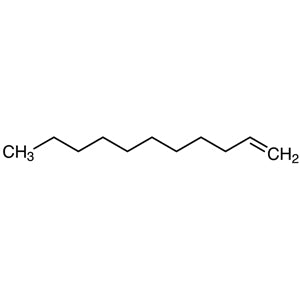
1-Undecene TCI U0025
Regular price Rp 1.060.500,00Regular priceRp 741.300,00Sale price Rp 1.060.500,00

![111865-47-5 Benzyltrimethylammonium Tribromide [Brominating Reagent] - AMI Scientific](http://amiscientific.com/cdn/shop/files/TCI2510T1382.jpg?v=1769057884&width=533)

![1,8-Diazabicyclo[5.4.0]-7-undecene (CAS 6674-22-2) - TCI D1270 - AMI Scientific](http://amiscientific.com/cdn/shop/files/TCI2510D1270.jpg?v=1767102806&width=533)