Trimethylphenylammonium Tribromide (TCI P0928, CAS 4207-56-1) is a chemical compound widely used as a phase transfer catalyst in laboratory settings. This reagent plays a crucial role in facilitating chemical reactions that involve the transfer of electrons or protons between different phases, such as between organic and aqueous phases. Its ability to bridge these phases makes it an essential tool for chemists working on complex reactions. In synthetic chemistry, it is particularly valuable for reactions requiring efficient and stable catalytic activity.
One of the key properties that make Trimethylphenylammonium Tribromide a preferred choice is its molecular structure, which allows it to interact effectively with a variety of substrates. This interaction enables the catalyst to promote reactions without significant degradation, ensuring consistent performance across multiple experimental runs. Additionally, its stability under various reaction conditions enhances its reliability in laboratory applications. These characteristics contribute to its widespread use in both academic and industrial research environments.
In Indonesian laboratories, Trimethylphenylammonium Tribromide is commonly used in chemical research, especially in the fields of organic synthesis and catalysis. Its role in enabling complex reactions with high efficiency makes it a valuable resource for educational institutions and research centers. The compound’s consistent performance and reliability support the development of modern chemical techniques, making it a staple in many laboratory setups across Indonesia.
- Organic synthesis reactions benefit from this catalyst due to its ability to facilitate electron and proton transfer between phases, enhancing reaction efficiency.
- Phase transfer catalysis in aqueous-organic systems is optimized with this reagent, as it effectively mediates reactions across immiscible solvents.
- It is ideal for multi-step synthetic processes where maintaining reaction consistency and minimizing byproduct formation is critical.
- In catalytic research, it supports the development of new methodologies by providing a stable and efficient catalytic environment.
- Its use in educational laboratories helps students understand the principles of phase transfer catalysis and its practical applications.
| Brand | TCI |
|---|---|
| CAS number | 4207-56-1 |
| Molecular formula | — |
| Purity | — |
| Category | Chemistry > Synthetic Reagents > Phase Transfer Catalysts |
| Pack sizes | Available in various quantities as per supplier specifications |
| Physical form | Solid |
| Storage | Store in a cool, dry place away from moisture and direct sunlight |
Trimethylphenylammonium Tribromide should be stored in a cool, dry environment to maintain its chemical stability and effectiveness. It is recommended to keep the compound in airtight containers to prevent exposure to moisture, which could potentially affect its performance. Due to its solid form, it is best stored in a secure, well-ventilated laboratory cabinet. General laboratory precautions include handling with care to avoid contamination and ensuring that it is kept away from incompatible materials. Proper labeling of storage containers is essential for safety and easy identification. Regular monitoring of storage conditions ensures that the reagent remains in optimal condition for use in chemical experiments.
—
Produk Terkait
-
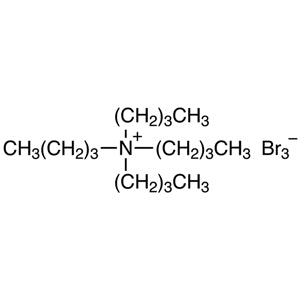
TetrabutylammoniumTribromide TCI T1284
Regular price From Rp 955.500,00Regular price -
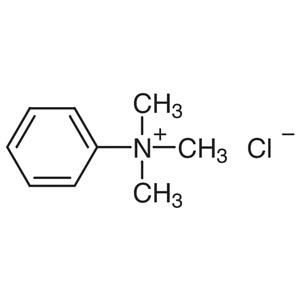
TrimethylphenylammoniumChloride TCI P0244
Regular price From Rp 557.550,00Regular price -
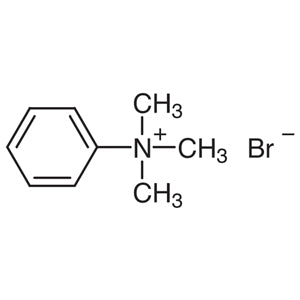
TrimethylphenylammoniumBromide TCI P0243
Regular price From Rp 795.900,00Regular price -
1-Butyl-3-methylimidazoliumTribromide TCI B3596
Regular price Rp 3.870.300,00Regular price -
BenzyltrimethylammoniumTribromide[BrominatingReagent] TCI T1382
Regular price From Rp 823.200,00Regular price -
PhosphorusTribromide TCI P1743
Regular price From Rp 610.050,00Regular price -
1,8-Diazabicyclo[5.4.0]-7-undeceneHydrogenTribromide TCI D3976
Regular price Rp 3.075.450,00Regular price -
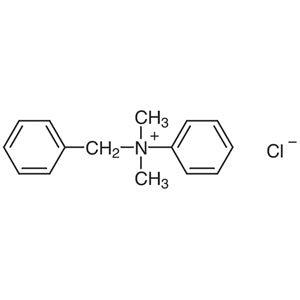
BenzyldimethylphenylammoniumChloride TCI B0416
Regular price Rp 3.207.750,00Regular price

![111865-47-5 Benzyltrimethylammonium Tribromide [Brominating Reagent] - AMI Scientific](http://amiscientific.com/cdn/shop/files/TCI2510T1382.jpg?v=1769057884&width=533)

![1,8-Diazabicyclo[5.4.0]-7-undecene Hydrogen Tribromide (CAS 138666-59-8) - TCI D3976 - AMI Scientific](http://amiscientific.com/cdn/shop/files/TCI2510D3976.jpg?v=1768205014&width=533)