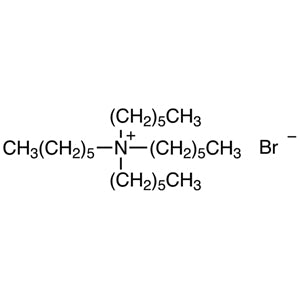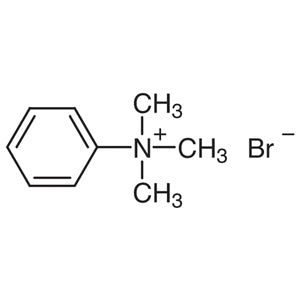
Trimethylphenylammonium Bromide (TCI P0243), with CAS number 16056-11-4, is a chemical compound widely utilized as a phase transfer catalyst in laboratory settings. It plays a crucial role in facilitating reactions between immiscible phases, such as aqueous and organic solvents, by bridging the gap between polar and non-polar environments. This compound is particularly valuable in synthetic chemistry, where it enhances the efficiency of reactions that require interfacial interactions. Its ability to promote electron or proton transfer makes it an essential reagent in various chemical processes.
The unique ionic structure of Trimethylphenylammonium Bromide allows it to act as a mediator, enabling the transfer of ions or molecules across different phases. This property makes it highly effective in accelerating chemical reactions without altering the structure of the main reactants. Additionally, its stability under standard laboratory conditions ensures consistent performance across a wide range of experimental scales. The compound’s reliability and efficiency have made it a preferred choice for researchers working in both academic and industrial laboratories.
In Indonesian laboratories, Trimethylphenylammonium Bromide is commonly used in organic chemistry research and the synthesis of complex compounds. Its ability to improve reaction efficiency without compromising molecular integrity makes it a valuable tool for both educational and industrial applications. It is frequently found in chemical experiments aimed at enhancing reaction rates and improving product yields. Its relevance in the Indonesian scientific community underscores its importance in advancing chemical research and development.
Related TCI products
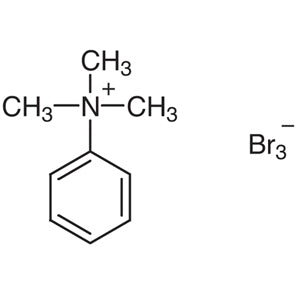
- TCI P0928 4207-56-1 Trimethylphenylammonium Tribromide
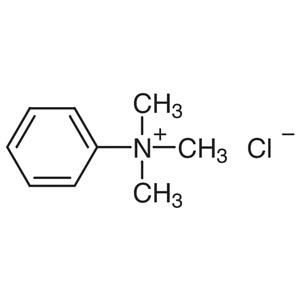
- TCI P0244 138-24-9 Trimethylphenylammonium Chloride
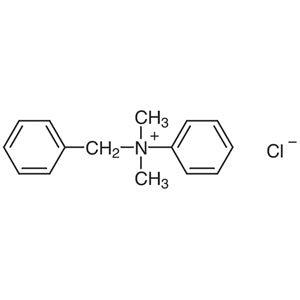
- TCI B0416 3204-68-0 Benzyldimethylphenylammonium Chloride
- TCI T2762 2650-50-2 Trimethylpropylammonium Bromide
- TCI T2734 1943-11-9 Trimethylnonylammonium Bromide
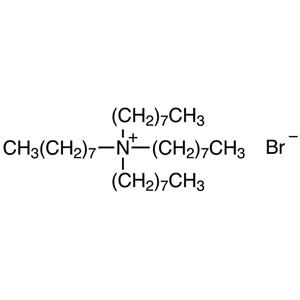
- TCI T1603 14866-33-2 Tetra-n-octylammonium Bromide
- Organic synthesis reactions where phase transfer between aqueous and organic phases is required.
- Catalytic processes that involve electron or proton transfer across immiscible phases.
- Industrial chemical experiments aimed at improving reaction efficiency and yield.
- Educational laboratory setups for teaching phase transfer catalysis concepts.
- Research applications in the development of complex organic compounds.
| Brand | TCI |
|---|---|
| CAS number | 16056-11-4 |
| Molecular formula | — |
| Purity | — |
| Category | Chemistry > Synthetic Reagents > Phase Transfer Catalysts |
| Pack sizes | Available in various quantities as per standard supplier offerings |
| Physical form | Solid powder |
| Storage | Store in a cool, dry place away from moisture and direct sunlight |
Trimethylphenylammonium Bromide should be stored in a cool, dry environment to maintain its chemical stability. It is recommended to keep the compound in a tightly sealed container to prevent exposure to moisture, which could affect its performance. Suitable storage containers include glass or high-density polyethylene (HDPE) vessels that are resistant to chemical degradation. In laboratory settings, it is important to handle the compound with appropriate personal protective equipment (PPE), such as gloves and safety goggles, to ensure safe handling. Avoid contact with incompatible materials, and ensure proper ventilation when working with the compound. Regular monitoring of storage conditions will help maintain the integrity and effectiveness of the reagent over time.
—
Produk Terkait
-
TrimethylphenylammoniumTribromide TCI P0928
Regular price From Rp 1.829.100,00Regular price -
TrimethylphenylammoniumChloride TCI P0244
Regular price From Rp 557.550,00Regular price -
BenzyldimethylphenylammoniumChloride TCI B0416
Regular price Rp 3.207.750,00Regular price -
TrimethylpropylammoniumBromide TCI T2762
Regular price Rp 6.651.750,00Regular price -
TrimethylnonylammoniumBromide TCI T2734
Regular price Rp 1.749.300,00Regular price -
Tetra-n-octylammoniumBromide TCI T1603
Regular price From Rp 1.565.550,00Regular price -
TetraheptylammoniumBromide TCI T1602
Regular price From Rp 1.246.350,00Regular price -
TetrahexylammoniumBromide TCI T1599
Regular price Rp 2.837.100,00Regular price