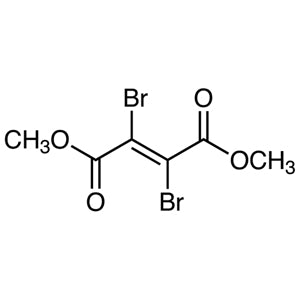
TCI D4073 Dimethyl trans-2,3-Dibromobutenedioate is the dimethyl ester of butenedioic acid carrying two bromine atoms on the carbon–carbon double bond in a defined trans configuration. The structure combines three elements of reactivity in a single small molecule: an electron-poor carbon–carbon double bond, two electron-withdrawing ester groups, and two vinylic bromine atoms. In the organic synthesis laboratory, this compound serves as a versatile building block used to construct heterocyclic rings, conjugated systems, and a range of substituted alkene derivatives that are difficult to obtain through other synthetic routes.
The characteristic that makes this reagent a preferred choice is its behaviour as a strongly activated Michael acceptor and dienophile. The presence of two ester groups lowers the electron density at the double bond, so the compound is readily attacked by nucleophiles such as amines, thiols, and enolates, and also reacts with dienes through Diels–Alder cycloaddition. The vinylic bromine atoms add a second dimension: once addition has taken place, bromine can be removed by elimination to restore unsaturation, or exploited in cross-coupling reactions. The defined trans configuration further helps control product stereochemistry in many transformations.
In Indonesian laboratories, this material is typically used in university and institutional organic synthesis groups, in medicinal chemistry and heterocyclic chemistry research, and in method development work where a compact, highly functionalised electrophile is required. It is usually handled at bench scale for exploratory reactions and route scouting, where a single building block that can be elaborated through several different bond-forming steps reduces the number of separate reagents that a laboratory needs to keep on hand.
Related TCI products
- TCI H0776 25126-93-6 Dimethyl trans-3-Hexenedioate
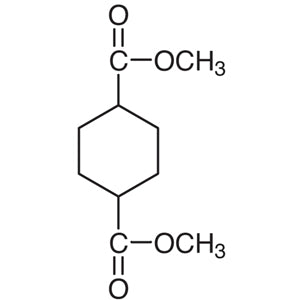
- TCI D3723 3399-22-2 Dimethyl trans-1,4-Cyclohexanedicarboxylate
- TCI D3692 17673-68-6 Dimethyl trans-4-Cyclohexene-1,2-dicarboxylate
- TCI C1154 94-60-0 Dimethyl 1,4-Cyclohexanedicarboxylate (cis- and trans- mixture)
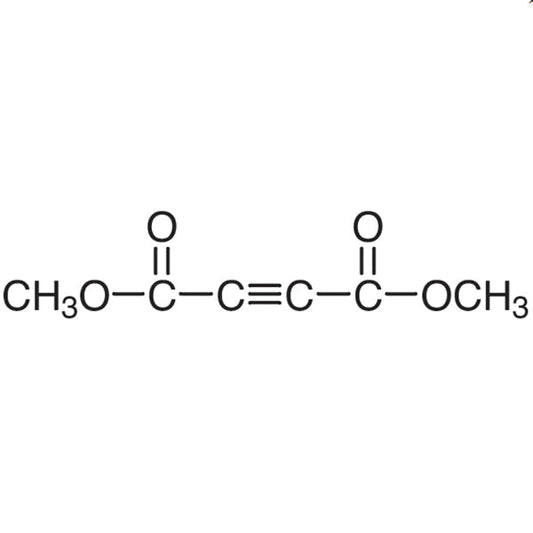
- TCI A0090 762-42-5 Dimethyl Acetylenedicarboxylate
- TCI A0056 1830-54-2 Dimethyl 1,3-Acetonedicarboxylate
- Michael addition chemistry — the two electron-withdrawing ester groups strongly activate the double bond, allowing clean conjugate addition of amines, thiols, and enolate nucleophiles.
- Diels–Alder cycloaddition — the electron-poor alkene functions as an activated dienophile, reacting with dienes to build cyclic frameworks bearing two ester handles for further elaboration.
- Heterocyclic ring construction — combined nucleophilic addition and bromide displacement or elimination allows the compound to be closed into heterocyclic ring systems in synthesis programmes.
- Cross-coupling substrate preparation — the two vinylic bromine atoms provide reactive sites that can be carried forward into palladium-mediated cross-coupling reactions to install new carbon substituents.
- Stereocontrolled alkene synthesis — the defined trans configuration of the starting material helps direct the stereochemical outcome of addition and elimination sequences leading to substituted alkene derivatives.
| Brand | TCI |
|---|---|
| CAS number | 116631-94-8 |
| Molecular formula | — |
| Purity | — |
| Category | Chemistry > Building Blocks > Non-Heterocyclic Building Blocks |
| Pack sizes | available in standard TCI research-scale catalogue pack sizes; please confirm the size required when ordering |
| Physical form | — |
| Storage | keep in the tightly closed original container under the conditions stated on the manufacturer's label and safety data sheet |
- Chemical name: Dimethyl trans-2,3-Dibromobutenedioate
Store the material in its tightly closed original container, in a cool, dry, and well-ventilated area away from direct sunlight, heat sources, and incompatible materials such as strong bases, strong oxidising agents, and nucleophilic reagents. Amber glass or the supplied manufacturer packaging is suitable for keeping the compound protected from light and moisture. As a reactive brominated ester, it should be handled in a fume hood using nitrile gloves, safety goggles, and a laboratory coat, avoiding contact with skin and eyes and inhalation of vapours. Transfer with clean, dry glassware, close containers immediately after use, and record opening dates for inventory control. Always consult the manufacturer's safety data sheet before use, and dispose of residues and contaminated materials as halogenated organic chemical waste according to applicable institutional and local regulations.
—
Produk Terkait
-
Dimethyltrans-3-Hexenedioate TCI H0776
Regular price From Rp 2.809.800,00Regular price -
Dimethyltrans-1,4-Cyclohexanedicarboxylate TCI D3723
Regular price From Rp 1.008.000,00Regular price -
Dimethyltrans-4-Cyclohexene-1,2-dicarboxylate TCI D3692
Regular price From Rp 1.565.550,00Regular price -
Dimethyl1,4-Cyclohexanedicarboxylate(cis-andtrans-mixture) TCI C1154
Regular price From Rp 717.150,00Regular price -
DimethylAcetylenedicarboxylate TCI A0090
Regular price From Rp 2.041.200,00Regular price -
Dimethyl1,3-Acetonedicarboxylate TCI A0056
Regular price From Rp 1.298.850,00Regular price -
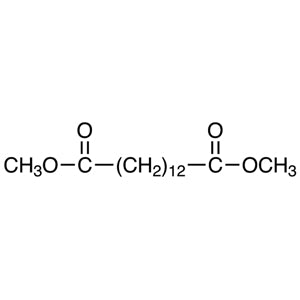
DimethylTetradecanedioate TCI T1726
Regular price From Rp 2.411.850,00Regular price -
1-Bromo-3,3-dimethyl-2-butanone TCI B1490
Regular price From Rp 2.094.750,00Regular price