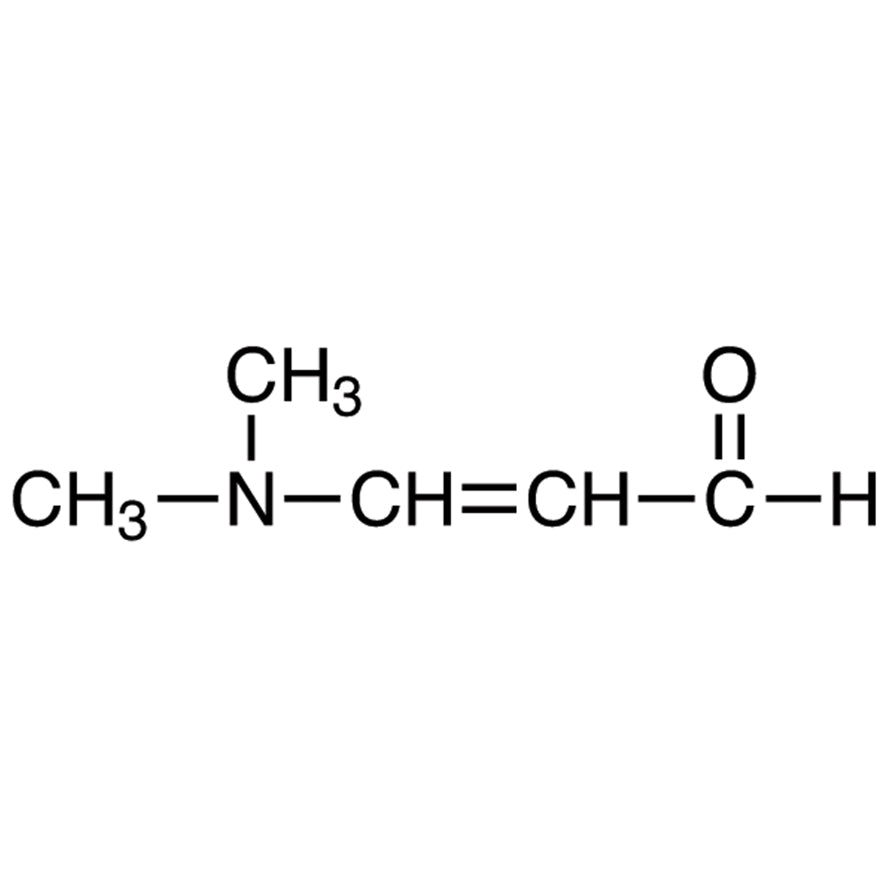
TCI D4092, with CAS number 927-63-9, is 3-(Dimethylamino)acrolein, also known as 3-dimethylaminoacrolein. It is a three-carbon enaminone classified within the non-heterocyclic building blocks category. The compound has a distinctive structure: an unsaturated aldehyde terminated by a dimethylamino group, producing a conjugated system with two electrophilic centers, the carbonyl carbon and the beta carbon. Because of this arrangement, it functions as a highly efficient three-carbon synthon for constructing heterocyclic rings, and it is one of the reliable reagents used in the synthesis of pyrimidines, pyridines, and pyrazoles in organic chemistry laboratories.
The property that makes this compound valuable is its ability to react with a wide range of binucleophilic reagents such as amidines, guanidines, urea, hydrazine, and hydroxylamine. The dimethylamino group acts as a good leaving group in addition–elimination reactions, so that after the nucleophile attacks, dimethylamine is released and the reaction proceeds through to ring closure. This pattern allows heterocyclic ring formation to be accomplished in a single step, generally with good yields and with straightforward experimental procedures. The compound additionally serves as a formylation reagent, extending its usefulness beyond ring-forming chemistry alone.
In Indonesian laboratories, this material is typically used in organic synthesis research at universities, research institutes, and industrial R&D units where heterocyclic scaffolds are prepared. It supports work on pyrimidine, pyridine, and pyrazole frameworks, which are common targets in medicinal chemistry and materials-oriented studies. Because the reaction procedures are simple and do not demand elaborate setups, the reagent fits well into teaching laboratories and small-scale research groups as well as into more established synthetic chemistry programs.
Related TCI products
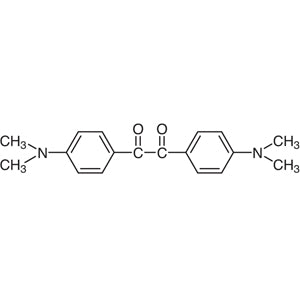
- TCI B1212 17078-27-2 4,4'-Bis(dimethylamino)benzil
- TCI E1179 51145-57-4 Ethyl 2-Acetyl-3-(dimethylamino)acrylate
- TCI D6362 41602-56-6 4-(Dimethylamino)-2-hydroxybenzaldehyde
- TCI D5384 1201-93-0 3-(Dimethylamino)-1-phenyl-2-propen-1-one
- TCI D5312 22965-98-6 (E)-4-(Dimethylamino)chalcone
- TCI D4259 96605-66-2 N-[3-[3-(Dimethylamino)acryloyl]phenyl]-N-ethylacetamide
- Pyrimidine synthesis: the compound supplies the complete three-carbon unit required for ring closure with amidines, guanidines, or urea, giving the pyrimidine core in a single condensation step.
- Pyridine synthesis: its conjugated enaminone system offers two electrophilic centers that allow binucleophilic partners to build the six-membered nitrogen ring efficiently under simple laboratory conditions.
- Pyrazole synthesis: reaction with hydrazine proceeds through addition–elimination at the beta carbon followed by cyclization onto the carbonyl, delivering the five-membered ring directly.
- Isoxazole and related ring formation: hydroxylamine acts as the binucleophile, with the dimethylamino group departing as dimethylamine so that ring closure completes without additional activating reagents.
- Formylation reactions: the compound also functions as a formylation reagent, allowing a formyl unit to be introduced during synthetic sequences that require aldehyde functionality.
| Brand | TCI |
|---|---|
| CAS number | 927-63-9 |
| Molecular formula | — |
| Purity | — |
| Category | Chemistry > Building Blocks > Non-Heterocyclic Building Blocks |
| Pack sizes | available in standard TCI catalogue pack sizes; please confirm the required quantity when ordering |
| Physical form | — |
| Storage | store according to the storage conditions stated by the manufacturer on the product label and safety data sheet |
- Chemical name: 3-(Dimethylamino)acrolein, also known as 3-dimethylaminoacrolein
- Chemical class: three-carbon enaminone, an unsaturated aldehyde bearing a terminal dimethylamino group
Store the container tightly closed in a cool, dry, well-ventilated area away from heat sources, direct sunlight, and incompatible chemicals, following the storage conditions specified by the manufacturer on the label and safety data sheet. Keep the material in its original container, and use clean, dry glassware when transferring portions to avoid contamination of the stock. Handle the compound inside a fume hood with appropriate personal protective equipment, including safety glasses, chemical-resistant gloves, and a laboratory coat. Avoid inhalation of vapours and contact with skin and eyes. Reseal the container promptly after use, label all working solutions clearly, and dispose of residues and contaminated materials in accordance with the applicable chemical waste procedures of the laboratory. Review the safety data sheet before first use.
—
Produk Terkait
-
4,4'-Bis(dimethylamino)benzil TCI B1212
Regular price From Rp 3.683.400,00Regular price -
Ethyl2-Acetyl-3-(dimethylamino)acrylate TCI E1179
Regular price From Rp 955.500,00Regular price -
4-(Dimethylamino)-2-hydroxybenzaldehyde TCI D6362
Regular price From Rp 2.545.200,00Regular price -
3-(Dimethylamino)-1-phenyl-2-propen-1-one TCI D5384
Regular price From Rp 1.724.100,00Regular price -
(E)-4-(Dimethylamino)chalcone TCI D5312
Regular price From Rp 2.332.050,00Regular price -
N-[3-[3-(Dimethylamino)acryloyl]phenyl]-N-ethylacetamide TCI D4259
Regular price From Rp 637.350,00Regular price -
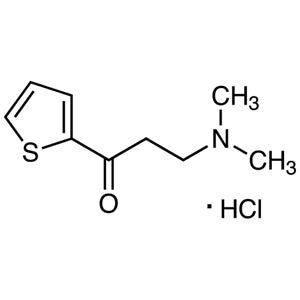
3-(Dimethylamino)-1-(2-thienyl)-1-propanoneHydrochloride TCI D4011
Regular price Rp 2.571.450,00Regular price -
Ethyl3-(Dimethylamino)acrylate TCI D2836
Regular price From Rp 903.000,00Regular price


![N-[3-[3-(Dimethylamino)acryloyl]phenyl]-N-ethylacetamide (CAS 96605-66-2) - TCI D4259 - AMI Scientific](http://amiscientific.com/cdn/shop/files/TCI2510D4259.jpg?v=1767107330&width=533)