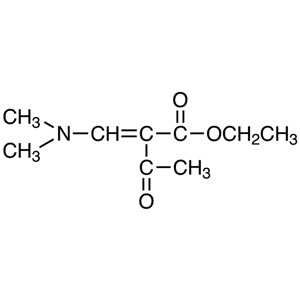
Ethyl 2-Acetyl-3-(dimethylamino)acrylate is a chemical compound widely used as a building block in the synthesis of complex organic compounds. This versatile reagent plays a crucial role in laboratory settings where precise chemical reactions are required. It is commonly utilized in reactions involving the formation of covalent bonds or substitution processes, making it essential for the development of various chemical structures. Its presence in laboratory experiments helps researchers achieve high levels of accuracy and control, particularly in the creation of compounds with specific functional groups.
The compound’s molecular structure includes functional groups such as acrylate and dimethylamine, which contribute to its reactivity. These characteristics make it suitable for a range of chemical reactions, including addition, substitution, and polymerization. Its reactivity and ability to participate in multiple reaction types make it a preferred choice for chemists and researchers working on synthetic pathways. The compound’s versatility allows it to be integrated into diverse experimental designs, enhancing the efficiency and effectiveness of laboratory work.
In Indonesian laboratories, Ethyl 2-Acetyl-3-(dimethylamino)acrylate is a favored material for scientific research, especially in the fields of organic chemistry and pharmaceutical development. Its availability and high-quality standards make it a reliable choice for both academic and industrial applications. Researchers and students rely on this compound to conduct experiments that require high precision and reproducibility, supporting advancements in chemical synthesis and innovation.
Related TCI products
- TCI D2836 924-99-2 Ethyl 3-(Dimethylamino)acrylate
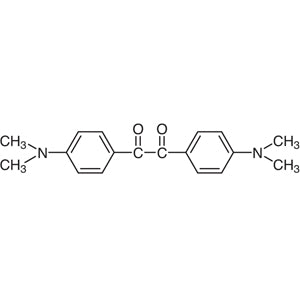
- TCI B1212 17078-27-2 4,4'-Bis(dimethylamino)benzil
- TCI D6362 41602-56-6 4-(Dimethylamino)-2-hydroxybenzaldehyde
- TCI D5384 1201-93-0 3-(Dimethylamino)-1-phenyl-2-propen-1-one
- TCI D5312 22965-98-6 (E)-4-(Dimethylamino)chalcone
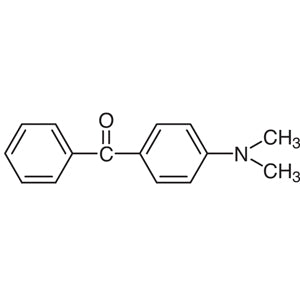
- TCI D2561 530-44-9 4-(Dimethylamino)benzophenone
- Organic synthesis applications benefit from this compound due to its reactivity and ability to form complex molecular structures.
- Pharmaceutical research utilizes it for the development of drug compounds with specific functional groups and molecular architectures.
- Polymer science experiments leverage its acrylate group for creating polymers with tailored properties and chemical behavior.
- Analytical chemistry studies use it as a standard reference for evaluating reaction mechanisms and chemical behavior.
- Industrial chemical production incorporates it for the synthesis of specialty chemicals and functional materials.
| Brand | TCI |
|---|---|
| CAS number | 51145-57-4 |
| Molecular formula | — |
| Purity | — |
| Category | Chemistry > Building Blocks > Non-Heterocyclic Building Blocks |
| Pack sizes | Available in standard laboratory quantities |
| Physical form | Liquid |
| Storage | Store in a cool, dry place away from light and incompatible substances |
Ethyl 2-Acetyl-3-(dimethylamino)acrylate should be stored in a cool, dry environment, away from direct sunlight and sources of heat. It is recommended to keep the compound in a tightly sealed container to prevent exposure to air and moisture. Due to its reactivity, it should be stored separately from strong oxidizers and incompatible chemicals. In laboratory settings, it is essential to use appropriate personal protective equipment, such as gloves and safety goggles, when handling this material. Proper ventilation should be maintained in the workspace to minimize inhalation risks. The compound should not be stored in areas with high humidity or temperature fluctuations to maintain its stability and effectiveness.
—
Produk Terkait
-
Ethyl3-(Dimethylamino)acrylate TCI D2836
Regular price From Rp 903.000,00Regular price -
4,4'-Bis(dimethylamino)benzil TCI B1212
Regular price From Rp 3.683.400,00Regular price -
4-(Dimethylamino)-2-hydroxybenzaldehyde TCI D6362
Regular price From Rp 2.545.200,00Regular price -
3-(Dimethylamino)-1-phenyl-2-propen-1-one TCI D5384
Regular price From Rp 1.724.100,00Regular price -
(E)-4-(Dimethylamino)chalcone TCI D5312
Regular price From Rp 2.332.050,00Regular price -
4-(Dimethylamino)benzophenone TCI D2561
Regular price From Rp 980.700,00Regular price -
2-Chloro-4-(dimethylamino)benzaldehyde TCI C2606
Regular price From Rp 1.696.800,00Regular price -
4-Amino-4'-(N,N-dimethylamino)stilbene TCI A0291
Regular price From Rp 1.936.200,00Regular price