
![Dibenzo[a,e]cyclooctene (CAS 262-89-5) - TCI D4338 - AMI Scientific](http://amiscientific.com/cdn/shop/files/TCI2510D4338.jpg?v=1767107430&width=1946)
![Dibenzo[a,e]cyclooctene (CAS 262-89-5) - TCI D4338 - AMI Scientific](http://amiscientific.com/cdn/shop/files/TCI2510D4338.jpg?v=1767107430&width=1445)
Dibenzo[a,e]cyclooctene from TCI, supplied under catalogue code D4338, is a polycyclic hydrocarbon classified as a non-heterocyclic building block. Its molecular structure consists of a central eight-membered ring flanked by two benzene rings on opposite sides. Unlike the flat aromatic compounds that chemists encounter most often, this eight-membered ring cannot adopt a planar geometry, so the molecule instead takes on a curved shape resembling a saddle or a tub. In the laboratory, the compound serves as a core scaffold for studying and constructing molecules that possess unusual three-dimensional geometry.
What makes this compound attractive is the combination of structural rigidity and that non-planar shape. The eight-membered ring carries a characteristic ring strain and produces bond angles that differ from those of ordinary aromatic systems, which means the reactivity of the double bonds contained within it also differs. The curved form prevents molecules from stacking tightly against one another, a characteristic that is exploited in materials chemistry to tune solid-state packing behaviour, solubility, and free volume. In addition, the dibenzocyclooctene framework is the parent structure for the cyclooctyne family of compounds.
In Indonesian laboratories, this material is typically handled in synthetic organic chemistry and materials research settings, at university research groups and institutional laboratories working on three-dimensional molecular architectures. It is normally used at bench scale as a starting scaffold rather than as a bulk reagent, weighed out in a fume hood and carried forward into subsequent synthetic steps. Researchers building strained-ring systems or exploring non-planar aromatic frameworks generally keep it as a reference building block in the stockroom.
- Non-planar scaffold synthesis: the rigid saddle-shaped core provides a defined three-dimensional starting geometry for building target molecules that cannot be accessed from flat aromatic precursors.
- Cyclooctyne precursor chemistry: because the dibenzocyclooctene framework is the parent structure of the cyclooctyne family, it serves as the structural entry point for preparing and studying that class of compounds.
- Ring-strain reactivity studies: the strained eight-membered ring gives bond angles unlike ordinary aromatic systems, letting researchers investigate how the enclosed double bonds behave under different reaction conditions.
- Materials chemistry and solid-state packing: the curved shape keeps molecules from stacking closely, so the compound is used to deliberately modify packing behaviour, solubility, and free volume in materials.
- Structural and conformational reference: as a well-defined non-planar polycyclic hydrocarbon, it acts as a comparison standard when characterising the geometry and rigidity of related three-dimensional molecular frameworks.
| Brand | TCI (catalogue code D4338) |
|---|---|
| CAS number | 262-89-5 |
| Molecular formula | — |
| Purity | — |
| Category | Chemistry > Building Blocks > Non-Heterocyclic Building Blocks |
| Pack sizes | available in standard TCI research-scale packaging; please confirm the currently offered pack size when ordering |
| Physical form | — |
| Storage | keep in the tightly closed original container in a cool, dry, well-ventilated place away from light and ignition sources |
- Chemical class: polycyclic hydrocarbon, non-heterocyclic building block
- Structure: central eight-membered ring fused to two benzene rings on opposite sides; non-planar saddle or tub conformation
Store the material in its original tightly closed container in a cool, dry, well-ventilated area, protected from direct sunlight, heat, and sources of ignition. Amber glass bottles or the supplier's original packaging are suitable containers; keep the closure sealed to limit exposure to moisture and air. As with any organic building block, handle it inside a fume hood, wear a laboratory coat, safety goggles, and chemically resistant gloves, and avoid inhaling dust or generating aerosols. Weigh out only the quantity needed, close the container promptly afterwards, and label all derived solutions clearly. Segregate it from strong oxidising agents during storage, and always consult the manufacturer's safety data sheet before first use and for disposal guidance in accordance with institutional waste procedures.
—
Produk Terkait
-
Dibenzo[g,p]chrysene TCI D3736
Regular price From Rp 3.578.400,00Regular price -
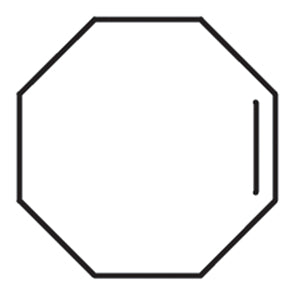
Cyclooctene TCI C0506
Regular price From Rp 875.700,00Regular price -
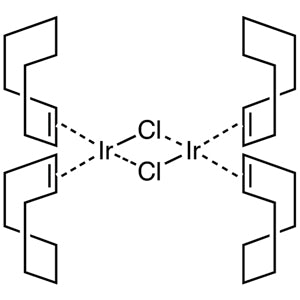
Chlorobis(cyclooctene)iridium(I)Dimer TCI C2985
Regular price Rp 3.155.250,00Regular price -
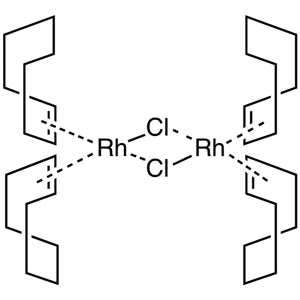
Chlorobis(cyclooctene)rhodium(I)Dimer TCI C2253
Regular price From Rp 2.809.800,00Regular price -
10,11-Dihydro-5H-dibenzo[b,f]azepine TCI D0269
Regular price Rp 717.150,00Regular price -
6-(2,5-Dihydroxyphenyl)dibenzo[c,e][1,2]oxaphosphinine6-Oxide TCI O0629
Regular price Rp 1.644.300,00Regular price -
2-[(6-Oxido-6H-dibenzo[c,e][1,2]oxaphosphinin-6-yl)methyl]succinicAcid TCI O0567
Regular price From Rp 980.700,00Regular price -
Sodium2,4,8,10-Tetra-tert-butyl-12H-dibenzo[d,g][1,3,2]dioxaphosphocin-6-olate6-Oxide TCI O0527
Regular price From Rp 980.700,00Regular price
![Dibenzo[g,p]chrysene (CAS 191-68-4) - TCI D3736 - AMI Scientific](http://amiscientific.com/cdn/shop/files/TCI2510D3736.jpg?v=1767106474&width=533)
![10,11-Dihydro-5H-dibenzo[b,f]azepine (CAS 494-19-9) - TCI D0269 - AMI Scientific](http://amiscientific.com/cdn/shop/files/TCI2510D0269.jpg?v=1769180490&width=533)
![99208-50-1 6-(2,5-Dihydroxyphenyl)dibenzo[c,e][1,2]oxaphosphinine 6-Oxide - AMI Scientific](http://amiscientific.com/cdn/shop/files/TCI2510O0629.jpg?v=1769143215&width=533)
![63562-33-4 2-[(6-Oxido-6H-dibenzo[c,e][1,2]oxaphosphinin-6-yl)methyl]succinic Acid - AMI Scientific](http://amiscientific.com/cdn/shop/files/TCI2510O0567.jpg?v=1768819299&width=533)
![85209-91-2 Sodium 2,4,8,10-Tetra-tert-butyl-12H-dibenzo[d,g][1,3,2]dioxaphosphocin-6-olate 6-Oxide - AMI Scientific](http://amiscientific.com/cdn/shop/files/TCI2510O0527.jpg?v=1768819298&width=533)