


3,3,3',3'-Tetramethyl-1,1'-bis(4-sulfobutyl)benzoindodicarbocyanine Sodium Salt is a specialized chemical compound used in laboratory settings for its optical and photonic properties. This cyanine dye belongs to the class of carbocyanine dyes, which are widely utilized in optical and photonic research. Its ability to absorb and emit light within specific wavelength ranges makes it a valuable tool for various analytical and experimental applications. In Indonesian laboratories, this compound is frequently employed in studies related to optical sensing, material development, and photonic technologies. Its unique molecular structure contributes to its effectiveness in these applications.
The compound is preferred due to its high efficiency in light absorption and emission, as well as its chemical stability under various conditions. Its molecular structure allows for precise optical responses, making it ideal for applications that require accurate light interaction. The presence of sulfobutyl groups enhances its solubility and compatibility with different solvents, which is crucial for experimental reproducibility. Additionally, its stability across a range of pH levels and temperatures ensures consistent performance in diverse laboratory environments. These properties make it a reliable choice for researchers working in photonic and optical material development.
In Indonesian laboratories, this compound is commonly used in research focused on optical sensors, photonic materials, and advanced imaging techniques. It plays a critical role in developing new materials with specific optical characteristics. Its application extends to both academic and industrial research, supporting innovation in fields such as optoelectronics and nanotechnology. The compound’s versatility and reliability make it an essential component in the toolkit of Indonesian researchers working in optical sciences.
Related TCI products
- TCI D4464 120724-84-7 3,3,3',3'-Tetramethyl-1,1'-bis(4-sulfobutyl)indocarbocyanine Sodium Salt
- TCI M3120 827320-59-2 1-Methyl-3-(4-sulfobutyl)imidazolium Hydrogen Sulfate
- TCI M3119 909390-59-6 1-Methyl-3-(4-sulfobutyl)imidazolium Bis(trifluoromethanesulfonyl)imide
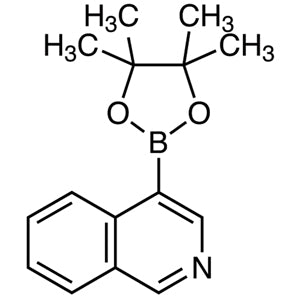
- TCI I0739 685103-98-4 4-(4,4,5,5-Tetramethyl-1,3,2-dioxaborolan-2-yl)isoquinoline
- TCI T4407 1609484-75-4 4,4,5,5-Tetramethyl-2-(spiro[fluorene-9,9'-xanthen]-4-yl)-1,3,2-dioxaborolane
- TCI T4406 1219637-88-3 1-(4,4,5,5-Tetramethyl-1,3,2-dioxaborolan-2-yl)-9H-carbazole
- Optical sensor development for precise light detection and measurement due to its high light absorption and emission efficiency.
- Photonic material research for creating advanced optical components and light-responsive materials.
- Fluorescence spectroscopy experiments to study light interaction properties in various chemical and biological systems.
- Imaging technology applications for enhancing contrast and resolution in optical imaging systems.
- Material characterization studies to evaluate optical properties and performance under different environmental conditions.
| Brand | TCI |
|---|---|
| CAS number | 64285-36-5 |
| Molecular formula | — |
| Purity | — |
| Category | Materials Science > Photonic Materials and Optical Materials > Cyanine Dyes, Squarylium Dyes |
| Pack sizes | Available in standard laboratory quantities as per supplier specifications |
| Physical form | Powder or solution, depending on formulation |
| Storage | Store in a cool, dry place away from light and moisture |
This compound should be stored in a cool, dry environment, away from direct light and moisture to maintain its chemical integrity. It is recommended to use airtight containers made of glass or high-density polyethylene to prevent contamination and degradation. Due to its optical properties, it is important to handle the material with care to avoid exposure to excessive heat or UV light, which may alter its performance. In laboratory settings, proper personal protective equipment such as gloves and safety goggles should be worn when handling the compound. Additionally, it should be kept in a well-ventilated area to ensure safe working conditions. Regular monitoring of storage conditions is advised to ensure the compound remains stable and effective for research applications.
—
Produk Terkait
-
3,3,3',3'-Tetramethyl-1,1'-bis(4-sulfobutyl)indocarbocyanineSodiumSalt TCI D4464
Regular price Rp 2.121.000,00Regular price -
1-Methyl-3-(4-sulfobutyl)imidazoliumHydrogenSulfate TCI M3120
Regular price From Rp 2.995.650,00Regular price -
1-Methyl-3-(4-sulfobutyl)imidazoliumBis(trifluoromethanesulfonyl)imide TCI M3119
Regular price From Rp 1.565.550,00Regular price -
4-(4,4,5,5-Tetramethyl-1,3,2-dioxaborolan-2-yl)isoquinoline TCI I0739
Regular price From Rp 2.386.650,00Regular price -
4,4,5,5-Tetramethyl-2-(spiro[fluorene-9,9'-xanthen]-4-yl)-1,3,2-dioxaborolane TCI T4407
Regular price From Rp 955.500,00Regular price -
1-(4,4,5,5-Tetramethyl-1,3,2-dioxaborolan-2-yl)-9H-carbazole TCI T4406
Regular price Rp 3.021.900,00Regular price -
4-(4,4,5,5-Tetramethyl-1,3,2-dioxaborolan-2-yl)-1H-pyrrolo[2,3-b]pyridine TCI T4400
Regular price From Rp 3.630.900,00Regular price -
4-(4,4,5,5-Tetramethyl-1,3,2-dioxaborolan-2-yl)isoxazole TCI T4396
Regular price From Rp 2.174.550,00Regular price


![1609484-75-4 4,4,5,5-Tetramethyl-2-(spiro[fluorene-9,9'-xanthen]-4-yl)-1,3,2-dioxaborolane - AMI Scientific](http://amiscientific.com/cdn/shop/files/TCI2510T4407.jpg?v=1768206674&width=533)

![942919-26-8 4-(4,4,5,5-Tetramethyl-1,3,2-dioxaborolan-2-yl)-1H-pyrrolo[2,3-b]pyridine - AMI Scientific](http://amiscientific.com/cdn/shop/files/TCI2510T4400.jpg?v=1767145178&width=533)
