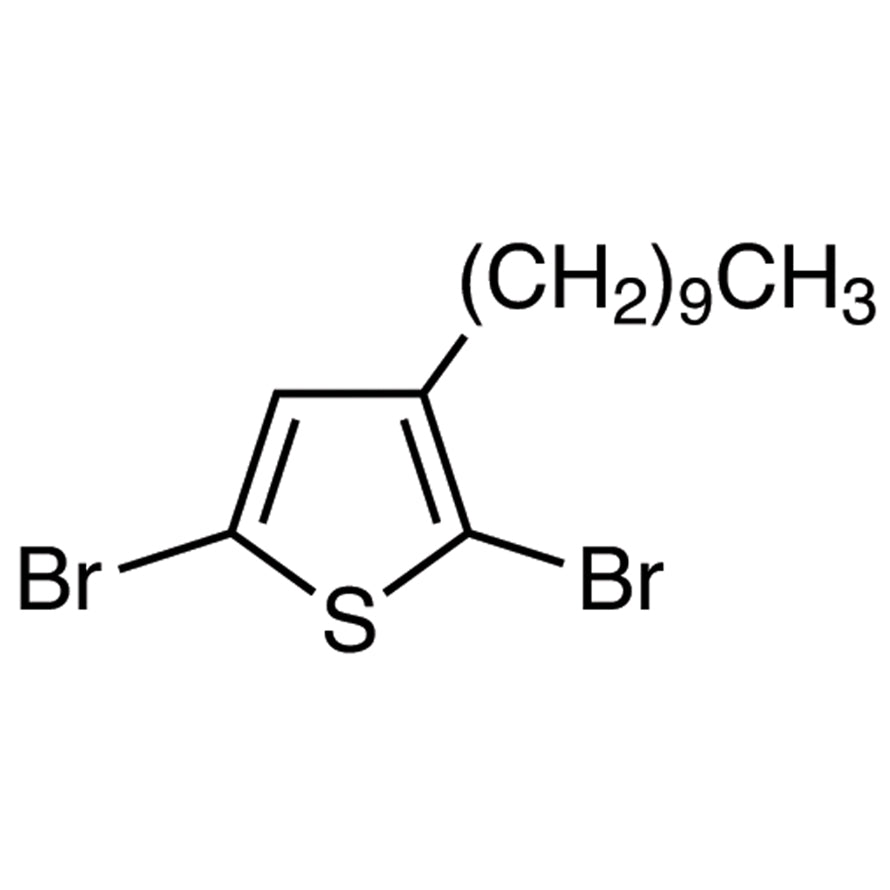
2,5-Dibromo-3-decylthiophene is a chemical compound widely used as a foundational material in scientific research, particularly in the development of polymers and semiconductors. This compound plays a crucial role in laboratories where researchers aim to create advanced materials with specific electronic properties. Its molecular structure allows for chemical modifications that enable the synthesis of materials tailored for various applications. Due to its versatility and stability, it is a key component in the exploration of new materials in both academic and industrial settings.
The compound is preferred for its stable chemical structure and controlled reactivity, which make it suitable for a wide range of chemical reactions. Its ability to undergo substitution and functional group modifications allows scientists to tailor its properties for specific applications. This adaptability makes it a valuable resource in the field of organic chemistry, where precise molecular design is essential. The compound's predictable behavior under different reaction conditions ensures reliable results in experimental settings.
In Indonesian laboratories, 2,5-Dibromo-3-decylthiophene is commonly used in material science research focused on the development of conductive and semiconductive materials. Researchers in universities and research institutions rely on this compound to advance their studies in electrochemistry and optoelectronics. Its application supports the creation of innovative technologies, contributing to the growth of scientific knowledge in the region.
TCI brochures (PDF)
- Thiophenes 2026-06-29 · p. 3
- Building Blocks for Organic Semiconductor 2026-03-24 · p. 37
Related TCI products
- Used in polymer synthesis for creating semiconductive materials due to its functional group versatility and molecular structure.
- Applied in semiconductor research for developing electronic components with tailored conductivity properties.
- Utilized in organic chemistry experiments for modifying molecular structures to achieve desired electronic characteristics.
- Employed in electrochemical studies to investigate material behavior under various electrical conditions.
- Integrated into optoelectronic device development for designing materials with specific light-responsive properties.
| Brand | TCI |
|---|---|
| CAS number | 158956-23-1 |
| Molecular formula | — |
| Purity | — |
| Category | Materials Science > Material Building Blocks > Polymer/Macromolecule Semiconductor Building Blocks |
| Pack sizes | Available in standard laboratory quantities as per supplier specifications |
| Physical form | Solid, crystalline or amorphous depending on purity and storage conditions |
| Storage | Store in a cool, dry place away from light and moisture |
This compound should be stored in a cool, dry environment, away from direct sunlight and sources of heat. It is recommended to use airtight containers to prevent exposure to moisture and air, which can affect its chemical stability. Due to its potential reactivity, it should be handled in a well-ventilated laboratory setting, ideally with appropriate personal protective equipment. Avoid contact with incompatible substances such as strong oxidizers or acids. Regular monitoring of storage conditions is advised to ensure the material remains in optimal condition for use in research applications.
—
Produk Terkait
-
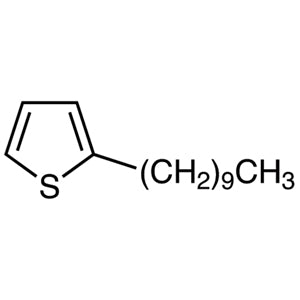
2-Decylthiophene TCI D5240
Regular price From Rp 1.538.250,00Regular price -
2-Bromo-3-octadecylthiophene TCI B5410
Regular price Rp 2.254.350,00Regular price -
2-Bromo-3-hexadecylthiophene TCI B5409
Regular price Rp 2.386.650,00Regular price -
2-Bromo-3-tetradecylthiophene TCI B5408
Regular price From Rp 1.565.550,00Regular price -
2-Bromo-5-dodecylthiophene TCI B5407
Regular price From Rp 2.837.100,00Regular price -
2,5-Dibromo-3-octadecylthiophene TCI D5243
Regular price Rp 1.749.300,00Regular price -
2,5-Dibromo-3-hexadecylthiophene TCI D5242
Regular price From Rp 1.696.800,00Regular price -
2,5-Dibromo-3-tetradecylthiophene TCI D5241
Regular price From Rp 1.405.950,00Regular price