2,5-Dibromo-3-tetradecylthiophene is a chemical compound widely utilized in scientific research, particularly in the development of organic semiconductor materials. This compound serves as a fundamental building block in the synthesis of conductive polymers and semiconductors with unique electronic properties. Its molecular structure combines a thiophene ring with a long hydrocarbon chain, enabling it to participate in complex chemical reactions that lead to the formation of advanced materials. In the laboratory, it is a key component in the creation of innovative materials that are essential for modern electronic and optoelectronic applications.
The compound is valued for its chemical stability under controlled conditions, which allows for consistent results in experimental processes. Its sensitivity to moisture and light, however, necessitates careful handling and storage to maintain its integrity. The ability to form well-defined crystalline structures makes it ideal for applications requiring precise control over material synthesis. These characteristics make it a preferred choice for researchers working on advanced material development and electronic device fabrication.
In Indonesian laboratories, 2,5-Dibromo-3-tetradecylthiophene is commonly used in material science and semiconductor technology research. It is a critical reagent for institutions and universities engaged in the development of organic photovoltaic cells and flexible electronic devices. Its role in these studies underscores its importance in advancing technological innovation within the scientific community.
- Organic semiconductor synthesis: This compound is ideal for creating organic semiconductors due to its molecular structure that facilitates charge transport properties.
- Conductive polymer development: Its long hydrocarbon chain contributes to the formation of conductive polymers with enhanced electrical conductivity.
- Flexible electronics research: The compound supports the development of flexible electronic devices by enabling the synthesis of materials with mechanical flexibility.
- Organic photovoltaic cell fabrication: It is used in the production of organic solar cells due to its ability to form stable and efficient semiconductor layers.
- Material characterization studies: Its crystalline structure allows for detailed analysis in material science experiments, aiding in the understanding of material properties.
| Brand | TCI |
|---|---|
| CAS number | 160096-74-2 |
| Molecular formula | — |
| Purity | — |
| Category | Materials Science > Material Building Blocks > Polymer/Macromolecule Semiconductor Building Blocks |
| Pack sizes | Available in various quantities as per standard laboratory supply |
| Physical form | Solid |
| Storage | Store in a cool, dry place away from light and moisture |
This compound should be stored in a cool, dry environment, away from direct light and moisture to maintain its chemical stability. It is recommended to use sealed containers made of materials that are chemically inert, such as glass or high-density polyethylene, to prevent contamination and degradation. Due to its sensitivity to environmental factors, it is important to handle it with care during preparation and use. Always ensure proper ventilation in the laboratory when working with this compound. Regular monitoring of storage conditions is advised to ensure the material remains suitable for research applications. Laboratory personnel should wear appropriate personal protective equipment, including gloves and safety goggles, to minimize exposure risks.
—
Produk Terkait
-
2-Bromo-3-tetradecylthiophene TCI B5408
Regular price From Rp 1.565.550,00Regular price -
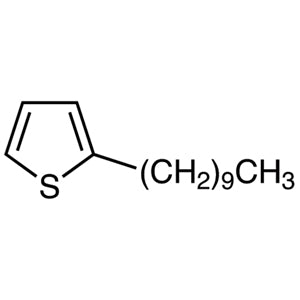
2-Decylthiophene TCI D5240
Regular price From Rp 1.538.250,00Regular price -
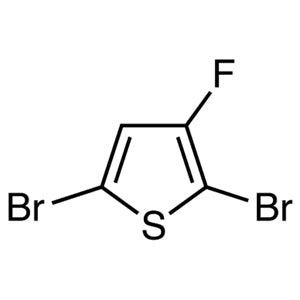
2,5-Dibromo-3-fluorothiophene TCI D5729
Regular price From Rp 3.896.550,00Regular price -
2,5-Dibromo-3-cyclohexylthiophene TCI D5247
Regular price Rp 6.679.050,00Regular price -
2,5-Dibromo-3-octadecylthiophene TCI D5243
Regular price Rp 1.749.300,00Regular price -
2,5-Dibromo-3-hexadecylthiophene TCI D5242
Regular price From Rp 1.696.800,00Regular price -
2-Bromo-5-dodecylthiophene TCI B5407
Regular price From Rp 2.837.100,00Regular price -
2-Bromo-3-octadecylthiophene TCI B5410
Regular price Rp 2.254.350,00Regular price