2,5-Dibromo-3-cyclohexylthiophene is a chemical compound widely used in scientific research, particularly in the field of materials science and technology. This compound plays a crucial role in the development of advanced materials, serving as a building block for the synthesis of organic compounds with unique electronic properties. Its molecular structure enables it to participate in various chemical reactions, making it a versatile component in laboratory settings. Due to its stability and controlled reactivity, it is often selected for experiments that require precise chemical interactions and controlled synthesis processes.
The compound's key properties include its ability to interact effectively with a range of reagents, supporting substitution and covalent reactions. Its solubility in organic solvents further enhances its utility, as it simplifies processing and synthesis procedures in the lab. These characteristics make it an ideal choice for researchers aiming to develop new materials with tailored electronic and structural properties. The stability of the compound also ensures that it remains safe for use in controlled laboratory environments.
In Indonesian laboratories, 2,5-Dibromo-3-cyclohexylthiophene is commonly used in the development of novel materials for electronic and semiconductor applications. Its role in creating advanced polymers and semiconductors aligns with the growing demand for innovative materials in both academic and industrial research. Researchers in Indonesia rely on this compound to explore new chemical pathways and improve the performance of materials used in modern technology.
Related TCI products
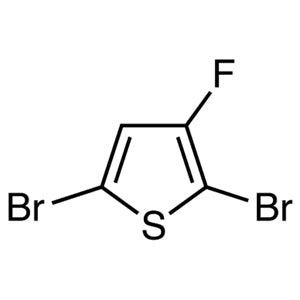
- TCI D5729 32431-85-9 2,5-Dibromo-3-fluorothiophene
- TCI D5243 205235-01-4 2,5-Dibromo-3-octadecylthiophene
- TCI D5242 178452-13-6 2,5-Dibromo-3-hexadecylthiophene
- TCI D5241 160096-74-2 2,5-Dibromo-3-tetradecylthiophene
- TCI B5420 241477-71-4 2-Bromo-3-cyclohexylthiophene
- TCI C3400 120659-34-9 3-Cyclohexylthiophene
- Used in semiconductor material synthesis due to its ability to form stable organic compounds with unique electronic properties.
- Applied in polymer research for creating advanced macromolecules with tailored structural and functional characteristics.
- Utilized in organic electronics development for its role in synthesizing materials with high conductivity and stability.
- Employed in material characterization studies to test the reactivity and compatibility of new chemical compounds.
- Integrated into research projects focused on developing environmentally sustainable materials with enhanced performance.
| Brand | TCI |
|---|---|
| CAS number | 302912-44-3 |
| Molecular formula | — |
| Purity | — |
| Category | Materials Science > Material Building Blocks > Polymer/Macromolecule Semiconductor Building Blocks |
| Pack sizes | — |
| Physical form | — |
| Storage | Store in a cool, dry place away from light and incompatible substances. |
This compound should be stored in a cool, dry place, away from direct sunlight and sources of heat. It is recommended to use airtight containers to prevent exposure to moisture and air. Due to its chemical nature, it should be kept separate from incompatible substances such as strong oxidizers or acids. Proper ventilation is essential when handling the material to minimize inhalation risks. Laboratory personnel should wear appropriate personal protective equipment, including gloves and safety goggles, to ensure safe handling. Regular monitoring of storage conditions is advised to maintain the integrity and stability of the compound.
—
Product Categories
Produk Terkait
-
2,5-Dibromo-3-fluorothiophene TCI D5729
Regular price From Rp 3.896.550,00Regular price -
2,5-Dibromo-3-octadecylthiophene TCI D5243
Regular price Rp 1.749.300,00Regular price -
2,5-Dibromo-3-hexadecylthiophene TCI D5242
Regular price From Rp 1.696.800,00Regular price -
2,5-Dibromo-3-tetradecylthiophene TCI D5241
Regular price From Rp 1.405.950,00Regular price -
2-Bromo-3-cyclohexylthiophene TCI B5420
Regular price From Rp 3.763.200,00Regular price -
3-Cyclohexylthiophene TCI C3400
Regular price From Rp 1.936.200,00Regular price -
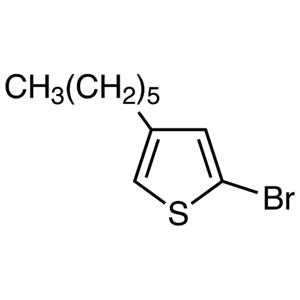
2-Bromo-4-hexylthiophene TCI B3985
Regular price Rp 4.240.950,00Regular price -
2-Bromo-5-hexylthiophene TCI B3812
Regular price Rp 4.028.850,00Regular price