2,5-Dibromo-3-octadecylthiophene is a chemical compound widely utilized in materials science research, particularly in the development of organic semiconductor materials. This compound plays a crucial role in laboratory settings where the synthesis of advanced electronic materials is required. Its unique molecular structure makes it a valuable building block for creating materials with tailored electronic properties. Researchers in Indonesia and globally rely on this compound to explore new avenues in semiconductor technology and functional material design.
The compound’s molecular structure, consisting of a long carbon chain and a thiophene ring, contributes to its electronic properties, making it a preferred choice for organic semiconductor applications. Its stability under certain conditions and the ability to undergo chemical reactions under controlled environments enhance its utility in synthetic processes. The compound’s high melting and boiling points also make it suitable for use in high-temperature laboratory procedures. These characteristics collectively make it a versatile and reliable material for advanced research.
In Indonesian laboratories, 2,5-Dibromo-3-octadecylthiophene is commonly used in semiconductor material research and development. Its application is particularly relevant in the study of organic conductive materials and optoelectronic devices. Due to its chemical stability and reactivity, it is a key component in the synthesis of various functional materials. Researchers in Indonesia frequently use this compound to advance their work in material science and semiconductor technology.
Related TCI products
- TCI B5410 827343-18-0 2-Bromo-3-octadecylthiophene
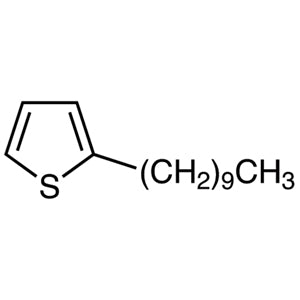
- TCI D5240 24769-39-9 2-Decylthiophene
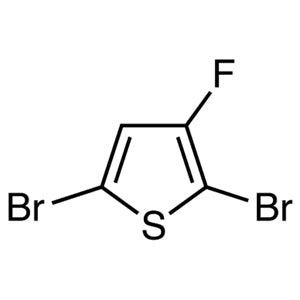
- TCI D5729 32431-85-9 2,5-Dibromo-3-fluorothiophene
- TCI D5247 302912-44-3 2,5-Dibromo-3-cyclohexylthiophene
- TCI D5242 178452-13-6 2,5-Dibromo-3-hexadecylthiophene
- TCI D5241 160096-74-2 2,5-Dibromo-3-tetradecylthiophene
- Organic Semiconductor Synthesis: This compound is ideal for synthesizing organic semiconductors due to its unique molecular structure and electronic properties.
- Conductive Polymer Development: Its long carbon chain and thiophene ring make it suitable for creating conductive polymers with enhanced performance.
- Optoelectronic Material Research: The compound's optical response properties are valuable in studying materials for optoelectronic applications.
- Material Characterization Studies: Its chemical stability allows it to be used in various characterization techniques to analyze material behavior.
- Advanced Electronic Device Prototyping: It serves as a building block for creating prototypes of next-generation electronic devices.
| Brand | TCI |
|---|---|
| CAS number | 205235-01-4 |
| Molecular formula | — |
| Purity | — |
| Category | Materials Science > Material Building Blocks > Polymer/Macromolecule Semiconductor Building Blocks |
| Pack sizes | Available in various quantities as per supplier specifications |
| Physical form | Solid |
| Storage | Store in a cool, dry place away from light and moisture |
This compound should be stored in a cool, dry place, away from direct light and moisture to maintain its chemical integrity. It is recommended to use airtight containers to prevent exposure to air and moisture, which could affect its stability. Laboratory personnel should handle the compound with care, using appropriate personal protective equipment such as gloves and safety goggles. Due to its chemical nature, it should be stored separately from incompatible substances to avoid any potential reactions. Proper labeling of storage containers is essential for safety and identification purposes. Always ensure that storage conditions comply with standard laboratory safety protocols to minimize risks associated with chemical handling.
—
Product Categories
Produk Terkait
-
2-Bromo-3-octadecylthiophene TCI B5410
Regular price Rp 2.254.350,00Regular price -
2-Decylthiophene TCI D5240
Regular price From Rp 1.538.250,00Regular price -
2,5-Dibromo-3-fluorothiophene TCI D5729
Regular price From Rp 3.896.550,00Regular price -
2,5-Dibromo-3-cyclohexylthiophene TCI D5247
Regular price Rp 6.679.050,00Regular price -
2,5-Dibromo-3-hexadecylthiophene TCI D5242
Regular price From Rp 1.696.800,00Regular price -
2,5-Dibromo-3-tetradecylthiophene TCI D5241
Regular price From Rp 1.405.950,00Regular price -
2-Bromo-5-dodecylthiophene TCI B5407
Regular price From Rp 2.837.100,00Regular price -
2-Bromo-3-hexadecylthiophene TCI B5409
Regular price Rp 2.386.650,00Regular price