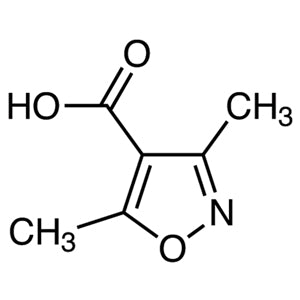
3,5-Dimethylisoxazole-4-carboxylic Acid is a chemical compound widely used as a building block in the synthesis of heterocyclic compounds. It plays a crucial role in organic chemistry laboratories, where it serves as a key intermediate in the development of complex molecular structures. This compound is particularly valuable in research involving the creation of pharmaceuticals and industrial chemicals due to its versatile reactivity and structural adaptability. Its presence in various chemical reactions makes it an essential tool for scientists working in the field of heterocyclic chemistry.
The compound is known for its stability and controlled reactivity, which make it a preferred choice for laboratory applications. It exhibits good solubility in organic solvents, facilitating efficient processing and synthesis procedures. These properties allow it to be easily incorporated into a wide range of chemical reactions without compromising the integrity of the final product. Its chemical stability ensures that it remains effective even under varying experimental conditions, making it a reliable component in both academic and industrial research settings.
In Indonesian laboratories, 3,5-Dimethylisoxazole-4-carboxylic Acid is commonly used by researchers and scientists for scientific research, chemical product development, and material testing. It is particularly relevant in the fields of organic chemistry, pharmacy, and materials science. Its application in these areas highlights its importance as a fundamental reagent in modern chemical research.
- Organic synthesis applications benefit from this compound's ability to participate in various chemical reactions, enabling the formation of complex heterocyclic structures.
- Pharmaceutical research utilizes it as a precursor for the development of new drugs, leveraging its structural versatility and chemical reactivity.
- Industrial chemical production relies on its stability and solubility to facilitate efficient synthesis processes and product development.
- Material science experiments incorporate it to create compounds with specific chemical properties, enhancing the functionality of new materials.
- Analytical chemistry uses it as a reference standard to ensure the accuracy and consistency of chemical testing procedures.
| Brand | TCI |
|---|---|
| CAS number | 2510-36-3 |
| Molecular formula | — |
| Purity | — |
| Category | Chemistry > Building Blocks > Heterocyclic Building Blocks |
| Pack sizes | Available in various quantities as per standard laboratory supply |
| Physical form | Solid |
| Storage | Store in a cool, dry place away from direct sunlight |
This compound should be stored in a cool, dry environment to maintain its chemical stability and prevent degradation. It is recommended to use airtight containers to minimize exposure to moisture and air, which can affect its reactivity. Proper labeling of containers is essential to ensure safe handling and prevent accidental use. In laboratory settings, it is important to follow standard safety protocols, including the use of personal protective equipment when handling. Regular monitoring of storage conditions ensures the compound remains in optimal condition for use in research applications.
—
Produk Terkait
-
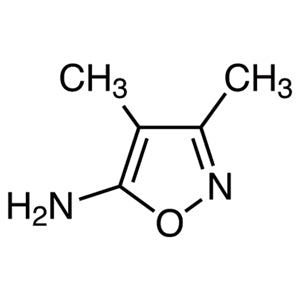
5-Amino-3,4-dimethylisoxazole TCI A3179
Regular price From Rp 1.193.850,00Regular price -
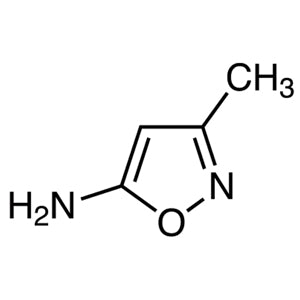
5-Amino-3-methylisoxazole TCI A2867
Regular price From Rp 1.008.000,00Regular price -
3-Amino-5-methylisoxazole TCI A0980
Regular price Rp 2.518.950,00Regular price -
3-Methylisoxazole-5-carboxylicAcid TCI M2953
Regular price Rp 2.916.900,00Regular price -
5-Methylisoxazole-3-carboxylicAcid TCI M2405
Regular price From Rp 1.298.850,00Regular price -
5-Methylisoxazole-4-carboxylicAcid TCI M1740
Regular price From Rp 769.650,00Regular price -
5-Methylisoxazole TCI M0813
Regular price From Rp 1.115.100,00Regular price -
3-Hydroxy-5-methylisoxazole TCI H1348
Regular price From Rp 1.696.800,00Regular price