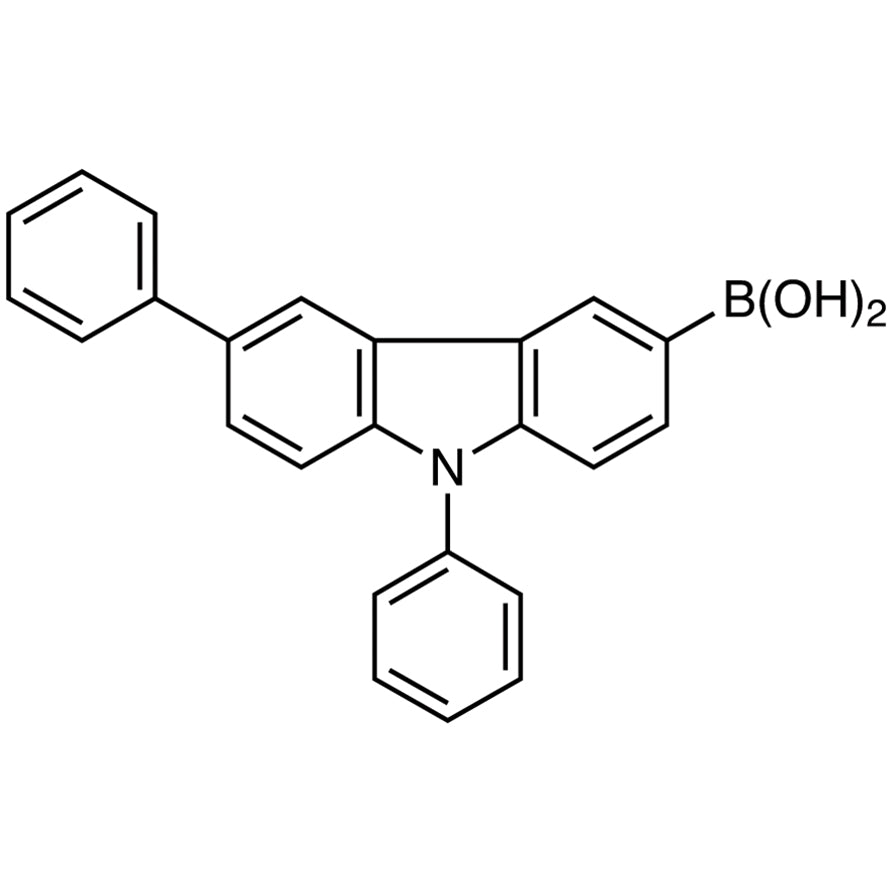
6,9-Diphenyl-9H-carbazole-3-boronic Acid is a versatile organic compound widely used in scientific research, particularly in the fields of materials science and semiconductor technology. This compound plays a crucial role in the development of advanced materials due to its unique chemical structure, which allows for flexible chemical modifications. Its ability to form stable bonds with various functional groups makes it an essential building block for creating new materials with tailored properties. In the laboratory, it serves as a key reagent in the synthesis of complex compounds that find applications in optoelectronics and display technologies.
The compound’s chemical stability and controlled reactivity make it a preferred choice for researchers aiming to develop materials with specific optical and electronic characteristics. Its boronic acid functionality enables the formation of covalent bonds with other molecules, which is vital for designing materials with enhanced performance. Additionally, its compatibility with a wide range of synthetic methods allows for greater flexibility in material design. These properties make it a reliable and efficient component in the synthesis of advanced semiconductor materials.
In Indonesian laboratories, this compound is commonly used in semiconductor research, especially in the development of optoelectronic devices such as LEDs and OLEDs. Its role in material innovation aligns with the growing demand for high-performance electronic components. Researchers in Indonesia rely on this compound to explore new applications in display technologies and electronic materials, contributing to the advancement of scientific research in the region.
TCI brochures (PDF)
- Building Blocks for Organic Semiconductor 2026-03-24 · p. 20
Related TCI products
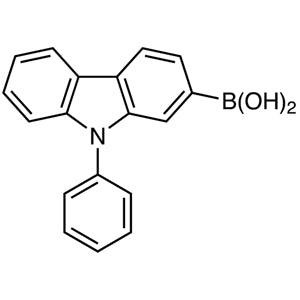
- TCI P2169 1001911-63-2 9-Phenylcarbazole-2-boronic Acid (contains varying amounts of Anhydride)
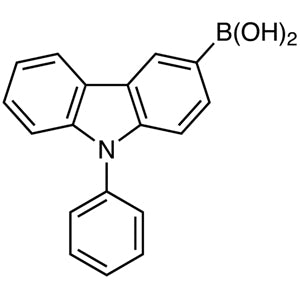
- TCI P2001 854952-58-2 9-Phenylcarbazole-3-boronic Acid (contains varying amounts of Anhydride)
- TCI N1098 1133057-98-3 [9-(Naphthalen-2-yl)-9H-carbazol-3-yl]boronic Acid (contains varying amounts of Anhydride)
- TCI E1153 669072-93-9 9-Ethylcarbazole-3-boronic Acid (contains varying amounts of Anhydride)
- TCI D5427 42448-04-4 2,7-Diphenyl-9H-carbazole
- TCI D5056 1359833-28-5 3,9-Diphenyl-6-(4,4,5,5-tetramethyl-1,3,2-dioxaborolan-2-yl)carbazole
- Semiconductor material synthesis for optoelectronic devices due to its ability to form stable chemical bonds with functional groups.
- Development of advanced display technologies such as OLEDs and LEDs through its role in creating materials with tailored optical properties.
- Research in organic electronics where its chemical versatility supports the design of new electronic materials with specific performance characteristics.
- Material modification studies that require flexible chemical structures for the creation of novel semiconductor compounds.
- Investigation of boronic acid functionalities in the development of hybrid organic-inorganic materials for electronic applications.
| Brand | TCI |
|---|---|
| CAS number | 1133058-06-6 |
| Molecular formula | — |
| Purity | — |
| Category | Materials Science > Material Building Blocks > Small Molecule Semiconductor Building Blocks |
| Pack sizes | Varies as per supplier |
| Physical form | Solid (exact form may vary) |
| Storage | Store in a cool, dry place away from moisture and direct sunlight |
This compound should be stored in a cool, dry environment, away from moisture and direct sunlight to maintain its chemical integrity. It is recommended to use airtight containers made of materials that are chemically inert, such as glass or high-density polyethylene, to prevent contamination and degradation. Due to its potential reactivity, it should be handled with appropriate personal protective equipment, including gloves and safety goggles. In laboratory settings, it should be stored separately from strong acids and bases to avoid unwanted chemical interactions. Proper ventilation is also essential when working with this compound to ensure a safe working environment.
—
Produk Terkait
-
9-Phenylcarbazole-2-boronicAcid(containsvaryingamountsofAnhydride) TCI P2169
Regular price From Rp 477.750,00Regular price -
9-Phenylcarbazole-3-boronicAcid(containsvaryingamountsofAnhydride) TCI P2001
Regular price From Rp 1.670.550,00Regular price -
[9-(Naphthalen-2-yl)-9H-carbazol-3-yl]boronicAcid(containsvaryingamountsofAnhydride) TCI N1098
Regular price Rp 4.028.850,00Regular price -
9-Ethylcarbazole-3-boronicAcid(containsvaryingamountsofAnhydride) TCI E1153
Regular price From Rp 2.121.000,00Regular price -
2,7-Diphenyl-9H-carbazole TCI D5427
Regular price Rp 2.942.100,00Regular price -
3,9-Diphenyl-6-(4,4,5,5-tetramethyl-1,3,2-dioxaborolan-2-yl)carbazole TCI D5056
Regular price From Rp 848.400,00Regular price -
[4'-(Carbazol-9-yl)-4-biphenylyl]boronicAcid(containsvaryingamountsofAnhydride) TCI C3353
Regular price From Rp 955.500,00Regular price -
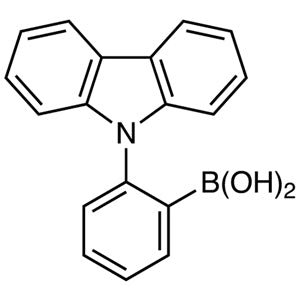
2-(9H-Carbazol-9-yl)phenylboronicAcid(containsvaryingamountsofAnhydride) TCI C3352
Regular price Rp 4.743.900,00Regular price
![1133057-98-3 [9-(Naphthalen-2-yl)-9H-carbazol-3-yl]boronic Acid (contains varying amounts of Anhydride) - AMI Scientific](http://amiscientific.com/cdn/shop/files/TCI2510N1098.jpg?v=1769143156&width=533)


![[4'-(Carbazol-9-yl)-4-biphenylyl]boronic Acid (contains varying amounts of Anhydride) (CAS 858131-73-4) - TCI C3353 - AMI Scientific](http://amiscientific.com/cdn/shop/files/TCI2510C3353.jpg?v=1768204763&width=533)