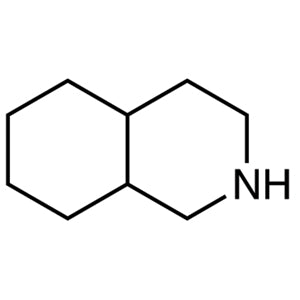
Decahydroisoquinoline, a mixture of cis- and trans-isomers with the cis-isomer being predominant, is a versatile chemical compound widely used in organic chemistry laboratories. As a heterocyclic building block, it serves as a foundational material for the synthesis of complex molecules. Its unique molecular structure enables participation in various chemical reactions, making it an essential component in the development of new compounds. This compound is particularly valuable for researchers seeking to explore the properties of heterocyclic systems and their applications in different scientific fields.
The chemical properties of decahydroisoquinoline, including its reactivity and ability to undergo substitution, reduction, and ring-opening reactions, make it a preferred choice for synthetic chemists. Its stability under certain conditions, combined with its sensitivity to oxidation and moisture, requires careful handling but also enhances its utility in controlled environments. These characteristics allow it to be a key player in the synthesis of bioactive compounds, pharmaceuticals, and advanced materials. Its adaptability to different reaction conditions and its role in creating complex molecular structures further solidify its importance in modern chemical research.
In Indonesian laboratories, decahydroisoquinoline is commonly used in organic chemistry research, especially in the development of new compounds with biological activity. Its application spans across various scientific disciplines, including pharmacology, material science, and medicinal chemistry. Researchers in Indonesia rely on this compound to build complex molecules, test new synthetic pathways, and explore the potential of heterocyclic structures in drug discovery and chemical innovation.
Related TCI products
- TCI M2363 16409-43-1 4-Methyl-2-(2-methyl-1-propenyl)tetrahydropyran (cis- and trans- mixture)
- TCI M2049 67715-80-4 2-Methyl-4-propyl-1,3-oxathiane (cis- and trans- mixture)
- TCI E0798 121-39-1 Ethyl 3-Phenylglycidate (cis- and trans- mixture)
- TCI D6456 639068-43-2 tert-Butyl 3,5-Dimethylpiperazine-1-carboxylate (cis- and trans- mixture)
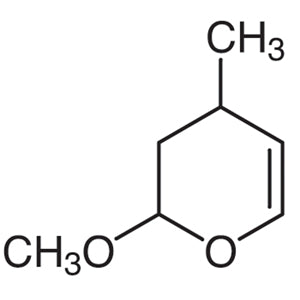
- TCI D2053 53608-95-0 3,4-Dihydro-2-methoxy-4-methyl-2H-pyran (cis- and trans- mixture)
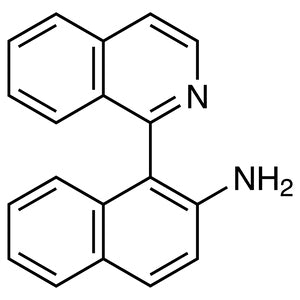
- TCI A2221 664302-70-9 1-(2-Amino-1-naphthyl)isoquinoline
- Organic synthesis of heterocyclic compounds due to its structural versatility and reactivity.
- Development of pharmaceuticals and bioactive molecules through ring-opening and substitution reactions.
- Research in material science for the creation of advanced polymers and functional materials.
- Study of chemical reactivity in controlled environments for academic and industrial applications.
- Exploration of new synthetic pathways in medicinal chemistry for drug discovery and formulation.
| Brand | TCI |
|---|---|
| CAS number | 6329-61-9 |
| Molecular formula | — |
| Purity | — |
| Category | Chemistry > Building Blocks > Heterocyclic Building Blocks |
| Pack sizes | Available in various quantities as per supplier specifications |
| Physical form | Solid, typically in crystalline or powder form |
| Storage | Store in a cool, dry place away from light and moisture |
Decahydroisoquinoline should be stored in a cool, dry environment to maintain its chemical stability. It is recommended to keep it in airtight containers to prevent exposure to moisture and oxidation. Due to its sensitivity to environmental factors, it is important to avoid prolonged contact with air and light. Laboratory personnel should handle the compound with care, using appropriate personal protective equipment to ensure safety. The compound should be stored in a designated chemical storage area, away from incompatible materials. Regular monitoring of storage conditions is essential to preserve its integrity and ensure safe usage in research settings.
—
Produk Terkait
-
4-Methyl-2-(2-methyl-1-propenyl)tetrahydropyran(cis-andtrans-mixture) TCI M2363
Regular price Rp 1.644.300,00Regular price -
2-Methyl-4-propyl-1,3-oxathiane(cis-andtrans-mixture) TCI M2049
Regular price Rp 2.227.050,00Regular price -
Ethyl3-Phenylglycidate(cis-andtrans-mixture) TCI E0798
Regular price Rp 477.750,00Regular price -
tert-Butyl3,5-Dimethylpiperazine-1-carboxylate(cis-andtrans-mixture) TCI D6456
Regular price From Rp 1.458.450,00Regular price -
3,4-Dihydro-2-methoxy-4-methyl-2H-pyran(cis-andtrans-mixture) TCI D2053
Regular price Rp 2.279.550,00Regular price -
1-(2-Amino-1-naphthyl)isoquinoline TCI A2221
Regular price Rp 7.446.600,00Regular price -
Isoquinoline-3-carboxylicAcid TCI I1246
Regular price From Rp 2.809.800,00Regular price -
Isoquinoline-5-carboxaldehyde TCI I0942
Regular price From Rp 3.790.500,00Regular price