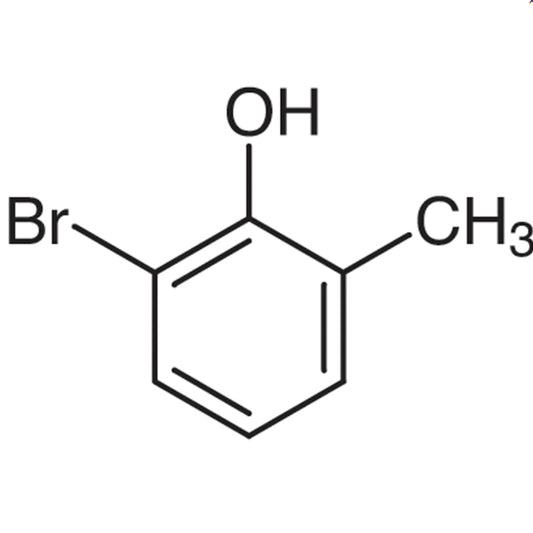
3,5-Dibromo-p-cresol is a chemical compound widely used in laboratory settings for the synthesis of complex organic molecules. As a building block in organic chemistry, it plays a crucial role in various chemical reactions, particularly those involving substitution mechanisms. This compound is commonly found in chemical laboratories as a foundational material for the development of new compounds and the study of aromatic reactivity. Its versatility makes it an essential component in the toolkit of chemists working on synthetic pathways and molecular modifications.
The compound's stable chemical structure and controlled reactivity make it a preferred choice for laboratory applications. It exhibits the ability to undergo halogen substitution reactions at ortho and para positions, enabling the creation of more complex molecular structures. This reactivity, combined with its chemical stability, allows researchers to manipulate aromatic systems effectively. Its predictable behavior under different reaction conditions ensures reliable results in experimental setups, making it a trusted material in both academic and industrial research environments.
In Indonesian laboratories, 3,5-Dibromo-p-cresol is frequently used in organic chemistry research, especially in studies related to aromatic reactivity and the synthesis of new compounds. It is a key reagent in experiments that require modification of aromatic structures, contributing to the advancement of chemical knowledge and the development of novel materials. Its presence in laboratory supply chains underscores its importance in the chemical research landscape of Indonesia.
- Synthesis of complex aromatic compounds using halogen substitution reactions due to its reactive ortho and para positions.
- Development of new organic molecules through controlled substitution mechanisms in chemical synthesis experiments.
- Study of aromatic reactivity in organic chemistry research to understand molecular behavior under different conditions.
- Modification of aromatic structures in laboratory settings to create novel chemical entities with specific properties.
- Support for experimental work in chemical synthesis that requires precise and predictable chemical reactivity.
| Brand | TCI |
|---|---|
| CAS number | 13979-81-2 |
| Molecular formula | — |
| Purity | — |
| Category | Chemistry > Building Blocks > Non-Heterocyclic Building Blocks |
| Pack sizes | Available in standard laboratory quantities as per supplier specifications |
| Physical form | Solid, typically in crystalline or powder form |
| Storage | Store in a cool, dry place away from light and incompatible substances |
3,5-Dibromo-p-cresol should be stored in a cool, dry environment to maintain its chemical stability. It is recommended to keep the compound in a sealed container to prevent moisture absorption and contamination. Due to its potential reactivity, it should be stored away from strong oxidizing agents and incompatible materials. Proper labeling and storage conditions are essential to ensure safety in the laboratory. Always handle the compound with appropriate personal protective equipment, such as gloves and safety goggles, to minimize exposure risks. Regular monitoring of storage conditions helps maintain the integrity and usability of the material for experimental purposes.
—
Produk Terkait
-
2,6-Dibromo-p-cresol TCI D3487
Regular price Rp 2.491.650,00Regular price -
3,4,5,6-Tetrabromo-o-cresol TCI T1528
Regular price Rp 610.050,00Regular price -
2,3,5,6-Tetrabromo-p-cresol TCI T1430
Regular price From Rp 2.147.250,00Regular price -
4-Bromo-o-cresol TCI B3677
Regular price From Rp 1.590.750,00Regular price -
6-Bromo-o-cresol TCI B3126
Regular price From Rp 3.683.400,00Regular price -
2-tert-Butyl-p-cresol TCI B0910
Regular price From Rp 505.050,00Regular price -
2-Bromo-p-cresol TCI B0808
Regular price From Rp 2.782.500,00Regular price -
6-tert-Butyl-o-cresol TCI B0728
Regular price From Rp 743.400,00Regular price